| |
| |
| |
| Presented By ASCEND |
| |
| Axios Space |
| By Miriam Kramer · Sep 13, 2022 |
| Thanks for reading Axios Space. At 1,231 words, this newsletter is about a 5-minute read. - Please send your tips, questions and satellite fragments to miriam.kramer@axios.com, or if you received this as an email, just hit reply.
|
| |
| |
| 1 big thing: Reining in destructive anti-satellite weapons |
 |
|
| Illustration: Natalie Peeples/Axios |
| |
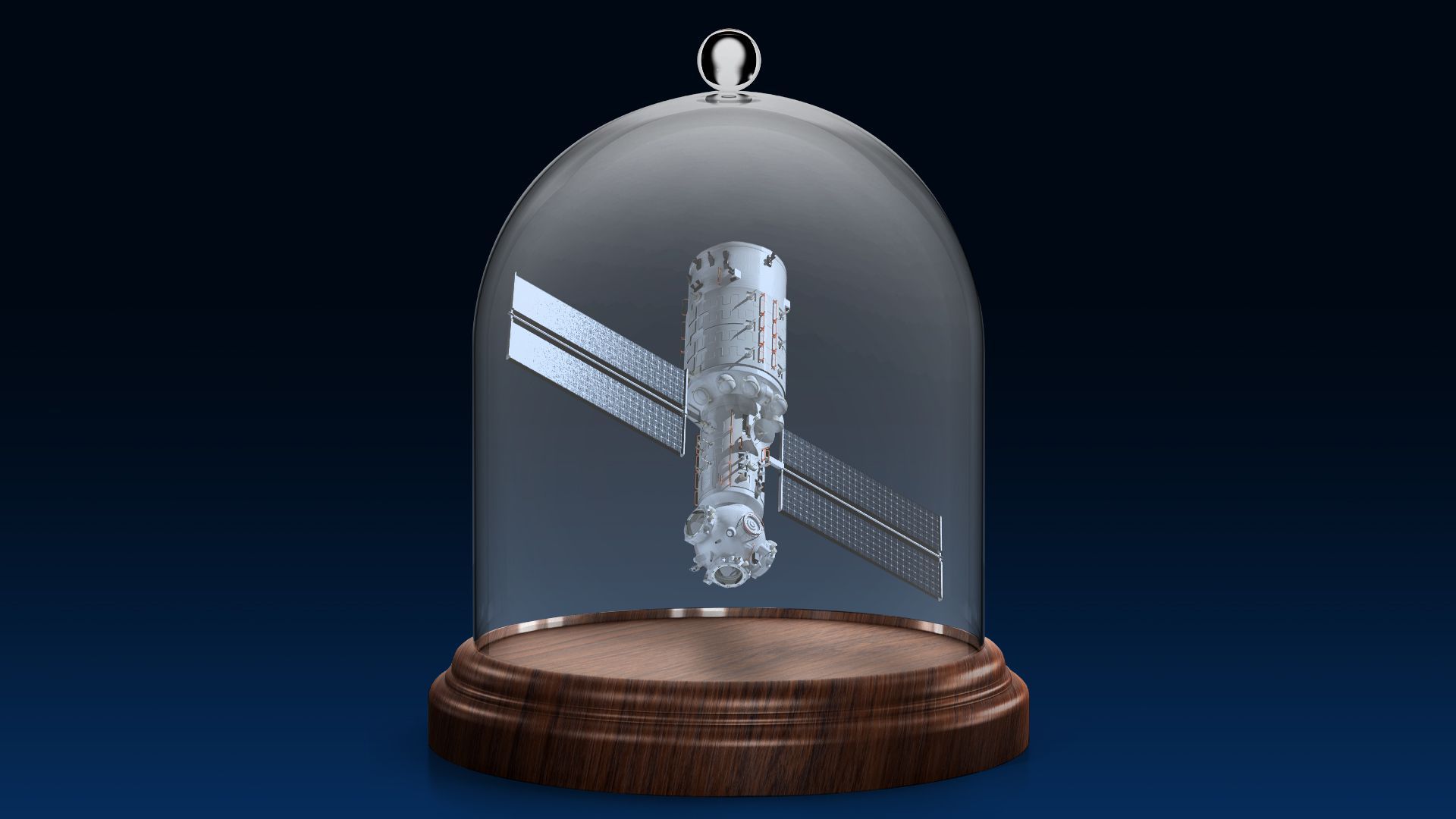
| Nations are meeting this week in a renewed attempt to establish norms and rules to govern space — including regulating the testing of weapons that can destroy satellites orbiting Earth, I write with my colleague Alison Snyder. Why it matters: Modern communication and navigation depend on sophisticated satellites orbiting Earth, but those tools are threatened today by anti-satellite weapons tests that can create dangerous debris — and they could be at risk in the future if there is conflict in space. - Efforts to come up with international rules for how space should be used have stalled in the UN for more than a decade.
- But experts say the increasingly important role of satellites across industries and vast swaths of life could soon spur countries to advance protective measures on the international stage.
Driving the news: A UN working group is meeting in Geneva this week to address how best to establish rules that would reduce the potential for conflicts in orbit. - Vice President Kamala Harris announced last week that the U.S. will put forth a resolution at the UN General Assembly calling on countries to stop testing destructive, direct-ascent anti-satellite weapons.
- In April, Harris announced the U.S. would no longer test anti-satellite weapons. Canada, Japan and New Zealand have also stated they won't test these types of weapons.
- "Our goal is that this resolution is adopted with the broadest possible support," the State Department's Monica Medina said during the National Space Council meeting last week.
Background: Destructive anti-satellite tests have left parts of Earth's orbit littered with debris in recent years. - Space debris moves at more than 17,000 mph. Even paint-chip-sized bits of junk can be devastating because of their speed.
- Russia conducted an anti-satellite test in 2021, blowing up its own satellite with a missile and creating thousands of pieces of space debris. Some of that space junk threatened to hit the International Space Station.
- India, China and the U.S. have also performed destructive anti-satellite weapons tests.
The stakes are highest for the U.S. — and increasingly China — both of which have sophisticated satellites that underpin their military activity. - But other countries have also started to increasingly rely on space for everyday life, potentially leading to a groundswell of support for establishing rules that would keep Earth's orbit safe for use.
Yes, but: Not all nations see eye to eye on defining the biggest threats. - The U.S. views reckless behavior — like testing destructive anti-satellite weapons that can create space debris — as a primary threat.
- But Russia and China say they are concerned about weapons placed in space, which is the focus of a treaty the countries proposed in the UN.
Between the lines: There are other, nondestructive means of messing with enemy satellites — from jamming to dazzling — which leave them temporarily disabled and are harder to attribute to a bad actor. What to watch: Whether nations can find far-reaching common ground around weapons testing remains to be seen. - "It is possible this week could become more contentious as they discuss various concepts of what threats to space are," the Secure World Foundation's Victoria Samson, who is in Geneva for the meeting this week, tells Axios.
|
    |
| |
| |
| 2. CAPSTONE in safe mode |
 |
|
| The Moon. Photo: NASA/JPL |
| |
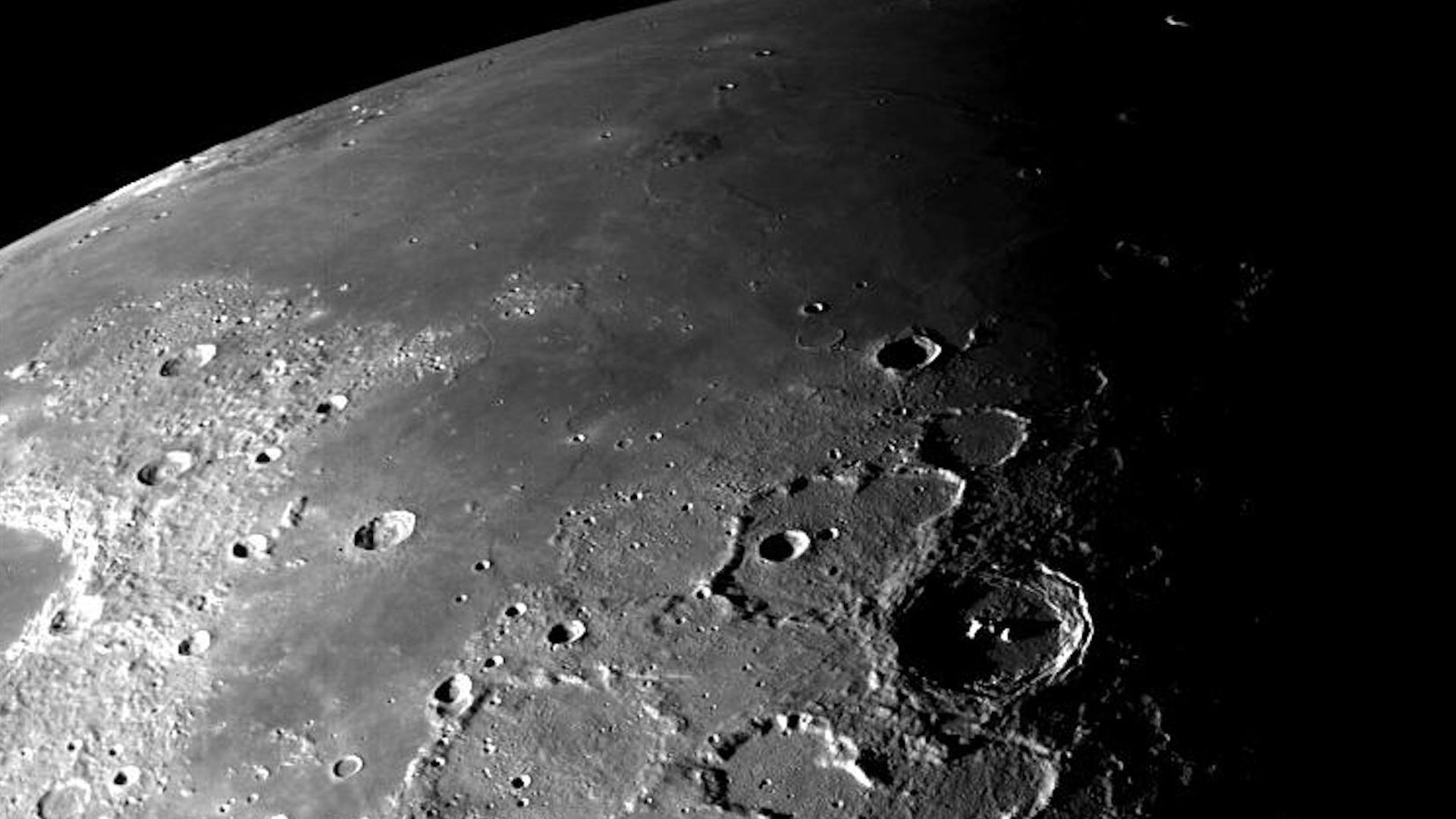
| A small spacecraft designed to test out key components of NASA's Artemis program to the Moon has run into trouble in space. Why it matters: The CAPSTONE probe is expected to act as a pathfinder for NASA's Gateway — a small space station designed to orbit the Moon and act as a jumping-off point for crewed missions to the surface. - CAPSTONE's mission centered around testing a never-before-used orbit to learn more about its stability before sending the Gateway to it.
What's happening: Advanced Space, which operates CAPSTONE, said in a statement Monday that the spacecraft is in "safe mode" after an engine burn last week and appears to be in a "stable orbit." - Mission managers are hoping to perform a "detumble" that will allow the spacecraft to orient itself in space again, pointing its solar panels to the Sun and charging its batteries.
- "These recovery operations will be further evaluated over the coming days," the statement added.
- The spacecraft is expected to make it into lunar orbit in November.
The big picture: NASA is also working to get another key component of its Artemis program off the ground this month. - The space agency is trying to fix the Space Launch System rocket being used to launch the uncrewed Orion capsule for the Artemis I mission after two launch scrubs.
- If NASA can get the rocket fixed in time, the first launch opportunity will be Sept. 27.
|
| |
| |
| |
| 3. Spiraling star formation |
 |
|
| The star cluster NGC 346. Image: NASA/ESA/Andi James (STScI) |
| |
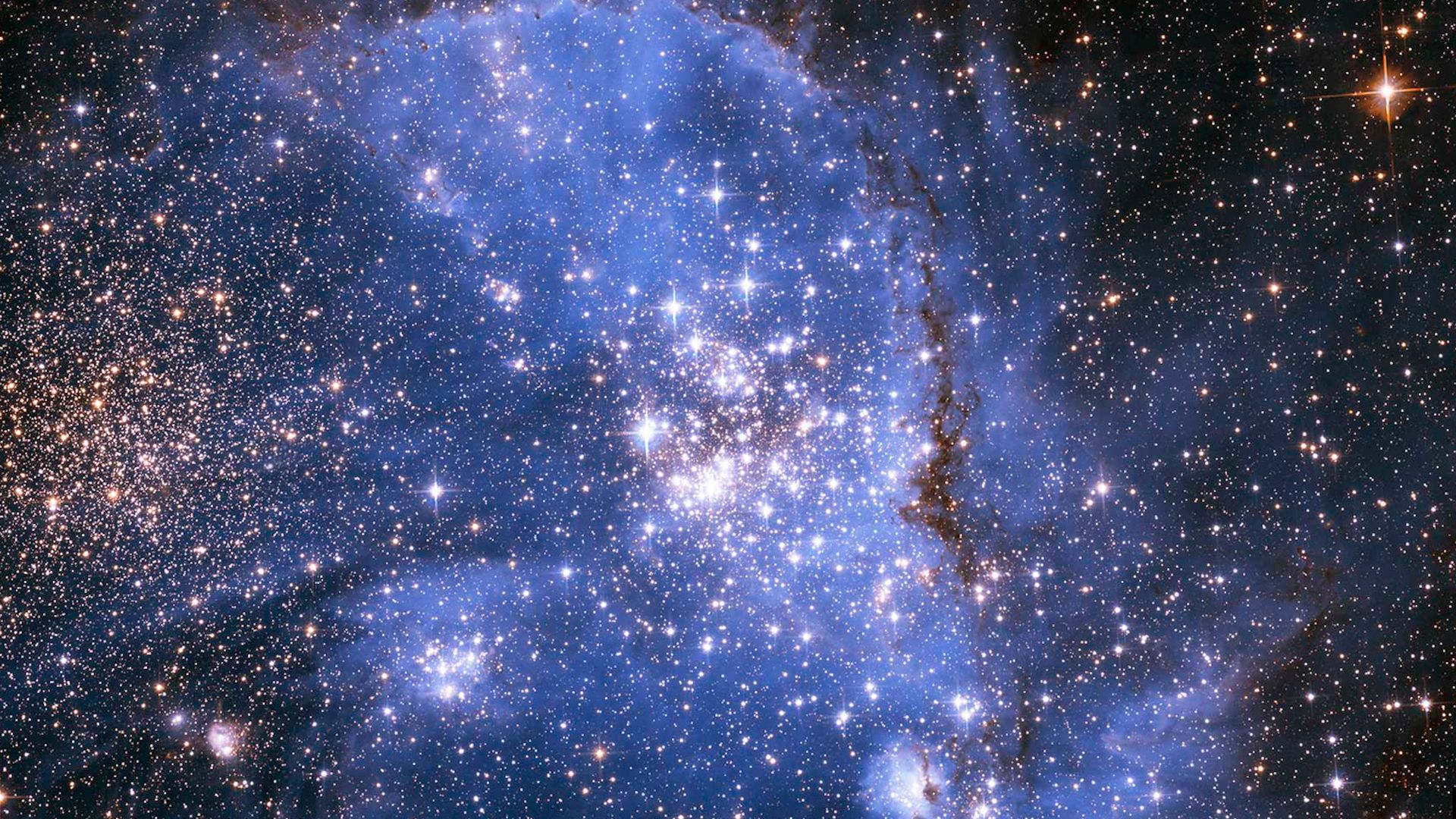
| Scientists have found that star formation in a star cluster within a nearby galaxy is fueled by young stars spiraling in toward the center of the cluster. Why it matters: By learning more about how stars form in this cluster, scientists might be able to piece together the relatively early history of stars — and determine how galaxies as a whole work. Driving the news: The Hubble Space Telescope and the Very Large Telescope both discovered stars spiraling toward the center of the star cluster NGC 346 in the Small Magellanic Cloud 200,000 light-years from the Milky Way. - NGC 346 is 50,000 times the mass of the Sun and 150 light-years in diameter. It is a curiosity for astronomers because it forms stars very quickly.
- Researchers found that NGC 346 looks the way it does because of that spiraling, feeding star formation from the outside toward the center of the cluster. The process is similar to what happens in the Milky Way.
- "It's the most efficient way that stars and gas fueling more star formation can move towards the center," Peter Zeidler, who led the team behind the Very Large Telescope study said in a statement.
The big picture: "Stars are the machines that sculpt the universe. We would not have life without stars, and yet we don't fully understand how they form," Elena Sabbi, who led the team behind the Hubble study, said in the statement. - "We have several models that make predictions, and some of these predictions are contradictory. We want to determine what is regulating the process of star formation, because these are the laws that we need to also understand what we see in the early universe."
|
| |
| |
| |
| A message from ASCEND |
| They'll be at ASCEND — will you? |
| |
 |
| |
| Join Pam Melroy from NASA, Gwynne Shotwell from SpaceX, Tejpaul Bhatia from Axiom Space and 200+ speakers at 2022 ASCEND. Happening Oct. 24-26, ASCEND unites space's leading industry thinkers, biggest companies and government leaders. Register online. |
| |
| |
| 4. Out of this world reading list |
 |
|
| A Starship flight in 2021. Photo: SpaceX |
| |
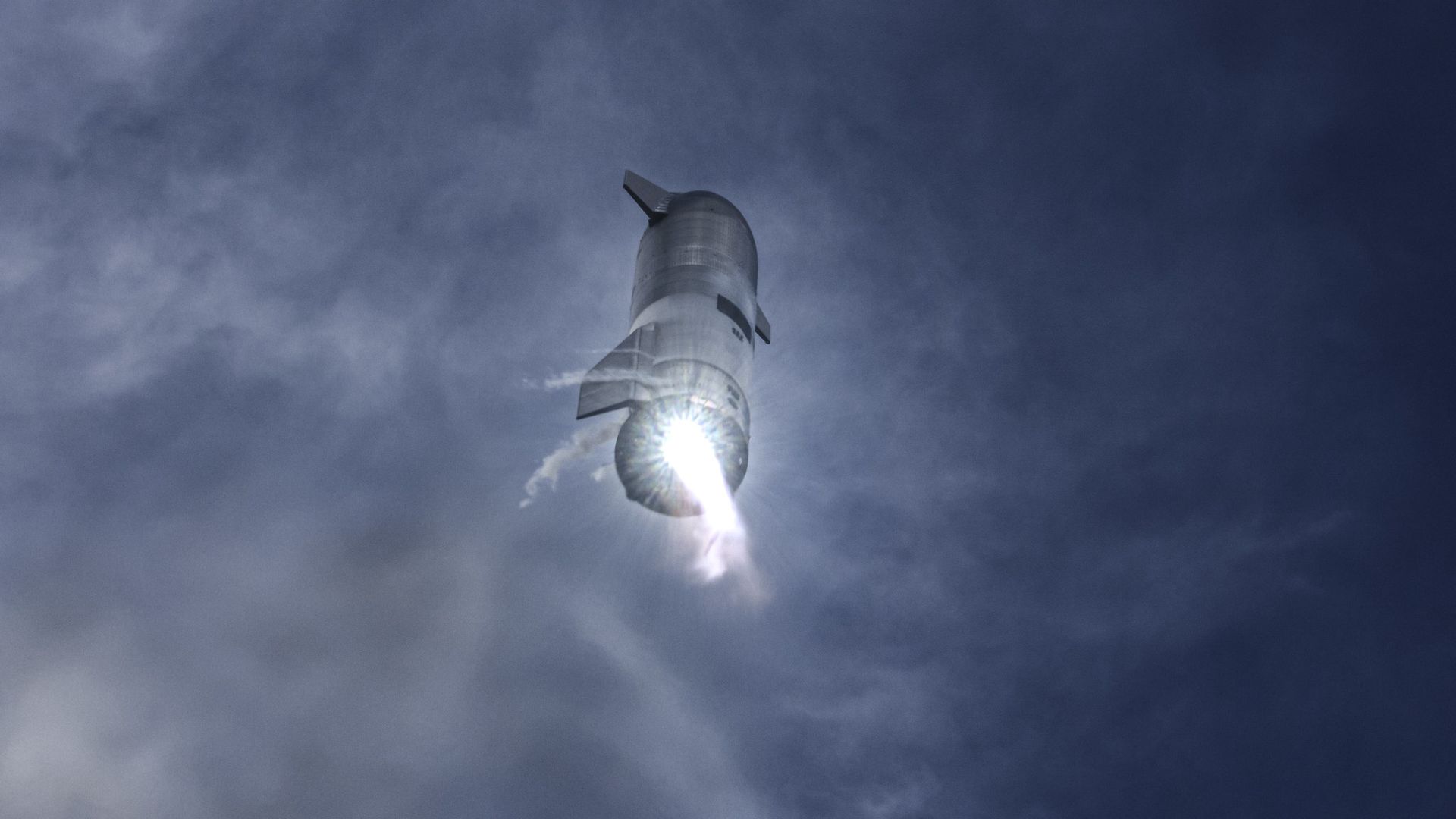
| 🚀 Rocketland: Worshippers of Elon Musk flock to the middle of nowhere in Texas (Loren Grush, The Verge documentary) 💥 Blue Origin rocket mishap triggers escape system (Denise Chow, NBC) 🌙 New moon mineral discovered in China's lunar samples (Andrew Jones, Space.com) 💶 ESA seeks major funding increase at ministerial (Jeff Foust, SpaceNews) |
| |
| |
| |
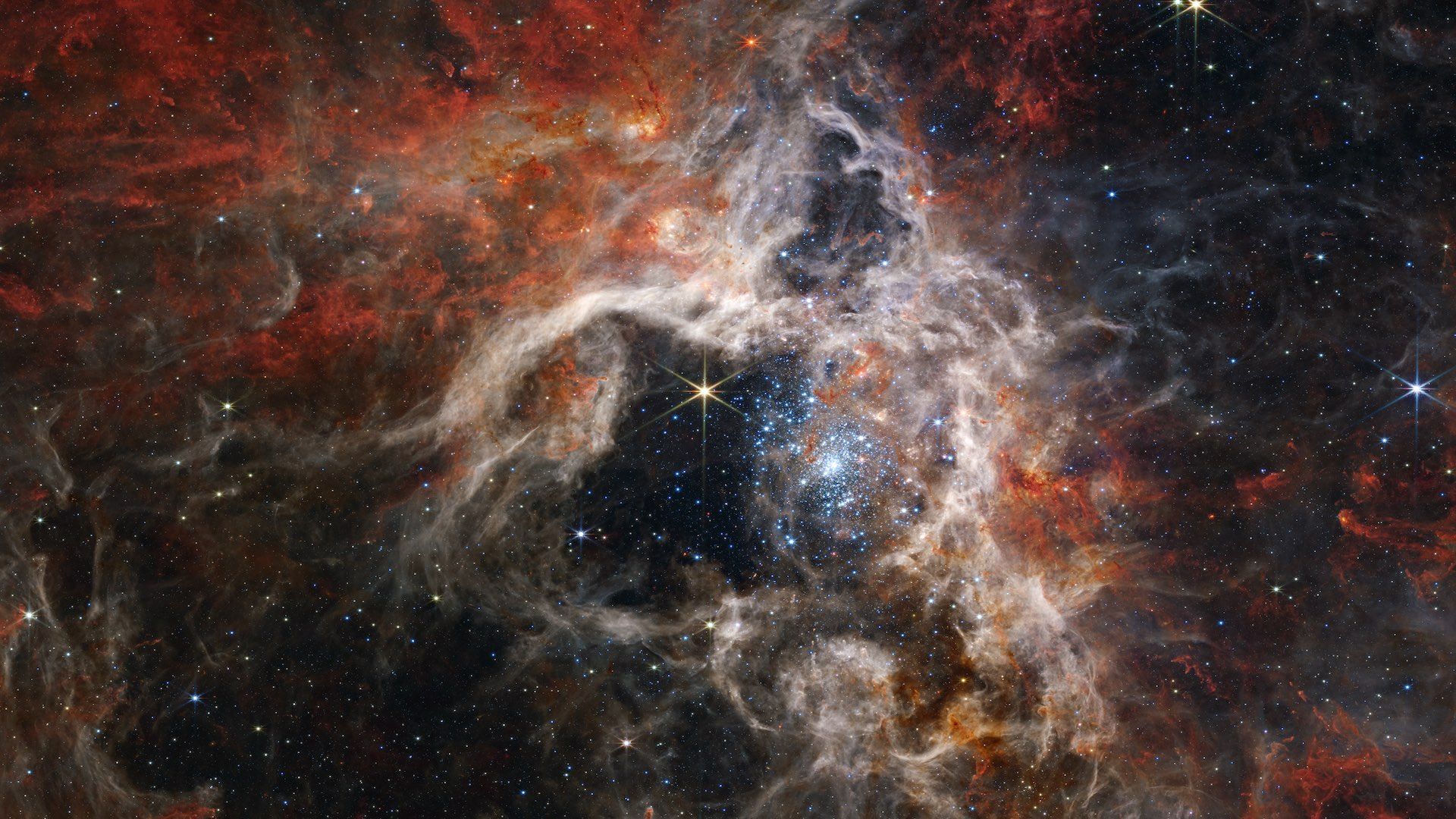
| 5. Weekly dose of awe: Walking into spiderwebs |
 |
|
| Photo: NASA/ESA/CSA/STScI/Webb ERO Production Team |
| |
| The depth and scale of this photo — taken by the James Webb Space Telescope — are difficult to put into words. - The image stretches across 340 light-years, revealing young stars never seen before in the Tarantula Nebula in the Large Magellanic Cloud.
- The cavity carved in the center of this image was created by radiation emitted from a group of young stars shining in blue, according to an image description.
- "Only the densest surrounding areas of the nebula resist erosion by these stars' powerful stellar winds, forming pillars that appear to point back toward the cluster," the description reads. "These pillars contain forming protostars, which will eventually emerge from their dusty cocoons and take their turn shaping the nebula."
|
| |
| |
| |
| A message from ASCEND |
| They'll be at ASCEND — will you? |
| |
| |
| |
| Join Pam Melroy from NASA, Gwynne Shotwell from SpaceX, Tejpaul Bhatia from Axiom Space and 200+ speakers at 2022 ASCEND. Happening Oct. 24-26, ASCEND unites space's leading industry thinkers, biggest companies and government leaders. Register online. |
| |
| Big thanks to Alison Snyder, Sam Baker and Sheryl Miller for editing this week's edition and to Natalie Peeples for the great illustration. If this newsletter was forwarded to you, subscribe. 🛰 |
 | | Are you a fan of this email format? It's called Smart Brevity®. Over 300 orgs use it — in a tool called Axios HQ — to drive productivity with clearer workplace communications. | | |


No comments