| |
| |
| |
| Presented By Amazon Web Services |
| |
| Axios Space |
| By Miriam Kramer · Nov 22, 2022 |
| Thanks for reading Axios Space. At 1,201 words, this newsletter is about a 4½-minute read. - Quick programming note: This newsletter will be taking a break next week. I'll be back in your inboxes again on Dec. 6.
Please send your tips, questions and your favorite pie recipes to miriam.kramer@axios.com, or if you received this as an email, just hit reply. |
| |
| |
| 1 big thing: The coming Moon economy |
 |
|
| Illustration: Annelise Capossela/Axios |
| |
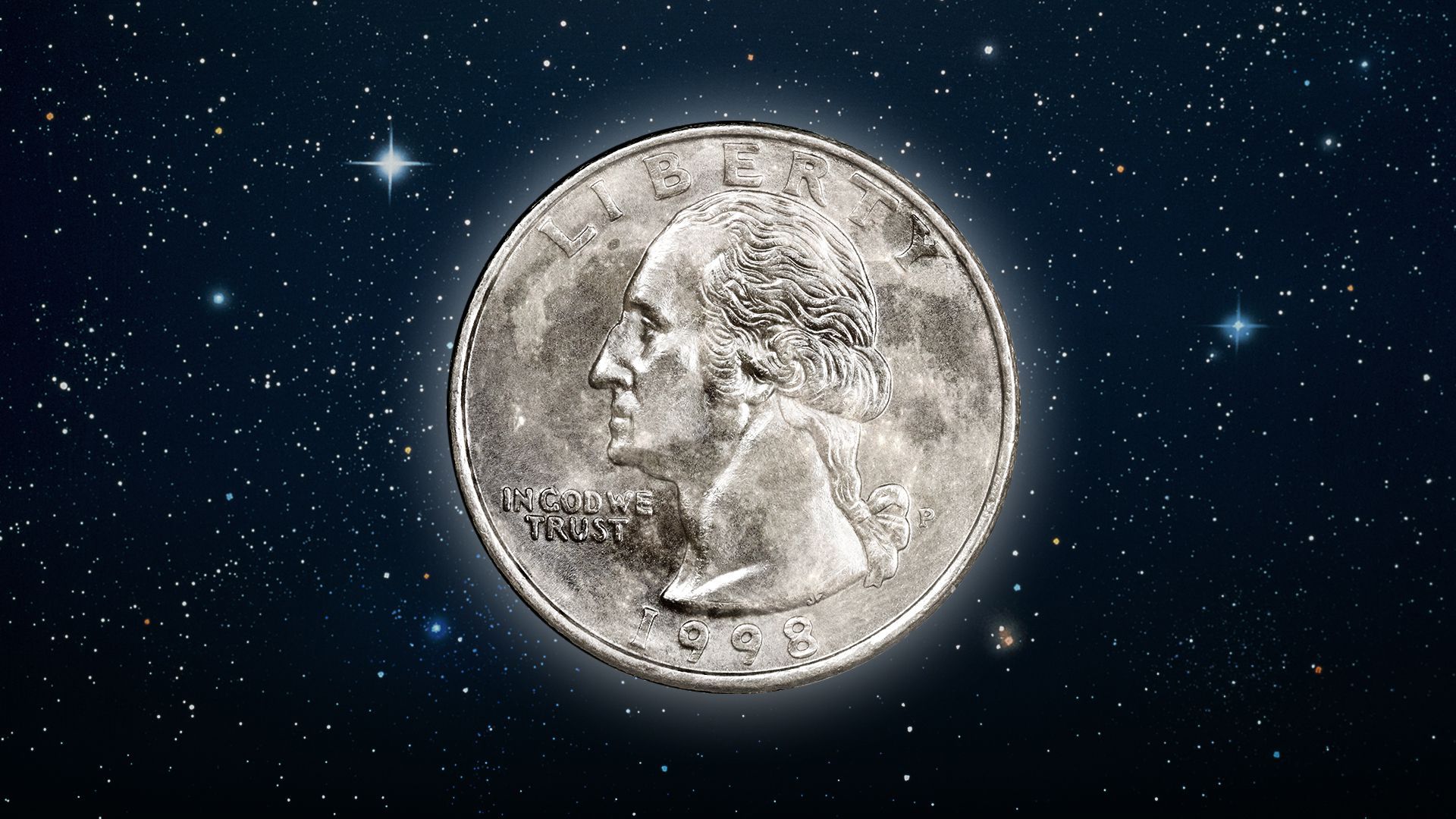
| NASA's successful Moon rocket launch last week will be a boon for private companies, experts tell Axios. Why it matters: As global economic growth slows, space and Moon exploration could become a source of ignition for new ventures and jobs, I write with my colleague Hope King. - The successful launch of Artemis I is "opening the door for expanding the lunar economy," says Takeshi Hakamada, CEO of ispace, which is planning to launch its first private mission to the Moon on Nov. 28.
Driving the news: NASA's uncrewed Artemis I mission showed companies looking to do business on and around the Moon that they would likely have a major customer there in the coming years. - NASA plans to send people to the lunar surface by 2025 and eventually create a "sustained" lunar presence.
- Private companies including ispace and Astrobotic are already planning to send missions to the lunar surface, delivering cargo not just for government customers, but also for other companies.
By the numbers: There are at least 22 companies specifically focused on the Moon that have raised funds from private sources, according to venture capital firm Space Capital. - Over the past decade, at least $781 million in private investments have gone toward the lunar industry.
- Most of that money so far has gone to companies working on transportation — think rovers and landers — but as that issue is solved, other business lines could start to emerge around resource mining and habitat building.
Be smart: Supporting private industry is baked into NASA's Artemis program and is part of the space agency's broader move to buy services from private industry in Earth orbit and eventually on the Moon. - The Space Launch System rocket was built by multiple contractors, including Boeing and Northrop Grumman. The space agency also has contracts with private companies to build spacesuits for the lunar surface, and SpaceX is building a lander for the Moon.
- NASA is also working with companies that are developing the technology needed to mine the Moon for resources.
The SLS program has been over-budget, delayed and technically challenging, the Planetary Society's Casey Dreier says, but it is also ultimately responsible for carving out a path for other missions to come behind it from NASA and private industry. - "And then you have a road from the Earth to the Moon," he said.
Yes, but: The lunar economy is still in the very early stages. - "I don't expect a 100% success rate of all of these different companies that are launching to the Moon for the first time," Space Capital's Chad Anderson said.
What to watch: For now, the main customers in the lunar industry are governments, but that could change as the Artemis program matures and more companies and investors make big bets on the Moon. - If and when breakthrough products and services that are unique to the Moon emerge, there will likely be even bigger growth from commercial and consumer spending, says Carissa Christensen, founder and CEO of BryceTech.
|
    |
| |
| |
| 2. No new name for JWST |
 |
|
| Illustration: Annelise Capossela/Axios |
| |
| NASA will not rename the James Webb Space Telescope, despite calls and criticism from within the scientific community. The big picture: James Webb — a former NASA administrator — has been accused of overseeing the ousting of LGBTQ+ individuals from federal government jobs during the 1950s and 1960s. - More than 1,700 people have signed a petition asking NASA to rename the telescope.
What's happening: NASA publicly released a much-anticipated report last week that found "to date, no available evidence directly links Webb to any actions or follow-up related to the firing of individuals for their sexual orientation." - Through the course of the investigation, NASA chief historian Brian Odom examined more than 50,000 pages of documents.
- Odom looked into two meetings, one with President Truman and another with Sen. Clyde Hoey, and others where "James Webb appears in the historical context around the Lavender Scare," NASA said, referring to "a time when the outing and firing of LGBTQI+ individuals in the executive branch was a harmful and discriminatory federal policy."
- Odom also looked into whether or not Webb knew about the firing of NASA employee Clifford Norton due to his sexual orientation in 1963, when Webb was the administrator. The report found there is no evidence Webb knew of Norton's firing.
What they're saying: Many astronomers think that, even if Webb wasn't directly involved with the firings of LGBTQ+ individuals, his name still shouldn't be on the telescope. - "It is hypocritical of NASA to insist on giving Webb credit for the exciting things that happened under his leadership — activities that were actually conducted by other people — but refuse to accept his culpability for the problems," astronomers Chanda Prescod-Weinstein, Sarah Tuttle, Lucianne Walkowicz and Brian Nord, who started the petition last year, said in a statement.
Go deeper: NASA really, really won't rename Webb telescope by Alexandra Witze (Nature) |
| |
| |
| |
| 3. Artemis at the Moon |
 |
|
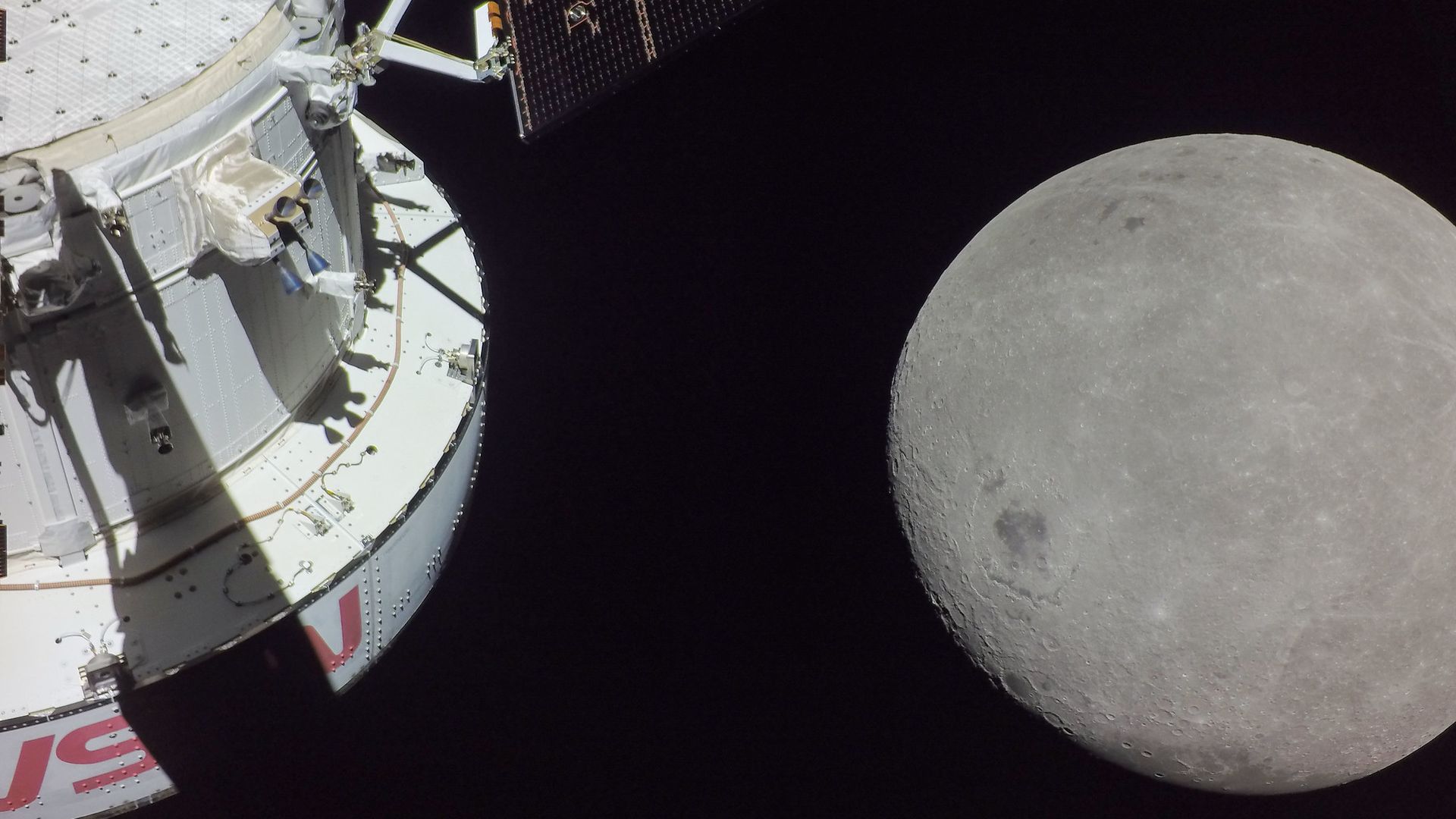
| Orion takes a selfie with the far side of the Moon on Nov. 21. Photo: NASA |
| |
| NASA's Orion spacecraft made a close flyby with the Moon on Monday after its history-making launch last week. Why it matters: The uncrewed capsule — populated with three test dummies — is a pathfinder for NASA as the space agency works to one day send people back to the surface of the Moon for the first time since the final Apollo landing in 1972. Driving the news: Orion passed just 81 miles above the Moon after an engine burn required for the capsule to get into orbit around the natural satellite this week. - The spacecraft performed the burn when it was passing over the far side of the Moon, leaving mission managers waiting for confirmation that it was successful until it passed back into sight of the Earth.
- "An Earthrise of our pale blue dot and its 8 billion human inhabitants now coming into view," Mission Control commentator Sandra Jones said as NASA received footage from Orion.
- Another engine burn planned for Friday should insert Orion into lunar orbit.
What to watch: Once in orbit, Orion is expected to circle the Moon for about a week before heading back to Earth. - NASA will watch closely to see how Orion's heat shield performs as it comes back through the atmosphere on its way to a splashdown in the Pacific Ocean on Dec. 11.
|
| |
| |
| |
| A message from Amazon Web Services |
| Boosting space research with machine learning |
| |
 |
| |
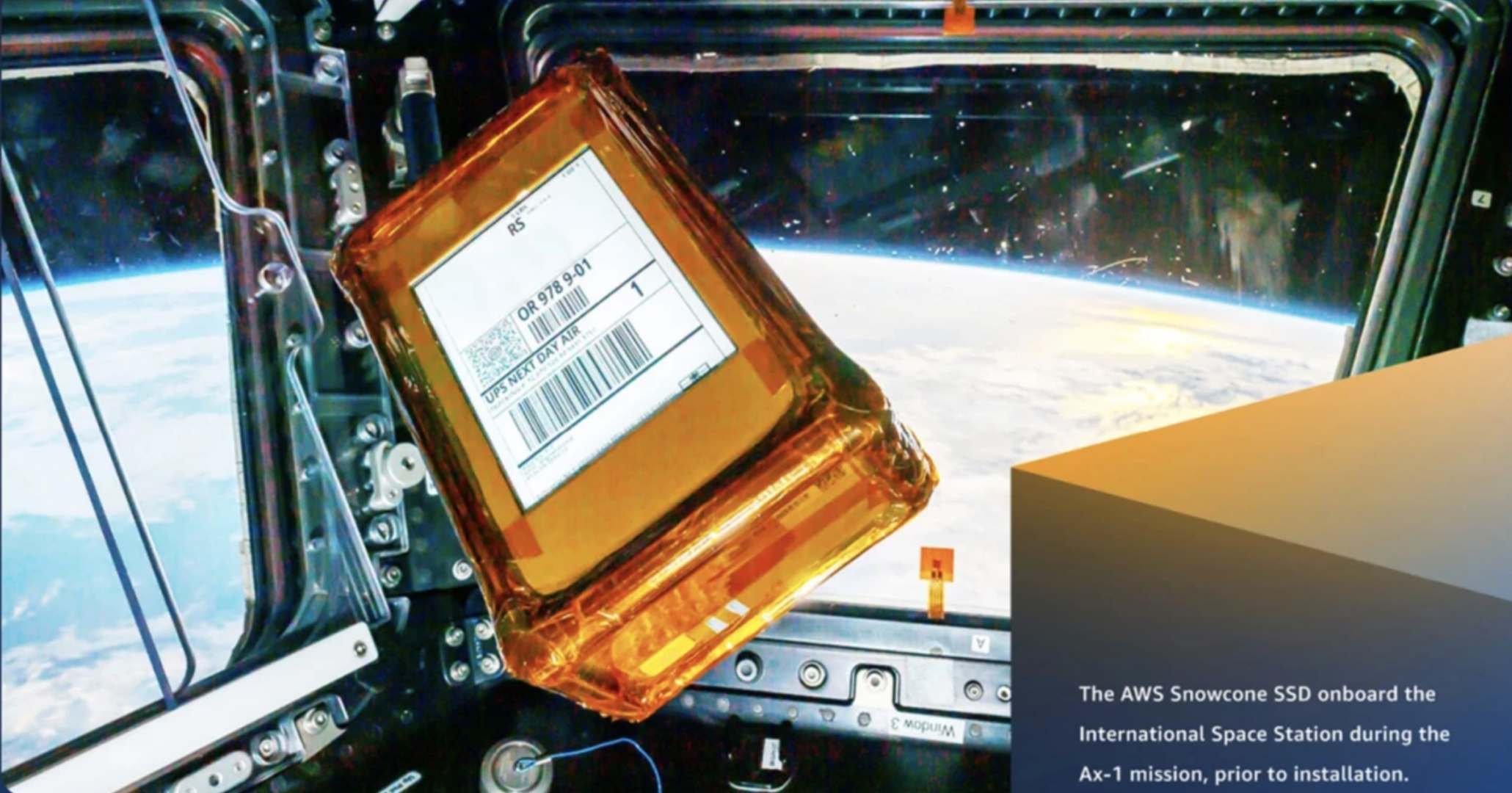
| Amazon Web Services recently sent a Snowcone to the International Space Station. Astronauts used the device to more quickly analyze their scientific research onboard. Why it's important: The Snowcone experiment proved it's possible to extend cloud computing to space. Take a behind-the-scenes look at the journey. |
| |
| |
| 4. Out of this world reading list |
 |
|
| Illustration: Shoshana Gordon/Axios |
| |
| 🌙 Welcome to the new Moon age (Axios) ☄️ Astronomers spot small space rock just hours before it drops meteorites (Tereza Pultarova, Space.com) 🚀 Space Force opens door to Blue Origin with new cooperative agreement (Sandra Erwin, SpaceNews) ☀️ Dimming the Sun to cool the planet is a desperate idea, yet we're inching toward it (Bill McKibben, The New Yorker) |
| |
| |
| |
| 5. Weekly dose of awe: Baby star in bloom |
 |
|
| Photo: NASA, ESA, CSA and STScI. Image processing: J. DePasquale, A. Pagan, and A. Koekemoer |
| |
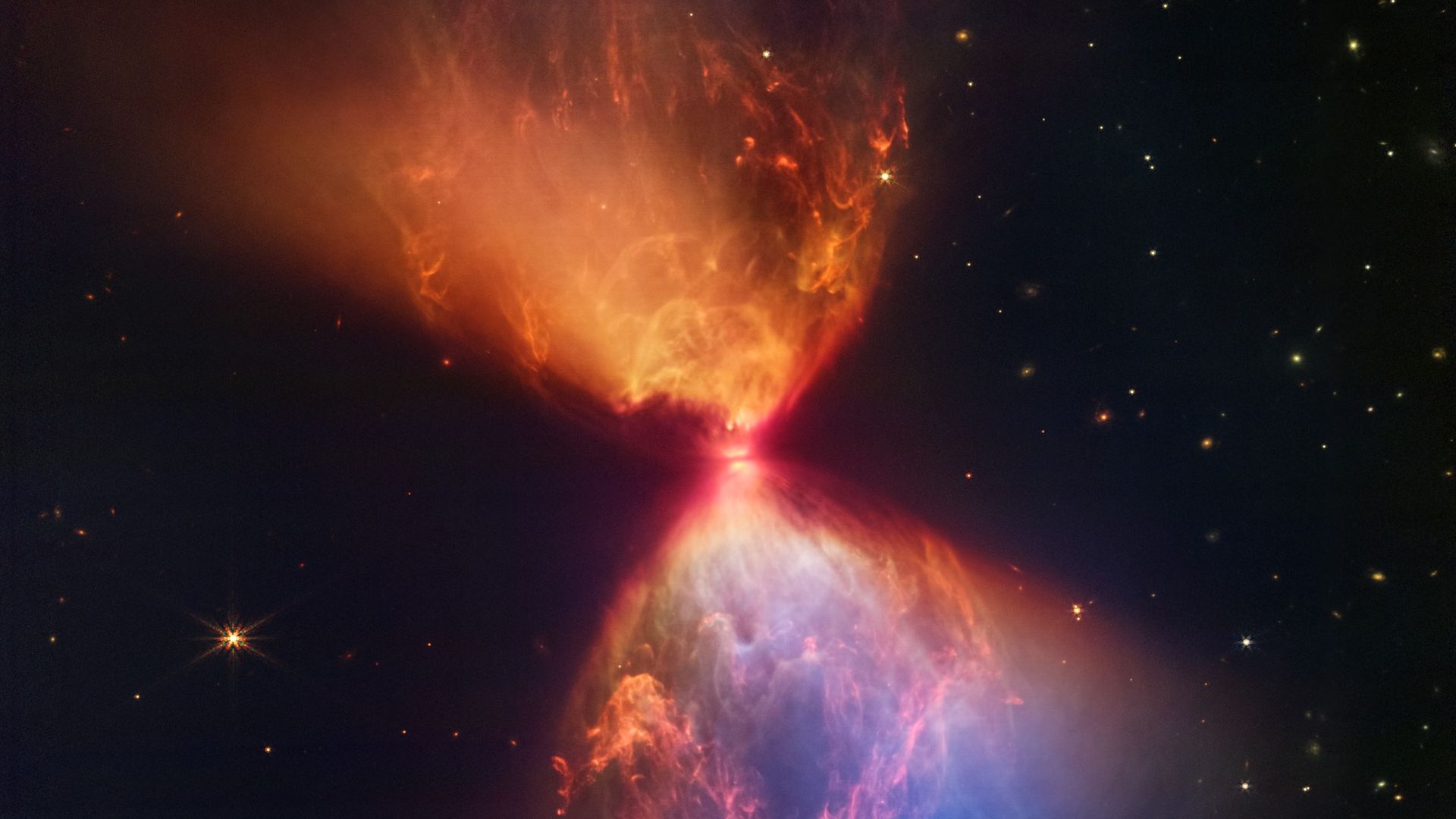
| A newly forming star typically hidden behind clouds of dust has been revealed in a new photo from the James Webb Space Telescope. - Studying protostars like this one provides a window into how our Sun and solar system began billions of years ago.
- The protostar L1527 — in the neck of the hourglass — is framed by blue, red and orange clouds of material. That material has cavities carved through it by matter expelled by L1527.
- The dark line at the neck of the hourglass is the protoplanetary disk of gas and dust around the protostar and could be clumping together in the earliest stages of planet formation, according to NASA.
Read more |
| |
| |
| |
| A message from Amazon Web Services |
| Processing data and imagery on the space station |
| |
| |
| |
| Bandwidth is limited in orbit due to limited infrastructure, which means astronauts have to send the data and imagery they gather back to Earth for processing. A solution: Amazon Web Services has found a more efficient way to process data and imagery, even where there's limited connectivity (like in space). Here's how it works. |
| |
| Big thanks to Alison Snyder for editing and Sheryl Miller for copy editing, to Annelise Capossela and Shoshana Gordon for the illustrations, and to Hope for writing with me. If this newsletter was forwarded to you, subscribe. 🦃 |
 | | Are you a fan of this email format? Your essential communications — to staff, clients and other stakeholders — can have the same style. Axios HQ, a powerful platform, will help you do it. | | |


No comments