| | | | | | | Presented By The Boeing Company | | | | Axios Space | | By Miriam Kramer · Dec 13, 2022 | | Thanks for reading Axios Space. At 1,325 words, this newsletter is about a 5-minute read. - Please send your tips, questions and lunar craters to miriam.kramer@axios.com, or if you received this as an email, just hit reply.
| | | | | | 1 big thing: The Moon is within reach... again |  | | | Illustration: Shoshana Gordon/Axios | | | | NASA's successful Artemis I mission paves the way for what could be the most exciting space moment in decades: landing people back on the Moon for the first time in more than 50 years. Why it matters: The mission moves a crewed Moon landing from the realm of the theoretical to a likely event for the first time since the Apollo era. - "Most people alive today have never seen astronauts go farther than a few hundred miles from Earth, and Apollo is rapidly fading into true history," the Planetary Society's Casey Dreier tells Axios.
- "This decade is going to be the most exciting decade in space since the 1960s."
Catch up quick: NASA's Orion spacecraft arrived back on Earth Sunday, splashing down in the Pacific Ocean after a 25.5-day long, uncrewed trip in space that culminated in orbiting the Moon and returning back to Earth under its parachutes. - The capsule performed very well during its mission, NASA said, which brought it as close as about 80 miles from the Moon and as far as about 270,000 miles from Earth.
- Artemis I was designed to stress test Orion and work out all the kinks before putting people on board for the space system's next flight, planned for 2024.
- The Space Launch System rocket also worked well during its inaugural flight with Orion in November, NASA said then, despite multiple delays and even weathering a hurricane on the launch pad.
- "With Orion safely returned to Earth, we can begin to see our next mission on the horizon, which will fly crew to the Moon for the first time as a part of the next era of exploration," NASA's Jim Free said in a statement after splashdown.
The big picture: NASA stresses that Artemis isn't just a rinse and repeat of Apollo. - The agency is focused on making this Moon program long-lived, with international partnerships and a specific focus on creating a "sustained" human presence on the lunar surface.
- Through Artemis, NASA is also working to make sure the astronauts going to the Moon are a reflection of the U.S. as a whole and can provide a source of inspiration for everyone.
- The agency has said the first crew to land on the lunar surface will include the first woman and person of color to launch to the Moon.
Between the lines: Geopolitical ties are also already being formed at the Moon, with more than 20 countries signing on to the Artemis Accords to govern behavior on the lunar surface. - Multiple space agencies have also agreed to build various parts of NASA's Gateway space station to be assembled in lunar orbit.
- Space companies are also banking on the Artemis program. With NASA at the Moon, these lunar-minded companies could have a built-in user for their goods and services, ranging from mining equipment to robotic landers and rovers.
Yes, but: There are still key pieces of technology that could mean more delays for the first Artemis lunar landing — now expected in 2025. - SpaceX hasn't yet flown its lunar lander based on its Starship space system, and NASA is still awaiting spacesuits also being produced under contract with private companies.
What to watch: NASA's second Artemis mission flight will see a crew of astronauts fly around the Moon without landing before coming back to Earth. - The four-person crew for that mission is expected to be named in early 2023.
- It's not yet clear when NASA will name the crew members who will fly to the lunar surface for Artemis III.
- "We'll start putting faces and names to this now — beyond hardware," Dreier said. "Those will be famous names."
|     | | | | | | 2. The earliest galaxies | 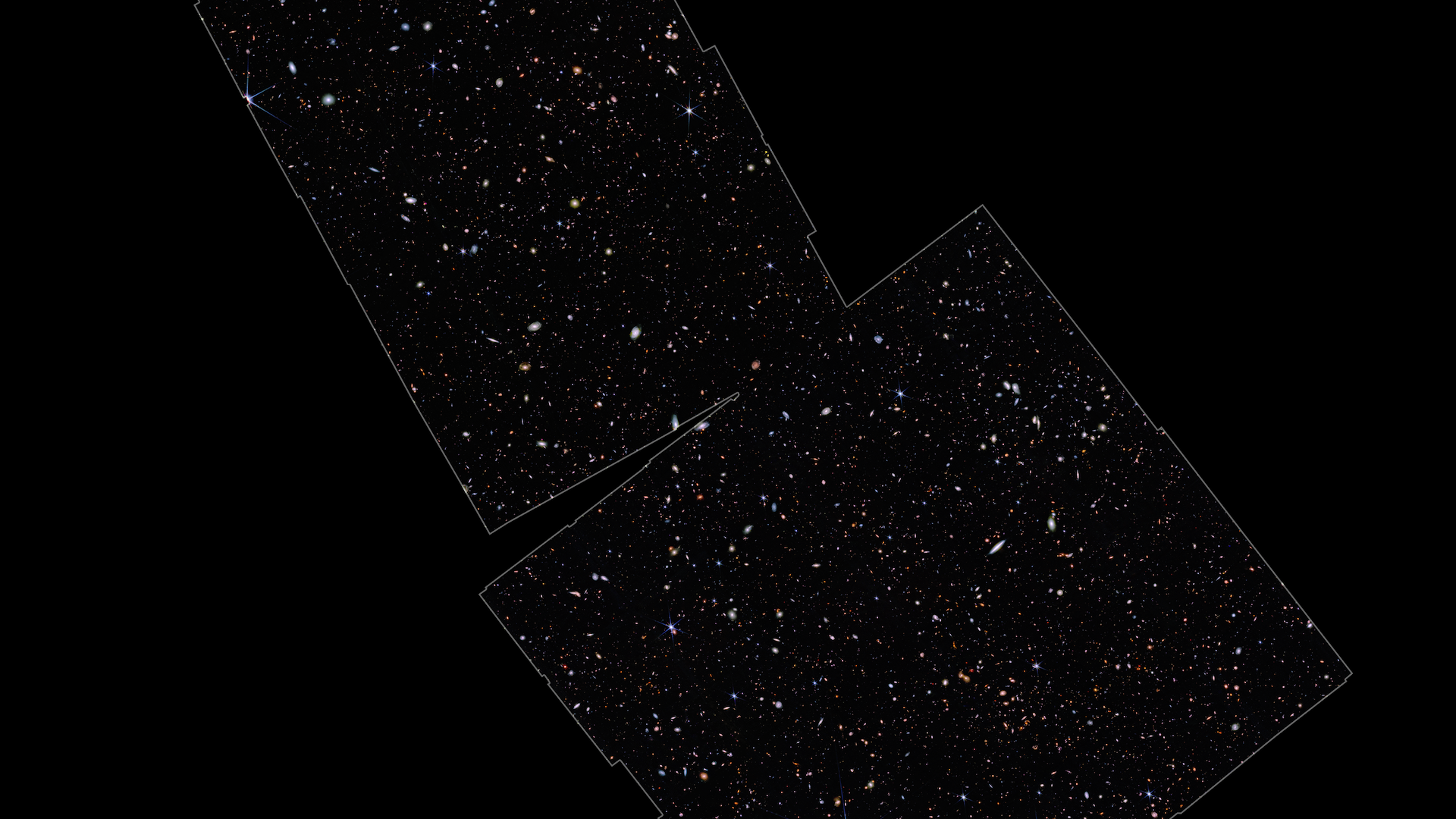 | | | A survey of galaxies made by the JWST. Photo: NASA, ESA, CSA, M. Zamani (ESA/Webb) | | | | The James Webb Space Telescope has discovered the earliest galaxies yet seen, scientists confirmed last week. Why it matters: One of the JWST's main tasks is to gather data about the earliest galaxies that formed in the universe, shedding light on how the cosmos came to be. - These kinds of discoveries are exactly what scientists were hoping for when the powerful telescope launched.
The latest: Scientists have confirmed the discoveries of a clutch of galaxies that formed less than 400 million years after the Big Bang occurred about 13.8 billion years ago. - The JWST spotted these galaxies earlier this year, but recent observations have confirmed their existence and their ages.
- "For the first time, we have discovered galaxies only 350 million years after the Big Bang, and we can be absolutely confident of their fantastic distances," Brant Robertson, a co-author of the study detailing these findings, said in a press release.
- The research team looked at the light of 25o early galaxies. From that light, astronomers were able to determine the chemical makeup of those galaxies and how old they are.
The big picture: Scientists still aren't sure exactly how the earliest galaxies in the universe formed. - One theory holds that these galaxies formed out of huge clouds of gas and dust that clumped and collapsed, forming dense clouds that started to spin and create early galaxies.
- Another idea suggests smaller clumps of gas and dust merged to create larger galaxies.
- Over the course of its life in space, the JWST will help scientists figure out more about how these early galaxies evolved.
Go deeper: Astronomers search for light that holds answer to how earliest galaxies formed | | | | | | | | 3. Look up! Here come the Geminids | 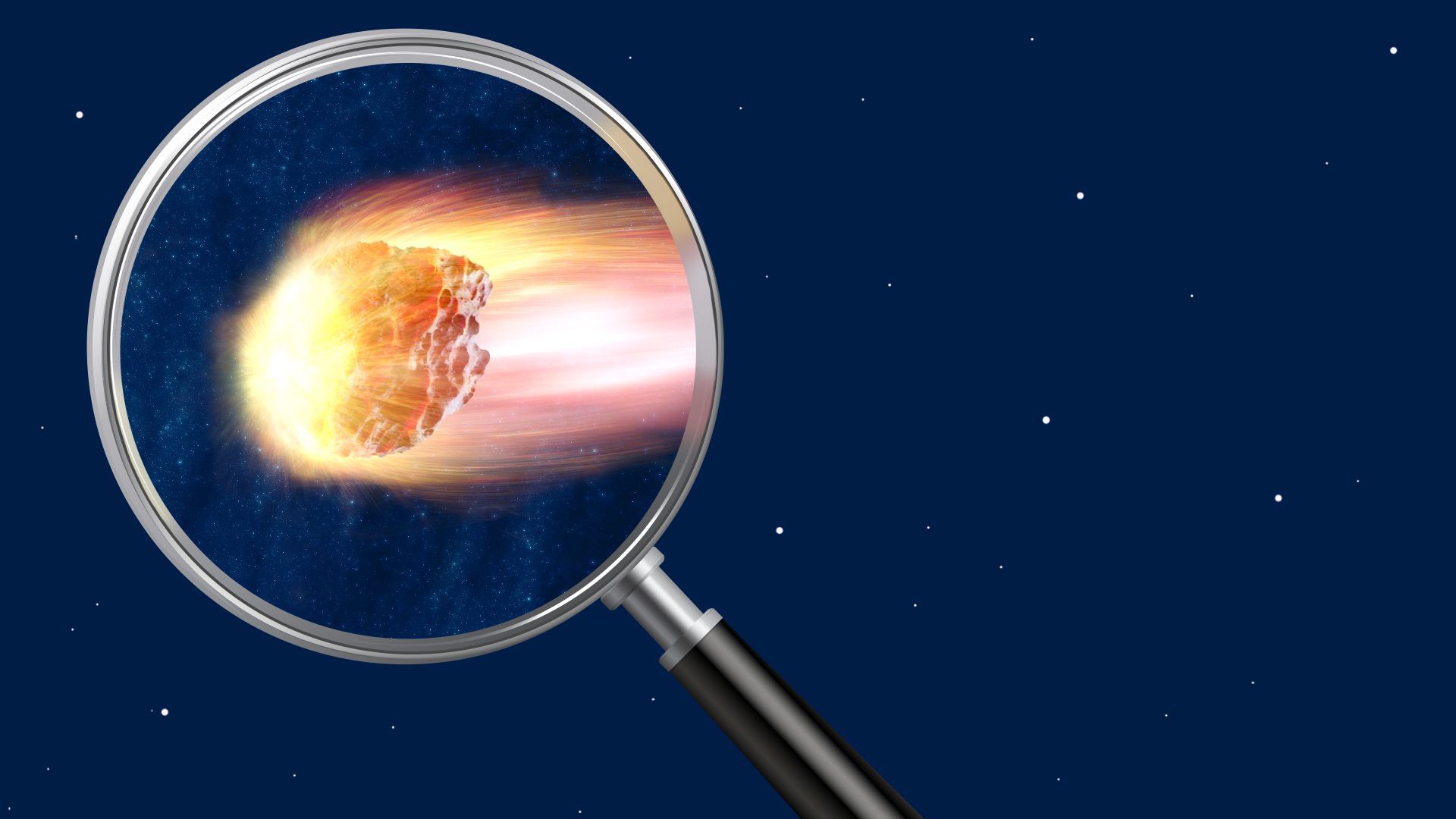 | | | Illustration: Annelise Capossela/Axios | | | | The Geminid meteor shower peaks tonight, and if you're somewhere with a dark sky and good weather, you should be able to enjoy it. Why it matters: The Geminids are typically one of the best meteor showers of the year, and while a bright Moon might hamper views a bit, the fireball-producing shower should still put on a good show. What's happening: The meteor shower is set to begin in earnest tonight starting at around 10pm ET, peaking at about 7am ET on Wednesday, but you can still see some meteors before and after that time, according to NASA. - The best rates will likely be at around 2am local time, the agency added.
- The best way to see the cosmic show is to get away from city lights, under a cloudless sky, and allow your eyes to adjust to the dark (that means no bright phone screens) for at least 30 minutes.
- Observers in dark areas of the Northern Hemisphere can probably expect to see about 30–40 meteors per hour at peak, NASA said. The relatively bright Moon will likely wash out at least some of the sky.
How it works: The Geminid meteor shower happens each year when the Earth passes through the trail of debris left behind by the asteroid 3200 Phaethon, which completes an orbit of the Sun every 1.4 Earth years. - Typically comets create meteor showers, but 3200 Phaethon is a bit of a weirdo.
- "Phaethon is the first asteroid to be associated with a meteor shower, but astronomers debate its exact classification and origins," NASA said.
- Some scientists think it's a "dead comet" whose icy outer shell melted away in the past, while others think it's a "rock comet" because it passes close to the Sun, possibly creating cracking that allows it to spew dust, NASA added.
Be smart: Meteoroids are rocks and dust grains in space. Meteors are the streaks of light created when meteoroids enter Earth's atmosphere. Meteorites are any bits of meteoroids that make it down to the surface of the planet. | | | | | | | | A message from The Boeing Company | | Boeing-built X-37B shatters another endurance record | | | 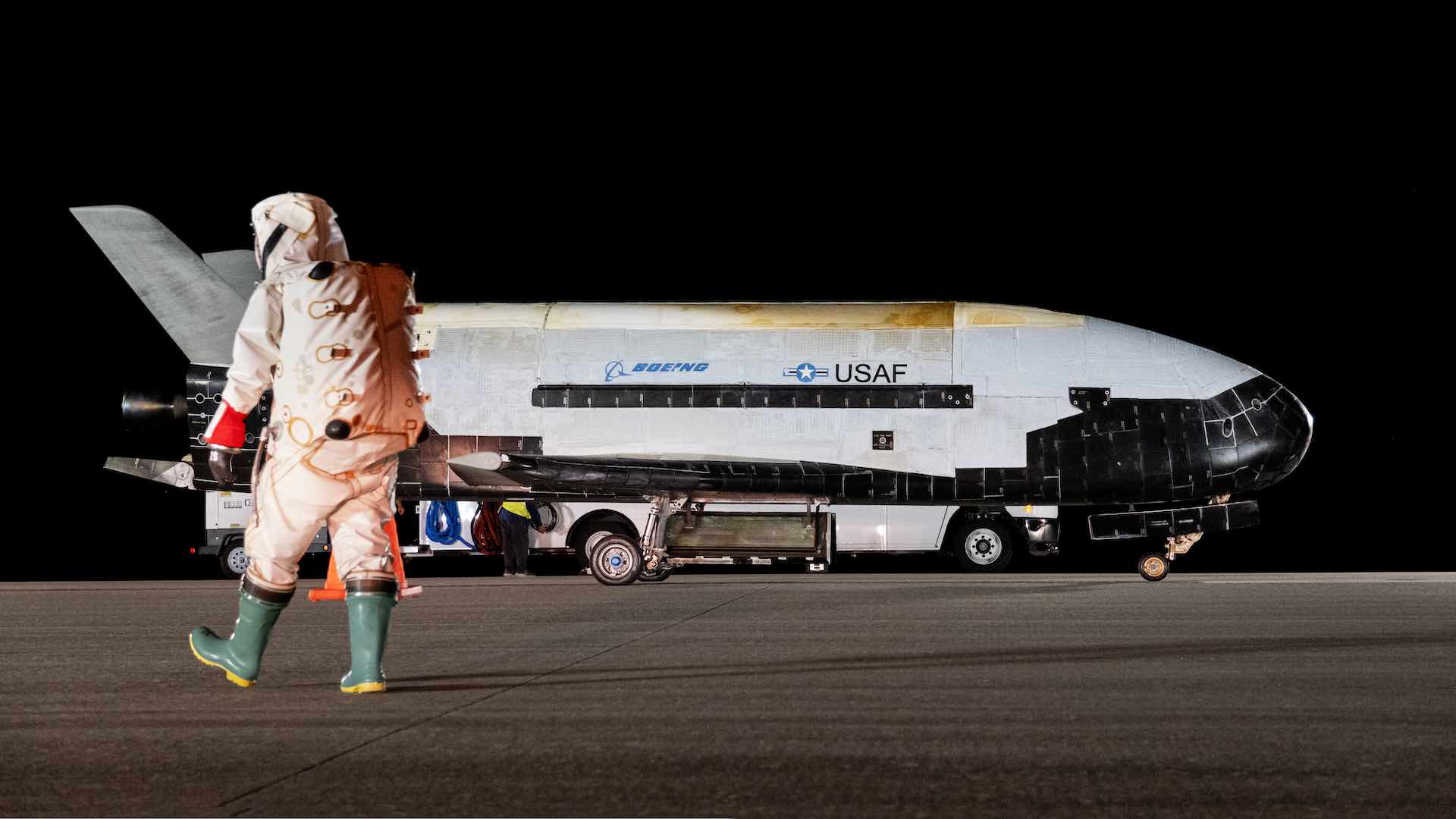 | | | | The X-37B autonomous spaceplane recently concluded its sixth mission after spending 908 days on orbit, a new record. It carried experiments for the Naval Research Laboratory, U.S. Air Force Academy and NASA. For the first time, the orbital test vehicle hosted a service module. Learn more here. | | | | | | 4. Out of this world reading list |  | | | Photo illustration: Megan Robinson/Axios. Photo: Britta Pedersen-Pool/Getty Images | | | | 🐦 Elon's Twitter dilemma (Jeff Foust and Jason Rainbow, SpaceNews) 🌌 University of Texas astronomers seek help identifying galaxies (Asher Price, Axios Austin) 🌖 Japanese company's lunar lander launches to the Moon (Kenneth Chang, NY Times) ✨ How star collisions forge the universe's heaviest elements (Sanjana Curtis, Scientific American) | | | | | | | | 5. Weekly dose of awe: Hello, Moon | 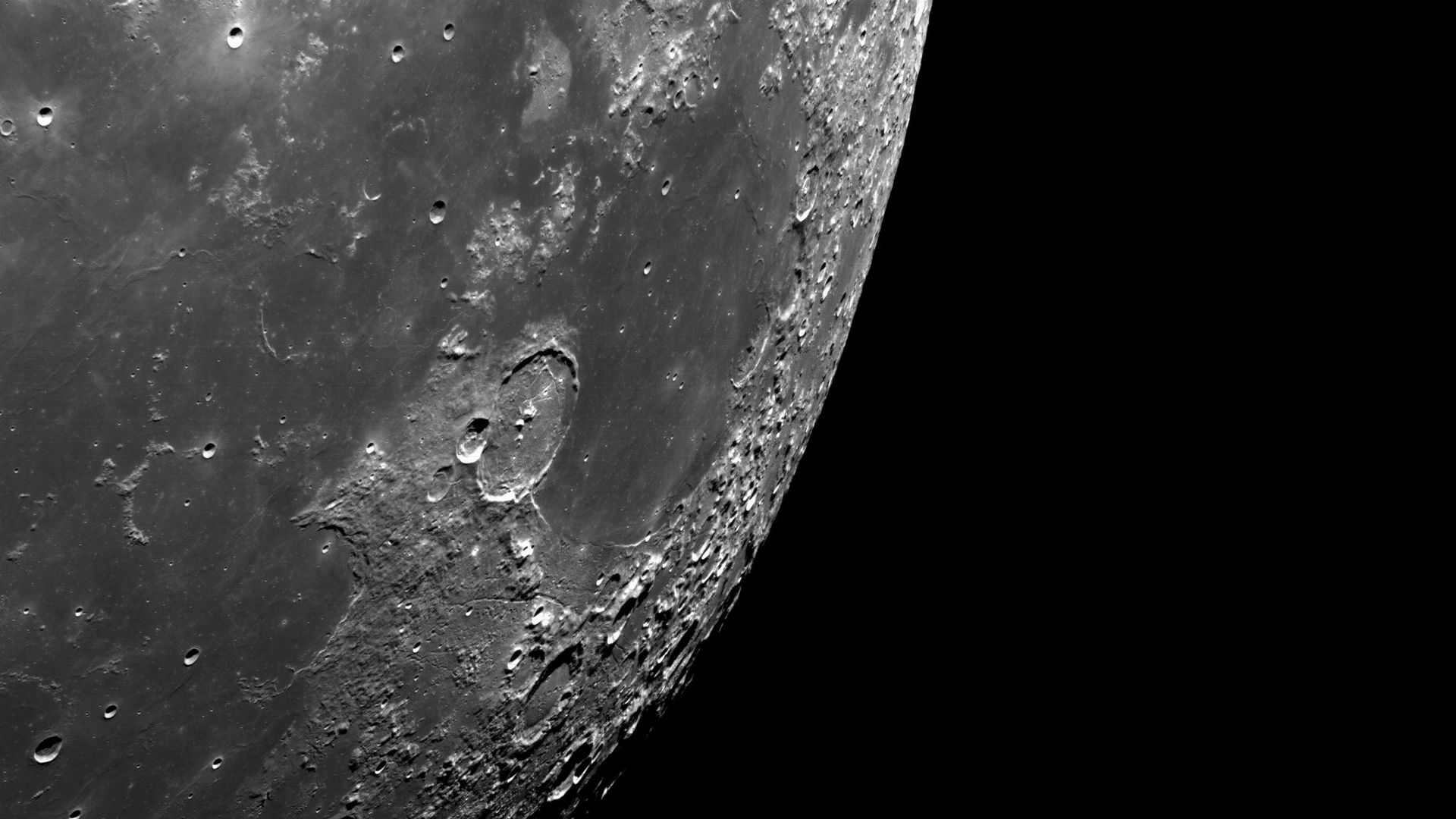 | | | Photo: NASA | | | | The Moon looks so close you could practically reach out and touch it in this photo from Orion taken on Dec. 5. - This image was taken on day 20 of the spacecraft's flight through space.
- That day, the capsule made its final close approach with the Moon before burning its engines to set a course back to Earth.
| | | | | | | | A message from The Boeing Company | | Boeing-built X-37B shatters another endurance record | | | | | | | | The X-37B autonomous spaceplane recently concluded its sixth mission after spending 908 days on orbit, a new record. It carried experiments for the Naval Research Laboratory, U.S. Air Force Academy and NASA. For the first time, the orbital test vehicle hosted a service module. Learn more here. | | | | 🌙 Big thanks to Alison Snyder for editing, Sheryl Miller for copy editing and the Axios visuals team for the illustrations. If this newsletter was forwarded to you, subscribe. |  | | Are you a fan of this email format? Your essential communications — to staff, clients and other stakeholders — can have the same style. Axios HQ, a powerful platform, will help you do it. | | | | | | Axios thanks our partners for supporting our newsletters. If you're interested in advertising, learn more here.
Sponsorship has no influence on editorial content. Axios, 3100 Clarendon Blvd, Arlington VA 22201 | | | You received this email because you signed up for newsletters from Axios.
Change your preferences or unsubscribe here. | | | Was this email forwarded to you?
Sign up now to get Axios in your inbox. | | | | Follow Axios on social media:    | | | | | |


No comments