| |
| |
| |
| Presented By Amazon Web Services |
| |
| Axios Space |
| By Miriam Kramer · Dec 06, 2022 |
| Thanks for reading Axios Space. At 1,197 words, this newsletter is about a 4½-minute read. - Please send your tips, questions and your favorite weird worlds to miriam.kramer@axios.com, or if you received this as an email, just hit reply.
|
| |
| |
| 1 big thing: The strangest objects in the solar system |
 |
|
| Illustration: Natalie Peeples/Axios |
| |
| A clutch of upcoming space missions will give scientists unprecedented views of some of the oddest objects in the solar system. Why it matters: The solar system is still a largely mysterious place. Scientists aren't sure exactly how planets came together billions of years ago or how life developed on Earth — and whether it took hold on other worlds. - The strange properties of odd objects could reveal something about our universe that isn't available through more well-studied objects in the solar system.
- "It doesn't necessitate that we go to really weird, exotic places, but it could be that some of these exotic, weird places may be the linchpin in understanding a particular question," says Paul Byrne, a planetary scientist at Washington University in St. Louis.
What's happening: Next year, NASA is sending a robotic mission to Psyche, a largely metal asteroid that is thought to be the leftover core of a long-dead planet that formed early in the solar system's history. - The agency's Dragonfly spacecraft, launching in 2026, will explore Titan — one of Saturn's moons with lakes of liquid methane and dunes of hydrocarbons — to search for signs of life and possibly learn more about where it comes from in the solar system.
- Lucy, a NASA mission on its way to a group of asteroids near Jupiter's orbit, will endeavor to learn more about those space rocks, which are thought to be extremely old and leftover from the dawn of the solar system.
Context: Learning more about the outliers of the solar system has already upended scientists' understanding of how planets in our solar system function and evolve. - When NASA's New Horizons flew by Pluto, it found a world rich in geology, something researchers didn't think was possible so far from the Sun in an exceedingly cold part of space.
- Pluto's mountains and plains forced researchers to re-examine long-held ideas about what worlds past Neptune may look like.
- "We're learning how planets work ... just from visiting one outlying planet and being confused by what we find there," NASA astronomer Henry Throop says.
The intrigue: Understanding outliers not only provides clues about the solar system, but it can also help scientists learn more about worlds and objects far from Earth. - "Our solar system is one example of one planetary system. And it's also a snapshot in time of one system," NASA scientist Megan Ansdell says. "So there's a lot to learn in our solar system, but it's also just one example."
- It's possible the odd objects in our solar system are actually common in others, so learning more about them gives scientists access to what other star systems could look like.
The big picture: NASA and other agencies have limited funds to devote to various space missions so they need to pick destinations based on the scientific return they can get. - And strange objects — like Pluto, Titan, Psyche and others — could provide the highest bang for scientific buck.
- "The whole point of looking at something weird is because that's where we learn stuff," Throop says.
|
    |
| |
| |
| 2. Orion heading back to Earth |
 |
|
| Orion and the Moon. Photo: NASA |
| |
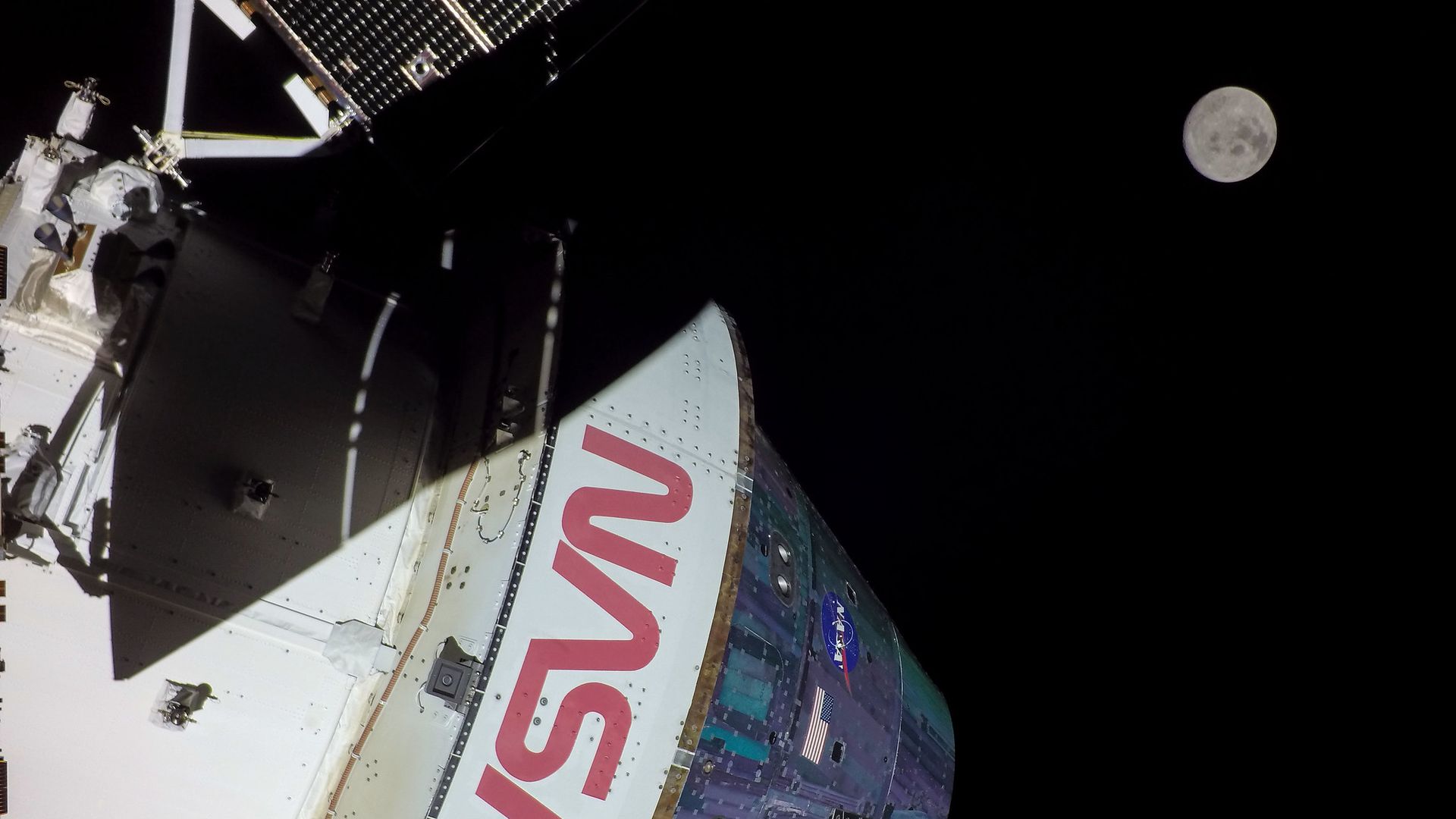
| NASA's Orion spacecraft is on its way back from the Moon and set for a splashdown in the Pacific Ocean on Dec. 11. Why it matters: Orion's trip to the Moon and back is part of NASA's Artemis I program, designed to test out many of the pieces of technology needed to one day send people back to the surface of the Moon. Driving the news: Orion performed a major engine burn on Monday, accelerating the spacecraft back toward Earth. - "Orion now has its sights set on home," NASA spokesperson Sandra Jones said on NASA TV during the maneuver.
- Just before the burn, the uncrewed spacecraft flew just 80.6 miles above the lunar surface.
The big picture: NASA has plans to send people back to the lunar surface as early as 2025. - Orion has so far performed well during this trip in space, NASA officials have said.
- The Space Launch System rocket — which sent Orion on its trip around the Moon — also worked well during its first launch.
- NASA is also waiting on key pieces of technology needed for the lunar landing, aside from the SLS and Orion. SpaceX is building a human lunar lander, and other industry partners are creating spacesuits for use on the lunar surface.
What to watch: NASA is going to be closely monitoring the spacecraft as it re-enters the atmosphere to make sure its heat shield holds up in the extreme environment and to test its parachutes ahead of a crewed flight. |
| |
| |
| |
| 3. The search for intelligent alien life |
 |
|
| Illustration: Victoria Ellis/Axios |
| |
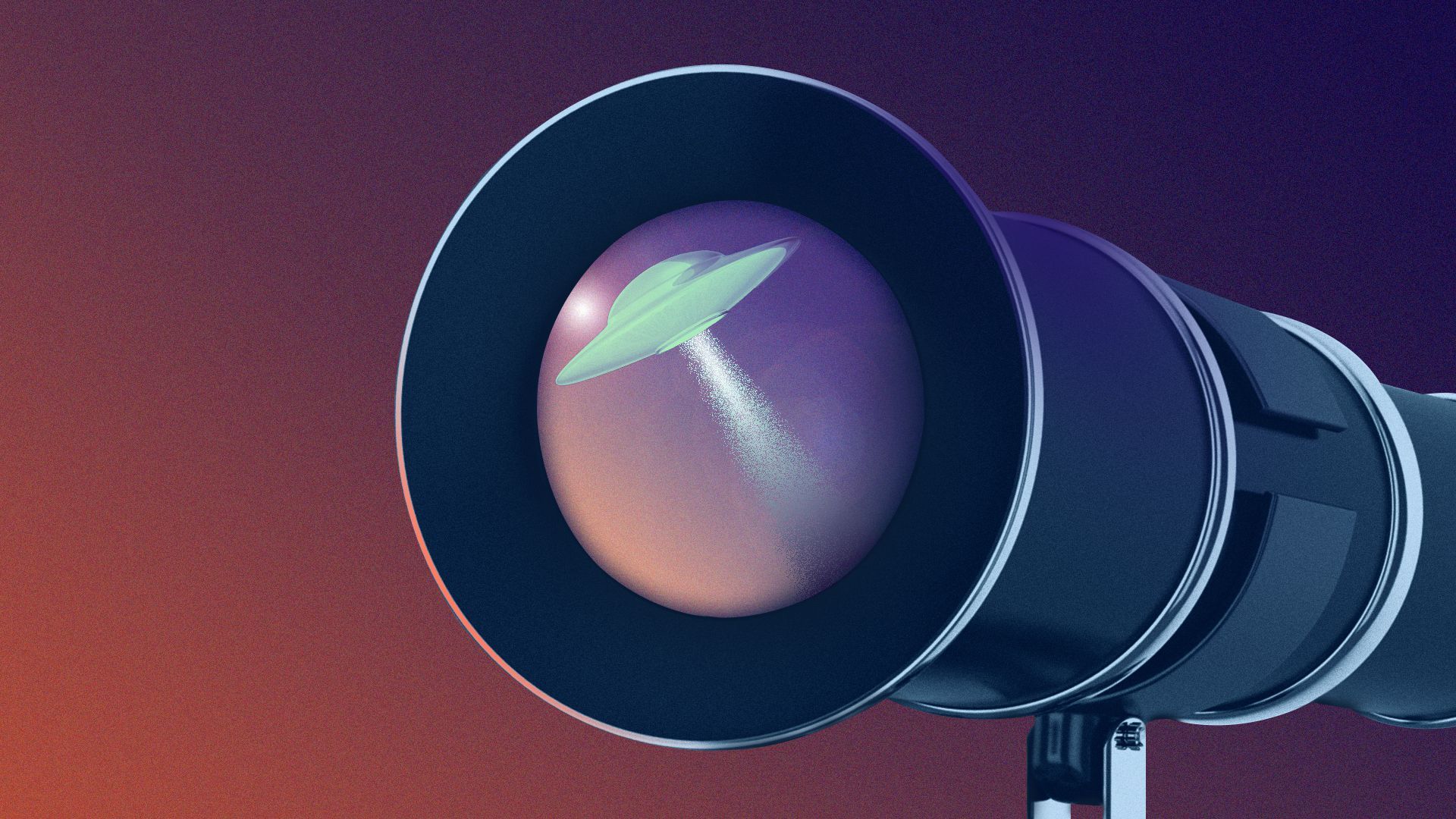
| A new instrument on a huge telescope in South Africa is searching the skies for signs of intelligent alien life. Why it matters: The instrument on the MeerKAT observatory will allow the Breakthrough Listen project to collect more data from nearby stars, allowing scientists to potentially pick out any strange signals that might be sent out by an alien civilization. How it works: Every day on Earth, radio signals are emitted into space, serving as a passive signal that humanity is here and we've developed technological intelligence. - Scientists think that if there are other intelligent forms of life out there, they may have also developed the tech needed to send their own radio waves traveling at the speed of light into space.
- By using observatories on Earth, researchers think they might be able to hear those signals from relatively nearby stars if they're being emitted.
State of play: Breakthrough Listen announced last week that the 64 MeerKAT antennas are now being used to search for technosignatures — signs of intelligent life in the universe. - The instrument will allow scientists working with the project to search stars observed with the antennas of the array as other science is ongoing instead of having to interrupt other observations.
- "It will take us just two years to search over 1 million nearby stars. MeerKAT will provide us with the ability to detect a transmitter akin to Earth's brightest radio beacons out to a distance of 250 light-years in our routine observing mode," Cherry Ng, Breakthrough Listen's Project Scientist for MeerKAT said in a press release.
|
| |
| |
| |
| A message from Amazon Web Services |
| Pioneering space-based cloud solutions |
| |
 |
| |
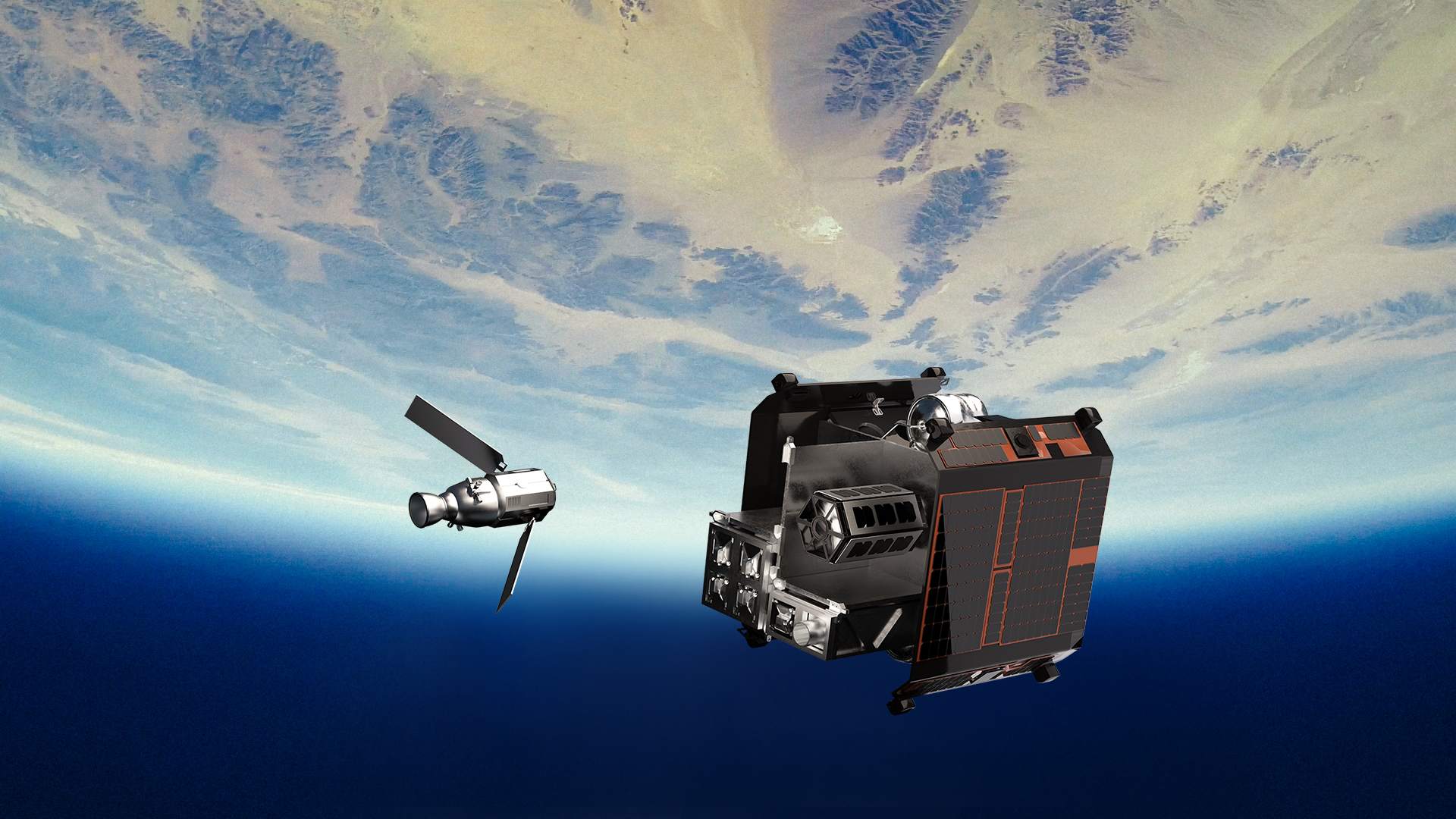
| Amazon Web Services runs edge computing and machine learning services on an orbiting satellite to deliver insights to scientists and engineers via the cloud. Why it's important: Performing secure cloud analysis in space means faster insights, communication and decision-making. Learn more. |
| |
| |
| 4. Out of this world reading list |
 |
|
| Photo illustration: Aïda Amer/Axios. Photo: NASA, ESA, CSA, and STScI |
| |
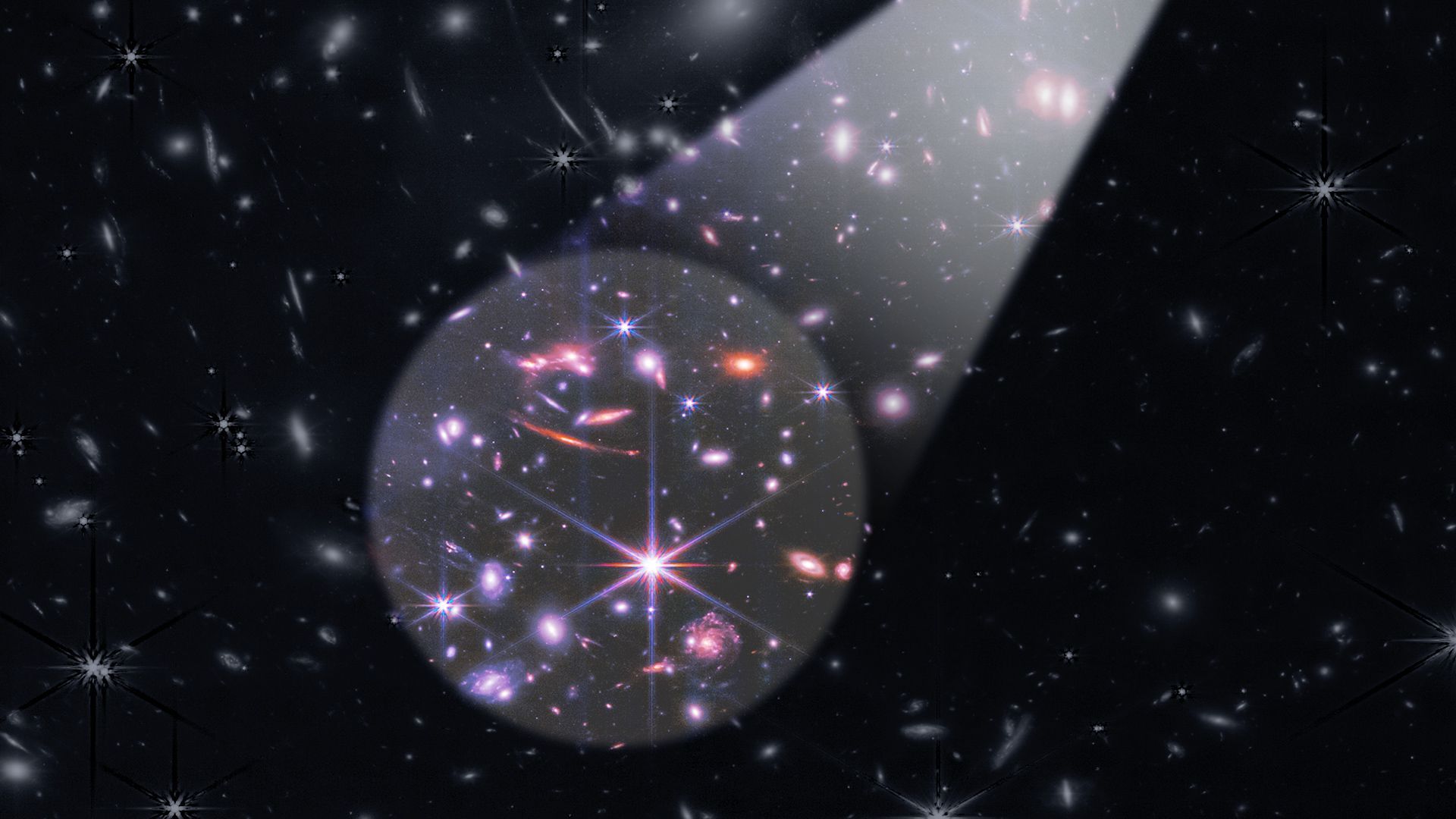
| 🕳 Physicists create "the smallest, crummiest wormhole you can imagine" (Dennis Overbye, NY Times) 🌌 Asymmetry detected in the distribution of galaxies (Katie McCormick, Quanta) 🌊 Megatsunami swept over Mars after a massive asteroid hit the Red Planet (Charles Q. Choi, Space.com) 🚀 Chinese commercial methane-fueled rocket set for its first launch (Andrew Jones, SpaceNews) |
| |
| |
| |
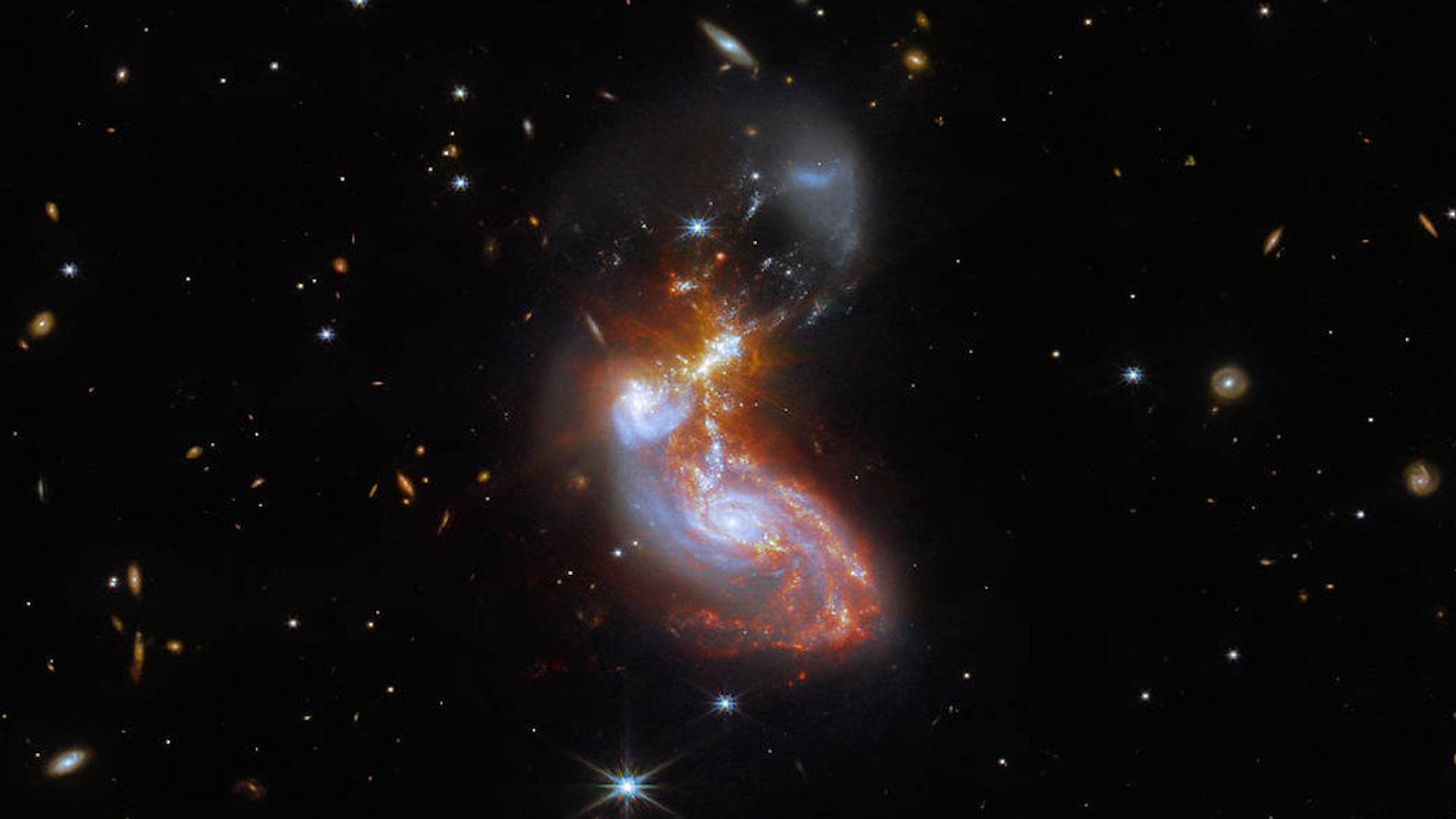
| 5. Weekly dose of awe: Two galaxies become one |
 |
|
| Photo: ESA/Webb, NASA & CSA, L. Armus, A. Evans |
| |
| Two galaxies were caught in the act of merging by the James Webb Space Telescope. - The structure, called II ZW 96, is located about 500 million light-years from Earth, according to NASA.
- "The bright cores of the two galaxies are connected by bright tendrils of star-forming regions, and the spiral arms of the lower galaxy have been twisted out of shape by the gravitational perturbation of the galaxy merger," NASA said in a statement.
- "It is these star-forming regions that made II ZW 96 such a tempting target for Webb; the galaxy pair is particularly bright at infrared wavelengths thanks to the presence of the star formation."
|
| |
| |
| |
| A message from Amazon Web Services |
| Cloud-powered sustainability solutions |
| |
| |
| |
| Organizations use Amazon Web Services to quickly process, analyze and deliver satellite data to improve how we live and work on Earth. Customers use valuable space data to tackle complex challenges like climate change, food insecurity, sustainable agriculture and more. Learn more. |
| |
| Big thanks to Alison Snyder for editing, Sheryl Miller for copy editing and the Axios visuals team for the illustrations. If this newsletter was forwarded to you, subscribe. 🪐 |
 | | Are you a fan of this email format? Your essential communications — to staff, clients and other stakeholders — can have the same style. Axios HQ, a powerful platform, will help you do it. | | |


No comments