Breaking News

ChatGPT in health care, pharma's latest digital health deal, & long-awaited diabetes tech

January 26, 2023

Good morning, reporting fellow Brittany Trang here with a deep dive on ChatGPT and more health tech news. Starting next week, our new medical devices reporter Lizzy Lawrence will be bringing you the news on Thursdays. Give her a follow. 

Artificial intelligence

The building buzz for ChatGPT in health care

It feels like ChatGPT is making headlines every day: The program has generated huge interest — including a pledged multi-billion dollar investment from Microsoft — for its ability to write nearly anything it's asked to write and to answer questions. Users come up with a steady string of new ways to put the AI chatbot to the test. And medicine is no exception. So far, it's passed a version of the U.S. medical licensing exam and been used to chart patient information and draft appeals to insurance denials. But what limitations and risks have those experiments exposed? And where might the technology be used in health care going forward? Can it rescue physicians from rote tasks, or should it be used to tackle complex scientific questions? I talked to experts about the technology, its risks, and its potential in a new deep dive out this morning — read here. 


diabetes tech

Long-awaited greenlight for artificial pancreas app

Earlier this week, the FDA cleared the Tidepool Loop automated insulin dosing app, which allows people with Type 1 diabetes to control their insulin pumps from their Apple Watch or iPhone. Tidepool, a nonprofit, developed the Loop app based on a DIY project by patients who exploited loopholes in the software of their insulin pumps. The app and dosing algorithm work with any certain integrated continuous glucose monitor and pump, allowing patients more choice. Tidepool said it's working to cement agreements with certain CGM and pump makers to make their devices compatible. STAT's Katie Palmer has previously reported on Dexcom's  partnership with Tidepool to include their components with the Loop platform, as well as Tidepool's data partnerships with Insulet and Medtronic.


Clinical trials

Pharma's latest digital health deal

Yesterday, Roche and Sysnav Healthcare announced a new partnership to use Sysnav's movement tracking technology to monitor disease progression in several neurological disorders. Sysnav's movement trackers, which are somewhat like the motion-capture technology used in the film industry than the inertial sensors in smartphones, allow patients with neurological disorders to measure motor function during their daily lives. The company, which has two wearable devices called ActiMyo and Syde, was the first to qualify a digital endpoint with the European Medical Association and aims to develop more digital endpoints for clinical trials in the partnership.


Wearables

Fitbits for tracking multiple sclerosis
Screen Shot 2023-01-25 at 5.53.35 PM

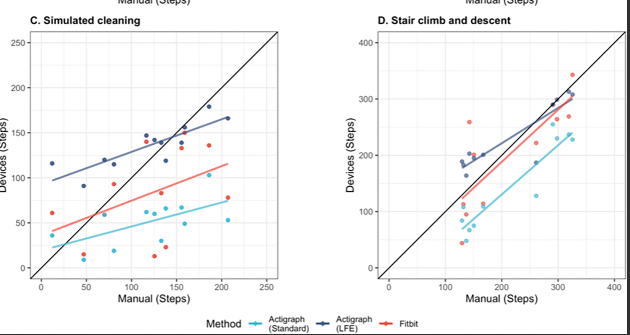
Speaking of movement trackers, there are few good tools for people with multiple sclerosis to keep tabs on their activity. The options can be costly, and not especially consumer-friendly. But that data could be especially useful to researchers and patients with the progressive disease, which can cause tremors and a loss of motor control. In a new paper, researchers report on the early results from a potential solution: Fitbits. The researchers gave a Fitbit Inspire HR to 45 people with moderate mobility impairment due to MS, and then tested how well it compared to self-reported step counts, time spent physically active, and more. They also compared it to data from a wearable made by Actigraph for research. The results, while not fully in agreement across all metrics, suggest the Fitbit might be usable as a physical activity tracking tool for patients with mild or moderate MS.


Congress

A push for reproductive health data privacy

California representatives Sara Jacobs and Anna Eshoo introduced the Secure Access for Essential Reproductive (SAFER) Health Act this week. The bill, rolled out in recognition of the 50th anniversary of Roe v. Wade, would prevent health care providers from disclosing abortion- or pregnancy loss-related health information without patient consent. Under the decades-old patient privacy law HIPAA, if there's a warrant, court order, or subpoena for the release of a patient's reproductive health records, then a health provider could be required to hand them over. It's not clear it could garner the support to pass. 


Industry news

New funding for AI 

  • Atomic AI announced a $35 million Series A funding round led by Playground Global on Wednesday. The South San Francisco company is focused on using AI to better understand the structure of RNA, which my colleague Jonathan Wosen describes as looking "a bit like a map of an airport terminal." Read more here.  
  • Pearl Health, a company that uses data science to help primary care providers triage patients who are most likely to need care, announced today that it raised $75 million in a Series B funding round, led by a16z and Viking Global Investors.
  • Yesterday, Zócalo Health announced Sarah Lopez will be the company's chief medical officer. Previously, Lopez was an emergency physician and patient safety officer at Harbor-UCLA Medical Center. Zócalo Health, founded in 2021, primarily serves Latino patients and operates in California and Texas.

More around STAT
Check out more exclusive coverage with a STAT+ subscription
Read premium in-depth biotech, pharma, policy, and life science coverage and analysis with all of our STAT+ articles.

What we're reading


You're all caught up! Back next week — Brittany

Brittany Trang is a 2022-2023 Sharon Begley Science Reporting Fellow at STAT. 


Enjoying STAT Health Tech? Tell us about your experience
Continue reading the latest health & science news with the STAT app
Download on the App Store or get it on Google Play
STAT
Facebook
Youtube
Twitter
Instagram
STAT, 1 Exchange Place, Boston, MA
©2023, All Rights Reserved.

No comments