Is Covid still a global emergency, when children die on a drug meant to save them, & questions about FDA's changing accelerated approvals
|
|
|
|
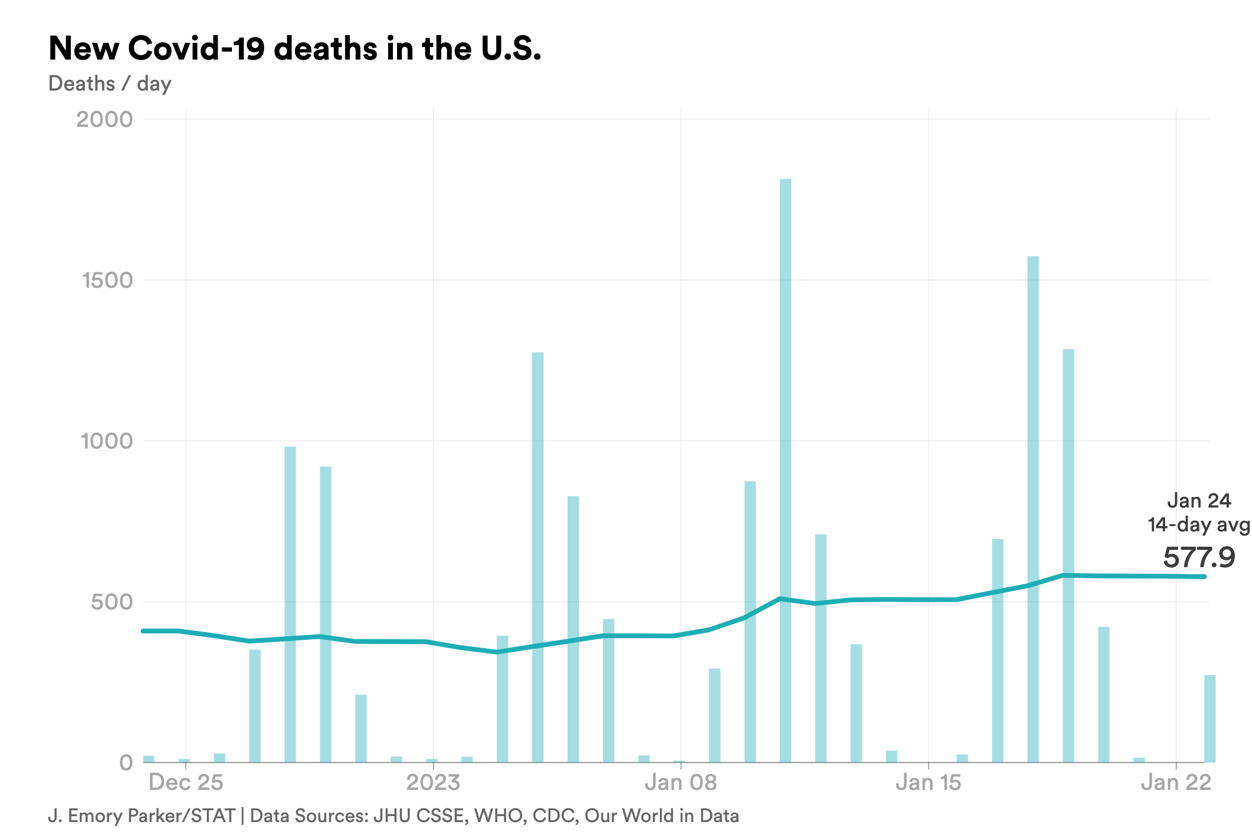
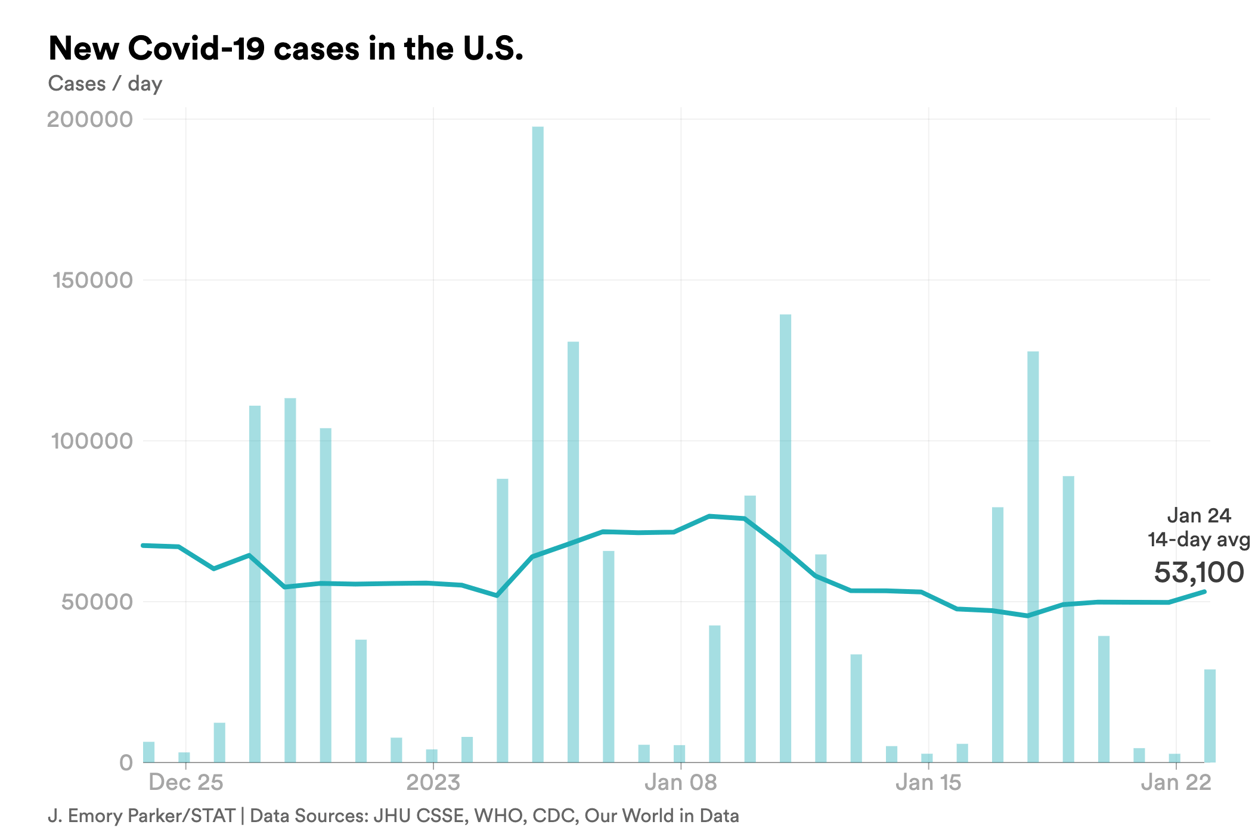
global HealthIs it time for WHO to end the global health emergency over Covid?Three years ago, WHO designated the new coronavirus outbreak a public health emergency of international concern. On Friday, an emergency committee will meet once again to decide whether to advise Director-General Tedros Adhanom Ghebreyesus to declare it's over. Tedros will make the final call, just when Covid cases are spreading like wildfire through China after its "zero Covid" policy abruptly ended and while the global response remains strained. "I remain very concerned by the situation in many countries and the rising number of deaths," the director-general said during WHO's weekly press briefing yesterday. Even though Covid is clearly still with us, does it still strictly meet the criteria for a PHEIC? Yes, it's "serious," but "sudden, unusual, or unexpected" seems like a stretch. Another question is whether the designation still matters. STAT's Helen Branswell has more, including some history and how to pronounce PHEIC. policyThe 4 biggest questions for FDA about changing accelerated approvalIn the wake of its much-criticized accelerated approval of the Alzheimer's drug Aduhelm, the FDA gained some new powers — thanks to Congress — over how the process will work. The agency already requires further, confirmatory clinical trials after the initial green light, but now its authority includes criminal prosecution. STAT's John Wilkerson details questions on the minds of industry lobbyists about how that will work, keeping in mind the intent of the program to speed treatments to patients with life-threatening conditions. One issue is how aggressively FDA will enforce the requirement to complete post-market studies "with due diligence." Another question is what kind of evidence will be acceptable. Surrogate endpoints, like cholesterol levels in the blood, are widely accepted for some drugs, but as the Aduhelm case showed, amyloid is controversial. Also, how would drug withdrawals work? The old process could take years, but the new streamlined version has yet to be tested. Read more. hospitalsCare at health systems may be only marginally better, but it costs moreIt's a familiar story, STAT's Tara Bannow reminds us. Hospital CEOs announce a merger, predicting higher quality and lower costs through greater efficiency. But what happens after the deal is done might not match the claim. A new study in JAMA adds to the growing body of evidence showing only razor-thin improvements in care but big bumps in costs. "The cost part, you look at it and it jumps off the screen at you," David Cutler, a study author and economics professor at Harvard, told Tara. "And the quality part really just is not doing that." For example: Hospitalized health system patients were somewhat more likely to be readmitted — 16.3% versus 15.7% — but less likely to die, 5.5% versus 5.7%. But prices paid in systems were 12% to 26% higher for physician services and 31% higher for hospital services compared to non-system care. Read more on the implications. |
Closer LookAfter getting a drug meant to save their lives, children are dyingEvangeline GallagherIf there could be anything worse than learning your child has cancer, hearing this would have to come close. Children are getting a substandard, often contaminated version of one of the most important chemotherapy drugs for treating the most common childhood cancer. The story, based on reporting by the Bureau of Investigative Journalism in partnership with STAT, begins in Brazil but spans the globe's low- and middle-income countries, many without strict regulatory authorities. At least a dozen brands of asparaginase, the drug in question, have been proven to be of poor quality, with 10 still on the market globally. Without the drug, patients face a dramatically reduced chance of surviving aggressive leukemia. The bottom line: Sick children in lower-income countries could be dying in large part because of bad drugs. "The solution really is completely restructuring the market dynamics around childhood cancer," said André Ilbawi, WHO's technical lead in cancer control. Read more. infectious diseasesCases of Guinea worm disease fall to all-time lowHere's some good news on the infectious diseases beat: Cases of Guinea worm disease fell to a historic low of 13 last year, including six in Chad, five in South Sudan, one in Ethiopia, and one (still under investigation) in the Central African Republic. After low case counts recorded in 2021, that decline moves the disease closer to eradication, The Carter Center reported yesterday. For some perspective, in 1986 about 3.5 million human cases occurred each year in 21 countries in Africa and Asia. There is no medication or vaccine for the parasitic disease, which people usually get when they drink water contaminated with tiny crustaceans that eat Guinea worm larvae. Eventually a pregnant female worm — about 2 to 3 feet long — slowly emerges through painful blisters in the skin. Animals serve as a host for Guinea worms, so until numbers are down in them, too, the disease may not be eliminated. healthBariatric surgery's benefits still strong 40 years onJust when drugs to treat obesity are gaining momentum (sometimes not in a good way), here's research confirming the long-term health benefits of bariatric surgery. The retrospective study published today in Obesity pulls 40 years of data from the Utah Population Database to conclude that people who got bariatric surgery had 16% lower death rates from all causes compared to people with severe obesity who did not undergo surgery. Among the surgery patients, these were less common: cardiovascular disease (down 29%), diabetes (down 43%), and cancer (down 72%). One concern: higher death rates from suicide in bariatric surgery patients age 18 to 34, compared to non-surgical participants. The study mirrors what many other studies have reported about the association between surgery and health outcomes while extending its analysis to 40 years, enrolling nearly 22,000 patients, and including the four most common bariatric surgery procedures: Roux-en-Y gastric bypass, adjustable gastric banding, sleeve gastrectomy, and bilio-pancreatic diversion with duo-denal switch. by the numbers
|
|
|
What we're reading
|
Thanks for reading! More tomorrow, |
|
|
|


No comments