| |
| |
| |
| Presented By HCA Healthcare |
| |
| Axios Vitals |
| By Tina Reed · Mar 14, 2023 |
| Happy Tuesday, Vitals readers. Today's newsletter is 1,079 words or a 4-minute read. Situational awareness: A U.S. District Court in Texas will hear oral arguments on Wednesday at 10am ET in a case challenging the FDA's authorization of abortion pill mifepristone. |
| |
| |
| 1 big thing: Biotech deals provide a split-screen moment for battered sector |
 |
|
| Illustration: Sarah Grillo/Axios |
| |
| A pair of big biotech deals is stirring some hope for a segment that's been in a deep funk and just starting to size up the aftereffects of Silicon Valley Bank's demise, Axios' Adriel Bettelheim and I write. What's happening: Pfizer's $43 billion acquisition of cancer drug maker Seagen and Sanofi's $2.9 billion deal to buy diabetes drug manufacturer Provention Bio, both announced Monday, offer signs that pharmaceutical giants flush with cash and eager to reboot their pipelines could slow the sector's slide. But the truth is, conditions will remain tough for startups still pushing products to market and struggling in an environment with rising interest rates. - "We already saw a huge dip in valuations" before SVB's fallout, Snell & Wilmer partner Bardia Moayedi tells Axios Pro's Claire Rychlewski and Aaron Weitzman. "Now with hesitation in the financial markets with cash, liquidity and investment, it's going to be much harder for startups to get funded."
Driving the news: Pfizer's play for Seagan jolted the markets on Monday and marks both the largest merger announcement so far this year, and the largest pharma deal since AbbVie bought Allergan in 2020, per Axios' Dan Primack. - It reaffirmed the enduring appeal of cancer drugs, which public and private insurers tend to cover despite hefty price tags — and the way Pfizer is starting to pivot away from top-selling drugs that are facing patent cliffs, like the blood thinner Eliquis and breast-cancer drug Ibrance, the Wall Street Journal noted.
- While the pandemic-fueled tech and life sciences bubble may have ended as interest rates rose and geopolitical tensions grew, industries like pharma need to continue to show growth through either strategic investments or consolidation, Elizabeth Kaske, EY Americas buy and integrate leader, told Axios.
While neither deal is connected to what happened in banking over the weekend, Kaske said it's telling that both were announced Monday. - "What it does tell me is that that news wasn't enough to stop the big acquirers from announcing and proceeding with their plans," Kaske said. "It does still show confidence in the market."
Read the rest. |
    |
| |
| |
| 2. VA to cover newest Alzheimer's drug |
 |
|
| Photo: Spencer Platt/Getty Images |
| |
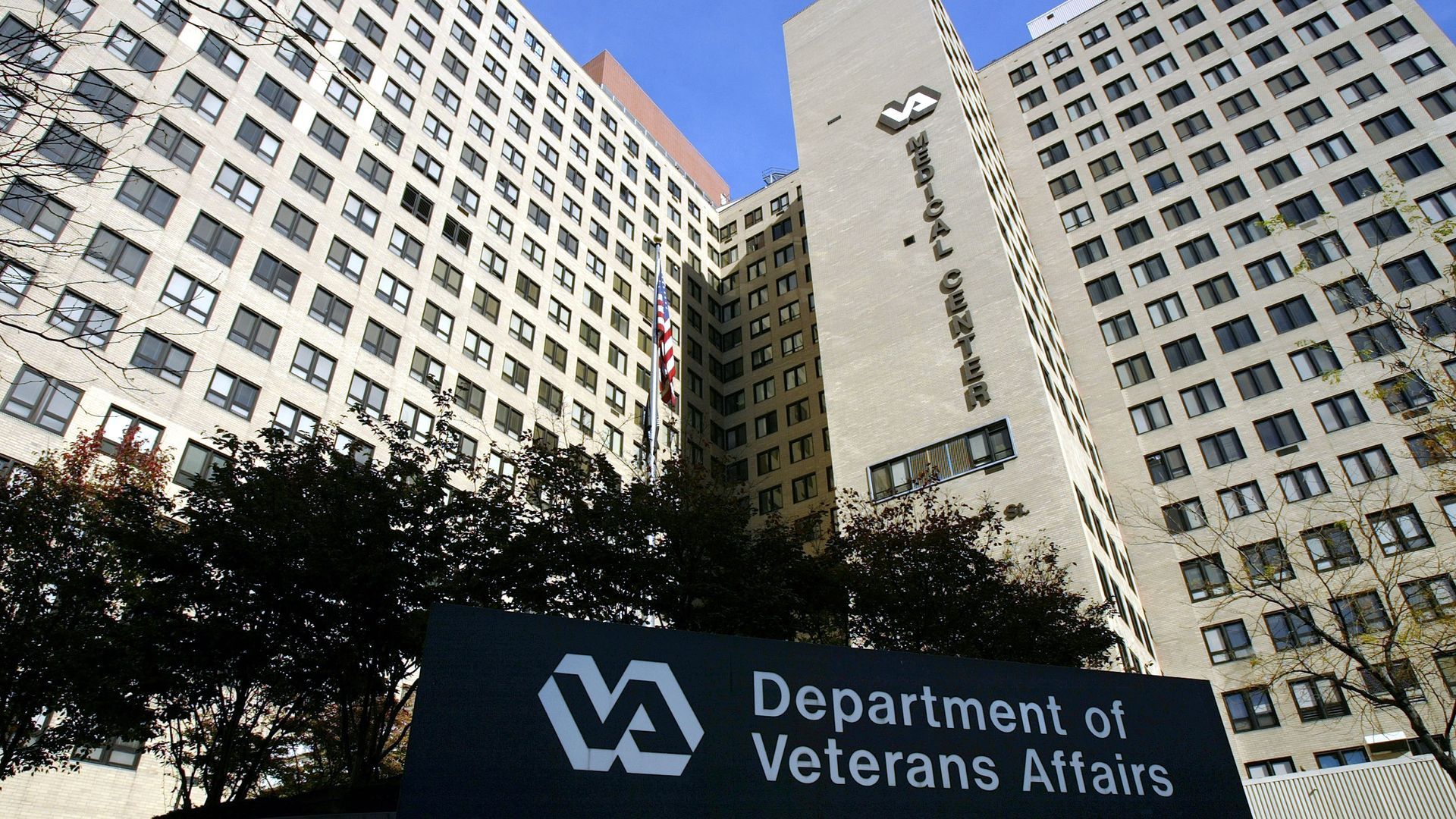
| The Veterans Health Administration said Monday that it intends to pay for a $26,500-a-year experimental Alzheimer's drug that the Centers for Medicare and Medicaid Services has to date declined to broadly cover, Axios' Oriana Gonzalez writes. The big picture: The FDA approved Eisai's Leqembi through its accelerated approval pathway earlier this year after data suggested that it could slow the progression of the disease. However, Medicare administrators said they need to evaluate more data before deciding whether to change coverage guidelines for the drug and others in its class. - CMS currently limits its coverage to patients enrolled in clinical trials or CMS-approved comparative studies.
State of play: The VA will offer coverage to veterans living with early stage Alzheimer's who meet the agency's criteria to take the medication, as well as conditions on Leqembi's label. - An Eisai spokesperson told Axios that it is difficult to estimate how many veterans are living with the early stages of the disease but the company estimates 80–90% of veterans who meet the criteria will be eligible for the treatment.
Don't forget: Leqembi — which Eisai developed alongside Biogen — is the second Alzheimer's drug to receive FDA approval, following the agency's controversial approval of Biogen's Aduhelm. - An FDA expert panel had initially recommended against approving Aduhelm, but the agency's decision to push it through the accelerated approval process anyhow triggered intense scrutiny.
What we're watching: The FDA is in the process of considering whether to grant traditional approval to Leqembi, and a decision could come by early July. |
| |
| |
| |
| 3. NIH's glory days of budget increases are ending |
 |
|
| Illustration: Sarah Grillo/Axios |
| |
| President Biden's fiscal 2024 budget proposes the smallest NIH funding bump in years, likely leaving the agency without a champion for more money next year, Axios' Caitlin Owens writes. Why it matters: The agency is already the target of Republican fury, especially over its handling of "gain-of-function" research. So if Biden isn't pushing for more funding, its decade-plus of hefty annual budget increases is probably over, at least for now. Driving the news: Biden's fiscal 2024 budget proposal includes $48.6 billion in NIH funding — an increase of $920 million from 2023, or less than 2%. - More than half of the new funding is earmarked for the National Cancer Institute as part of Biden's Cancer Moonshot initiative. Most other institutes' funding would remain flat.
State of play: That's a pretty big step down from the increases the agency has gotten in recent years. The NIH budget has increased from $30.9 billion in 2011 to this year's $47.7 billion. - Over the last seven years alone, it has increased by an average of 5.6% each year, according to a Raymond James analysis.
- "The President's budget implies NIH funding is not a priority and when Congress enters negotiations over appropriation levels and the debt limit, NIH may not be as protected as some investors assume," the analysis concludes.
A version of this story was published first on Axios Pro. Get news like this by subscribing. Use code POLICY100 which gives you $100 off. |
| |
| |
| |
| A message from HCA Healthcare |
| Using research-based programs to improve patient outcomes |
| |
 |
| |
| The idea: We use a patient-centered approach to surgical recovery. Patients play an active role in managing their care and recovery plan with our Enhanced Surgical Recovery program. Interventions before, during and after surgeries help improve outcomes and decrease opioid usage. Learn more. |
| |
| |
| 4. Data du jour: Deaths rise sharply among kids, teens |
 Data: JAMA Network, Virginia Commonwealth University; Chart: Axios Visuals Deaths among kids and teens jumped 20% between 2019 and 2021 in the largest increase seen in at least 50 years, according to an editorial published the Journal of the American Medical Association. Driving the news: Looking at death certificate data from the CDC, researchers from Virginia Commonwealth University attributed the jump largely to increases in homicides, accidental drug overdoses, motor vehicle accidents and suicide among those 10 to 19 years old. By the numbers: Between 2019 and 2020, the all-cause mortality rate for ages 1 to 19 years increased by nearly 11% and it increased by an additional 8.3% between 2020 and 2021. - Infants younger than 1 year old were the only age group that experienced no significant increase in mortality.
What they're saying: "Medicine and public health have made remarkable progress in lowering pediatric mortality rates, but the lives they have saved are now endangered by manmade pathogens," the authors of the study wrote. - "Bullets, drugs, and automobiles are now causing a youth death toll sufficient to elevate all-cause mortality rates," they wrote.
|
| |
| |
| |
| 5. Catch up quick |
| 👉 Nurses hit with hefty debt when trying to leave hospitals. (NBC News) 💊 McKinsey consulted the VA while advising opioid makers to target the agency for sales. (Wall Street Journal) 👀 The feds move to rein in prior authorization. (KHN) 🏛 DOJ lawsuit accuses Rite Aid of unlawful opioid prescriptions. (Axios) 📆 The next stage of COVID is starting now. (The Atlantic) |
| |
| |
| |
| A message from HCA Healthcare |
| Developing a diverse pipeline of health care leaders |
| |
 |
| |
| In 2022, HCA Healthcare announced $5.25 million in gifts to Historically Black Colleges and Universities and Hispanic-Serving Institutions to train future health care professionals. The reason: We believe our colleagues should reflect the diversity of our communities. Explore how We Show Up. |
| |
| Have a news tip? Just reply to this email. Did someone forward this email? Subscribe here. Thanks for reading, and thanks to senior health care editor Adriel Bettelheim and senior copy editor Bryan McBournie for the edits. |
 | | Dive deeper into the future of health care | | |


No comments