| | | | | | | Presented By Intelsat | | | | Axios Space | | By Miriam Kramer · Apr 18, 2023 | | Thanks for reading Axios Space. At 1,268 words, this newsletter is a 5-minute read. - Please send your tips, questions and Space Symposium survival tips to miriam.kramer@axios.com, or if you received this as an email, just hit reply.
| | | | | | 1 big thing: Starship's transformational power |  | | | Illustration: Aïda Amer/Axios | | | | If SpaceX's Starship program succeeds, it could revolutionize the space industry by dramatically lowering the cost of launching people and payloads to orbit and beyond. Why it matters: SpaceX and other companies want to make space travel more akin to air travel, with launches every day. - But in order to make that future a reality, launch costs need to get cheaper. That's where Starship comes in.
- SpaceX founder Elon Musk has said a Starship launch could eventually cost just $10 million or less. By comparison, the company's Falcon 9 costs about $62 million today and has far less carrying capacity than Starship.
Driving the news: SpaceX was planning its first launch of the Starship with its Super Heavy booster on Monday, but liftoff was scuttled after a technical issue popped up deep into the countdown. - Musk has said that the company will reset and try to launch again in the next few days.
The big picture: If Starship works and SpaceX builds up a fleet that can launch often and be reused, it could "potentially enable new businesses and even new markets," BryceTech's Carissa Christensen tells Axios. - That dramatic reduction in price could lead to viable business plans for companies that want to manufacture sensitive material in orbit like pharmaceuticals.
- Starship could also be a major factor in making human spaceflight accessible to a wider range of people. Instead of only being available to the ultra-rich, the vehicle could open up spaceflight opportunities to more would-be customers, Christensen says, though those flights will likely remain inaccessible to most, at least in the near term.
- The vehicle's huge carrying capacity to orbit could also allow constellations of satellites to be built far more quickly, saving time and money.
Between the lines: Starship could also open up new scientific opportunities. - Today, large telescopes — like the James Webb Space Telescope — need to be folded up to fit inside a rocket fairing and then deployed in space. But with Starship, that may not be necessary.
- Instead, the rocket's huge carrying capacity might allow for new designs and capabilities for space telescopes.
Yes, but: No satellites today — with perhaps the exception of SpaceX's Starlink spacecraft — are designed to fly to space aboard Starship. - "So it's gonna take a while for space agencies and companies to figure out how [Starship's] capacity can be used," Christensen says.
What to watch: It's not yet clear how quickly SpaceX will be able to scale up its Starship operations, and in order to reduce prices, the company will need a large fleet of Starships flying at a rapid clip. - It typically takes years for rockets to achieve expected operations after their first test flights.
- But SpaceX already has at least one customer for Starship: NASA. The U.S. space agency is relying on a modified version of the vehicle to act as a lunar lander that is expected to bring people to the surface of the Moon as soon as 2025.
|     | | | | | | 2. A candid moment with astronaut Victor Glover | 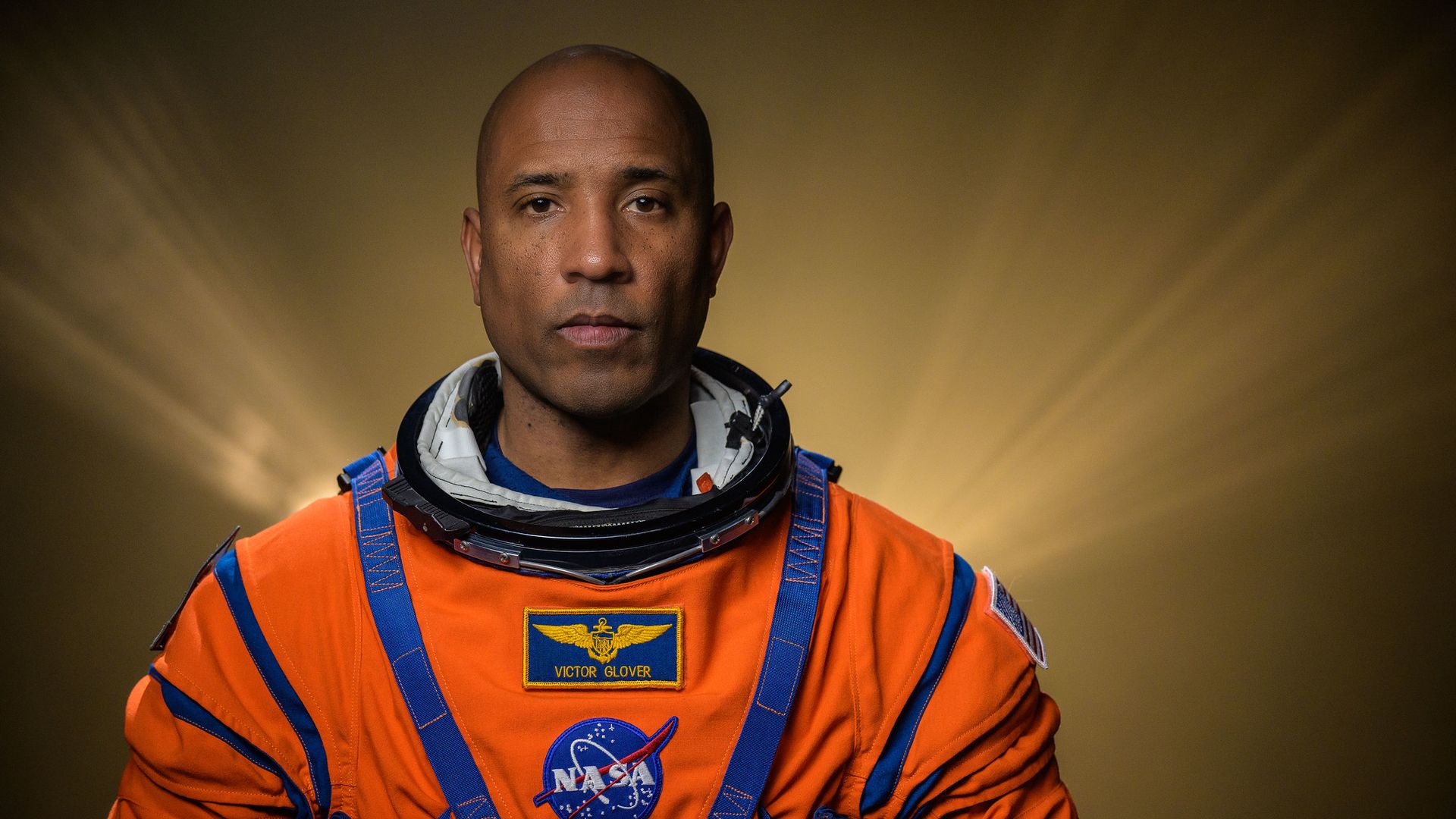 | | | Victor Glover. Photo: Robert Markowitz/NASA | | | | COLORADO SPRINGS, Colo. — NASA astronaut Victor Glover, recently named as the pilot of the Artemis II mission around the Moon, listens to Gil Scott-Heron's poem "Whitey on the Moon" twice a week on the way to work. The big picture: The rhetoric around NASA, the space industry and space at large is often centered on the idea that space is above Earthly concerns. - But space is, and has always been, a reflection of Earth — the good and the bad.
- In the 1970 spoken-word poem, Scott-Heron criticizes investment in space when Black people in the U.S. couldn't afford health care.
- Some of the lyrics: "A rat done bit my sister Nell. (with Whitey on the Moon) Her face and arm began to swell. (but Whitey's on the Moon) Was all that money I made last year (for Whitey on the Moon?)"
What he's saying: "Honestly, I started listening to [the poem] in the car to talk with my colleagues about it," Glover tells me here at the National Space Symposium. - "I live in the America that sent me to space, told my grandfather he couldn't fly during the Korean conflict when he was enlisted, but he got to sit and watch me fly," Glover says. "We live in a very complicated country."
Glover also believes that it's important to listen to the spaceflight skeptics, those who don't see the utility in sending people to space or spending money on those efforts. - "Where we were in 1968, when humans first set out on this voyage, our country is in a very similar place now," Glover says. "And it's important to recognize and respect those skeptics."
Background: Many NASA astronauts have historically avoided speaking out on politically charged topics, but that has changed in recent years. - During the George Floyd protests in 2020, Glover and others spoke out in support of the demonstrations against police violence.
- "When I came to NASA, you know, they said, 'Hey, we hired you because of who you are.' OK. Cool. You get all of it," Glover says.
| | | | | | | | 3. Ingenuity flies again | 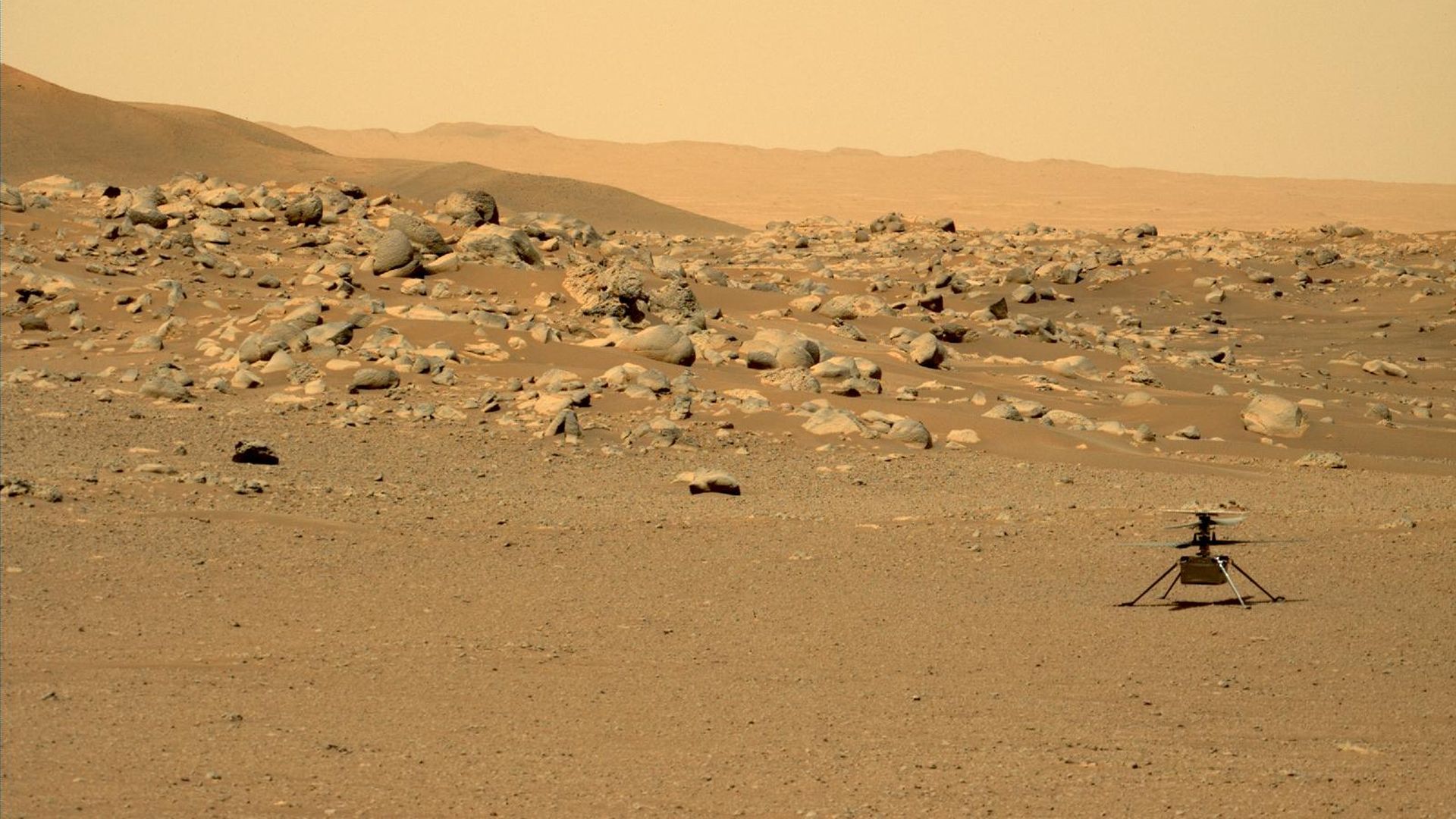 | | | Ingenuity on Mars. Photo: NASA/JPL-Caltech/ASU/MSSS | | | | NASA's tiny helicopter on Mars — named Ingenuity — just completed its 50th flight on the Red Planet. Why it matters: The tiny drone, which was designed as a technology demonstration to inform future missions, was never expected to survive this long on Mars. - "When we first flew, we thought we would be incredibly lucky to eke out five flights," Teddy Tzanetos, Ingenuity team lead at NASA's Jet Propulsion Laboratory, said in a statement.
What's happening: Ingenuity's 50th flight — which took place on April 13 — saw the drone fly more than 1,057 feet in about 146 seconds. - "We're flying over the dried-up remnants of an ancient river that is filled with sand dunes, boulders, and rocks, and surrounded by hills that could have us for lunch," Josh Anderson, Ingenuity operations lead, said in the statement.
- "And while we recently upgraded the navigation software onboard to help determine safe airfields, every flight is still a white-knuckler."
The big picture: Ingenuity's success has shown that helicopters could be useful for future crewed missions to Mars. - The drone has been scouting out the terrain ahead of the Perseverance rover, keeping mission operators updated on what could be coming up for the car-sized spacecraft.
- Helicopters like this could also access parts of a planet that might be difficult to reach by driving.
What's next: Ingenuity has been showing some signs of wear and tear as it flies in this difficult terrain on Mars, according to NASA. - "Whether Ingenuity's mission ends tomorrow, next week, or months from now is something no one can predict at present," Tzanetos added. "What I can predict is that when it does, we'll have one heck of a party."
| | | | | | | | A message from Intelsat | | Innovation through connectivity | | |  | | | | Intelsat, a pioneer in the satellite industry with over 50 years of experience, is driving seamless connectivity. Here's how: Its multi-layer, multi-orbit, space-based network, combined with extensive terrestrial infrastructure and attention to customer experience, fuels innovation. | | | | | | 4. Out of this world reading list | 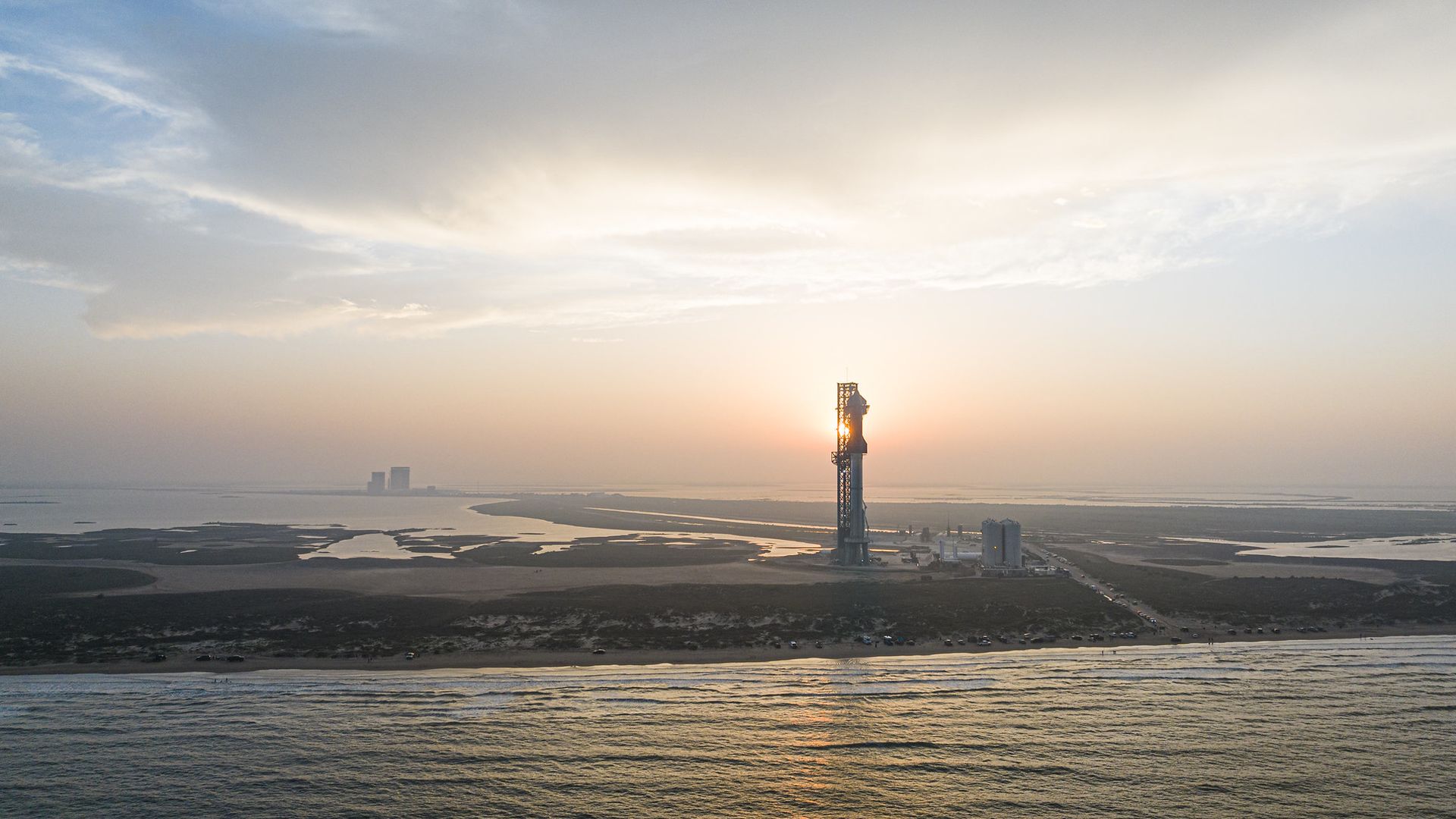 | | | Starship standing on its launch pad. Photo: SpaceX | | | | 🔥 SpaceX Starship model features rocket engine torch (Robert Pearlman, CollectSpace) ⛽️ Space Force looking at what it will take to refuel satellites in orbit (Sandra Erwin, SpaceNews) 🛰 Chinese satellite goes on sightseeing tour after researchers put AI in charge (Kevin Hurler, Gizmodo) 👽 Mars rovers might miss signs of alien life (Derek Smith, Scientific American) | | | | | | | | 5. Weekly dose of awe: JUICE's last look | 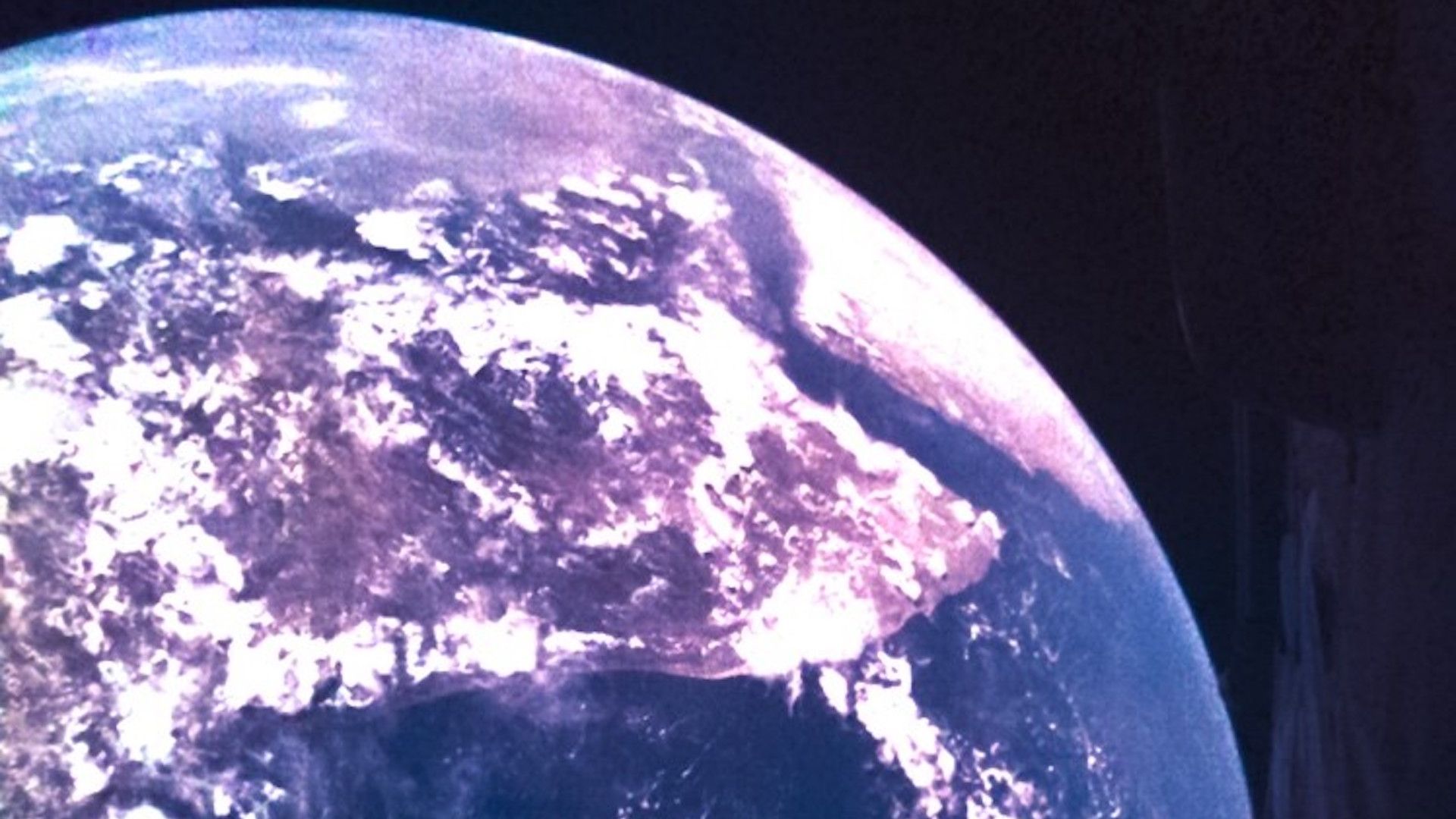 | | | Photo: ESA/Juice/JMC | | | | A spacecraft on an eight-year journey to Jupiter snapped a photo of Earth after its launch last week. - The European Space Agency's JUICE probe is now on its way to study Jupiter and three of its intriguing moons — Ganymede, Callisto and Europa.
- Scientists think those moons could be some of the most promising places to search for possible signs of habitability in the solar system. All three are thought to have subsurface oceans beneath their icy crusts.
- This photo was taken about 30 minutes after launch on Friday, revealing the Gulf of Aden.
| | | | | | | | A message from Intelsat | | Critical Missions: High-speed communications in Africa | | |  | | | | The challenge: Ensuring affordable broadband connectivity in Africa is critical, but there are many hurdles to overcome. The solution: Intelsat, the first to provide satellite communications services in Africa, is working to connect the unconnected. Learn how. | | | | 🚀 Big thanks to Laurin-Whitney Gottbrath for editing, Sheryl Miller for copy editing, and the Axios visuals team. If this newsletter was forwarded to you, subscribe. |  | | Are you a fan of this email format? Your essential communications — to staff, clients and other stakeholders — can have the same style. Axios HQ, a powerful platform, will help you do it. | | | | | | Axios thanks our partners for supporting our newsletters.
Sponsorship has no influence on editorial content. Axios, 3100 Clarendon Blvd, Arlington VA 22201 | | | You received this email because you signed up for newsletters from Axios.
To stop receiving this newsletter, unsubscribe or manage your email preferences. | | | Was this email forwarded to you?
Sign up now to get Axios in your inbox. | | | | Follow Axios on social media:    | | | | | |


No comments