Breaking News

What a gene therapy age cutoff means for kids, how the drug shortage hurts ovarian cancer patients, & recreating Pink Floyd from brain activity

August 16, 2023
Reporter, Morning Rounds Writer
Good morning. We have stories of struggle, to gain access to a new gene therapy or to stay on the best cancer drugs, but we also have a report on scientists reconstructing a classic rock song from brain activity.

rare disease

When a new gene therapy's age cutoff is 6 years old, families and doctors scramble for their kids

Hiram Secrist sits in a hospital bed next to his mother, Kristen Secrist, and his grandmother, Terrie Jordan.Courtesy Secrist family

A child diagnosed with Duchenne muscular dystrophy means a mountain of heartache for families to climb. A revolutionary gene therapy from Sarepta has raised hopes, but the FDA's narrow window for it, open only until age 6, has led to a frantic scramble or deep disappointment for parents and doctors who anticipated a broader approval for all patients (mostly boys) with the fatal, muscle-wasting disease who could still walk. That would have made it available for most boys under the age of 12. 

The FDA's June decision was based on a clinical trial that had shown dramatic benefit for 4- and 5-year-olds, but not for 6- and 7-year-olds. That made for difficult conversations for families of boys ages 6 and up. More pressing were the edge cases, boys about to turn 6, like Hiram Secrist (above). STAT's Jason Mast tells us their stories, both "heartbreaking" and "magic."


Health inequity

ER transfers for surgery after stroke are slower for women and people of color

It's called door-in-door-out time. When someone who's having a stroke comes to a hospital ER but needs surgery at another hospital, guidelines from the Joint Commission and the Brain Attack Coalition say no more than 120 minutes should elapse from when the clock starts ticking upon ER arrival and stops at departure. The goal is to limit brain damage and permanent disability by restoring the flow of oxygen-carrying blood to the brain. 

A new analysis in JAMA says nearly 2,000 U.S. hospitals miss that mark by almost an hour. Black, Hispanic, female, and over-80 patients all experienced longer door-in-door-out times. Worth noting: The study looked at 2019 and 2021, concluding Covid increased door-in-door-out times by roughly 16 minutes. Another caveat: Hospitals in the study were participating in the Get with the Guidelines Stroke Program, a voluntary quality improvement program, which could mean their results don't represent all hospitals. STAT's Bree Iskandar has more.


climate

Opinion: Heat deaths and illness are undercounted. It doesn't have to be that way 

Counting heat-related deaths caused by our warming Earth is a hodgepodge, as this Associated Press story detailed Monday. In a STAT First Opinion today, Ashley Ward of Duke University's Heat Policy Innovation Hub asks why, in this age of big data and sophisticated systems for monitoring and tracking our lives, can't we be better at figuring out how our changing climate can lead to our deaths?

Just as Covid cases and deaths were locally reported, so are heat illnesses and deaths. And then there are ICD codes for insurance reimbursement, the bane of many a clinician's existence. But things called E Codes, which note external causes of injury, could help. "The job of emergency department personnel is to stabilize the patient. It is the job of other medical professionals … to investigate contributing factors," Ward writes. "What we need now is the proper training and incentive to act."


Closer Look

Drug shortages hit ovarian cancer patients harder
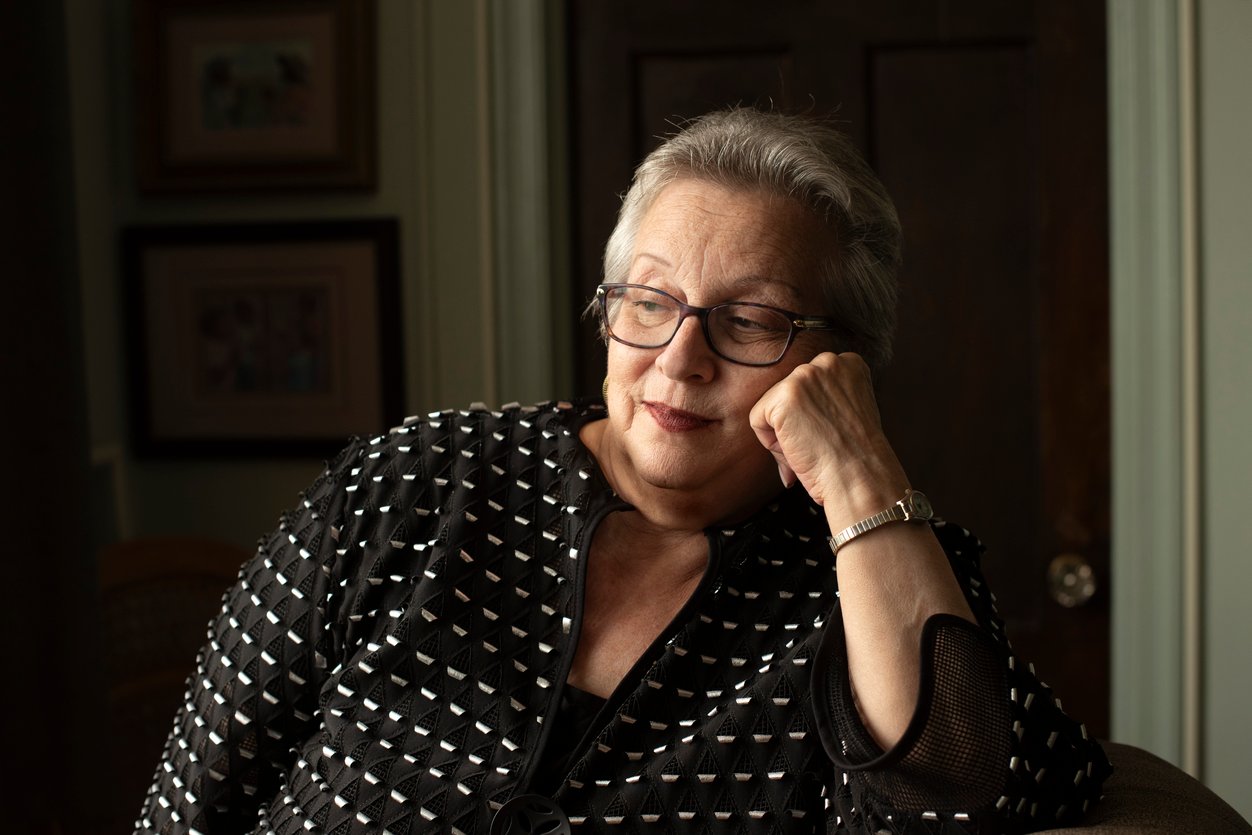
Sarah Evans

Michelle Gabel for STAT

The now-familiar cancer drug shortage is especially difficult for ovarian cancer patients. That's because the platinum drugs used to treat it — cisplatin and carboplatin, in combination with the chemotherapy drug paclitaxel — help the most but are among the hardest to find. The lack of good alternatives to platinum drugs "reflects the fact that it does work so well," said Michael Birrer of the University of Arkansas for Medical Sciences.

STAT's Annalisa Merelli tells us what that means for one patient: Sarah Evans (above), who at 68 is dealing with her second ovarian cancer recurrence. Her cancer was responding to carboplatin treatment earlier this year, but when there was no carboplatin available in May, she was shifted to cisplatin, which caused more severe side effects. She's back on carboplatin now, but her treatment wasn't as effective. "Psychologically it did a little number on me," she said last month. Read more.


pandemic

Doctors who spread Covid misinformation faced few consequences

If public health recommendations had been followed, roughly one-third of U.S. Covid deaths could have been avoided, a new study in JAMA Network Open begins, citing higher death rates for unvaccinated vs. vaccinated people. Individual health decisions may stem from early inconsistencies from public health officials, mistrust of science, or political division. But this study also points to doctors, cataloging how 52 of them amplified misinformation — defined as "false, inaccurate, or misleading information according to the best evidence available at the time" — about vaccines, medication, masks, and conspiracy theories, among other topics.

"Although professional speech may be regulated by courts and the FDA has been called on to address medical misinformation, few physicians appear to have faced disciplinary action," the authors write. "Factors such as licensing boards' lack of resources … and state government officials' challenges to medical boards' authority to discipline physicians propagating misinformation may limit action." 


whoa

Pink Floyd song recreated from brain activity

https://www.eurekalert.org/multimedia/994419Ludovic Bellier, PhD (CC-BY 4.0, https://creativecommons.org/licenses/by/4.0/)

Listen here. Can you hear it? It's a little muffled, but still recognizable as Pink Floyd's "Another Brick in the Wall, Part 1." The song comes from the brains of 29 epilepsy patients with electrodes already implanted in their brains. While they listened to the song, intracranial EEGs recorded their neural activity in response to guitar, rhythm, voice, and other elements that compose a song, translated into 128 frequencies. This kind of computer remodeling has been used before to recode and rebuild speech, but the authors believe this is the first time it's been attempted in music, they write in their PLOS Biology study

They hope to apply what they've learned to brain-machine-interfaces that might help people better perceive rhythm and melody in speech, too. Why did patients hear this particular song? "If they said, 'I can't listen to this garbage,'" the data would have been terrible, study co-author Gerwin Schalk told the New York Times.


More around STAT
Check out more exclusive coverage with a STAT+ subscription
Read premium in-depth biotech, pharma, policy, and life science coverage and analysis with all of our STAT+ articles.

What we're reading

  • A Pennsylvania study suggests links between fracking and asthma, lymphoma in children, Associated Press

  • Texas lawsuit could bankrupt Planned Parenthood in the state, The Hill
  • FDA warns AstraZeneca over misleading promotional materials for a COPD drug, STAT

  • The Smithsonian's 'Bone Doctor' scavenged thousands of body parts,

    Washington Post

  • SEC wants to know if key supplier of research monkeys bribed foreign officials, STAT

Thanks for reading! More tomorrow,


Enjoying Morning Rounds? Tell us about your experience
Continue reading the latest health & science news with the STAT app
Download on the App Store or get it on Google Play
STAT
STAT, 1 Exchange Place, Boston, MA
©2023, All Rights Reserved.

No comments