Breaking News

STAT Investigation: UnitedHealth portrayed its algorithm as a beacon for Medicare patients — then used it to cut off care

November 14, 2023
Reporter, Morning Rounds Writer
Good morning. Don't miss the striking new chapter in STAT's investigation of UnitedHealth's reliance on an algorithm to determine when seriously ill patients should be discharged from rehab.

stat investigation

UnitedHealth pushed clinicians to follow an algorithm that cut off care for patients in rehab

STAT_AI_NursingHome_ConveyorBelt_F1_2000x1125-1

The nation's largest health insurance company pressured its medical staff to cut off payments for seriously ill patients in lockstep with a computer algorithm's calculations, denying rehabilitation care for older and disabled Americans as profits soared, a STAT investigation has found. UnitedHealth Group has repeatedly said its algorithm, which predicts how long patients will need to stay in rehab, is merely a guidepost. But inside the company, managers delivered a much different message: the algorithm was to be followed precisely so payment could be cut off by the date it predicted.

STAT's Bob Herman and Casey Ross previously reported UnitedHealth began limiting employees' discretion to deviate from the algorithm after it bought NaviHealth in 2020. Newly obtained documents show that, since then, executives have sought to almost entirely subordinate clinical case managers' judgment to the computer's calculations. That has resulted in inflexible coverage decisions that legal experts say may violate longstanding case law and regulations that govern Medicare benefits.

"By the end of my time at NaviHealth I realized — I'm not an advocate, I'm just a moneymaker for this company," said Amber Lynch, an occupational therapist and former NaviHealth case manager who said she was fired earlier this year for failing to meet performance goals. "And that is not why I went into health care. I went into health care to help people, not to say, 'Well, we've got all the money, see you later.'" Read more.


health

Life expectancy is falling in the U.S., more so for men than women

Life expectancy has been falling in the U.S. over recent years, slipping from 79 years old in 2019 to 76 in 2022 — reversing decades of progress attributed to less smoking and therefore less cancer and cardiovascular disease. The current rates reflect more than a million deaths from Covid-19 and a death toll exceeding 100,000 a year from the drug-overdose epidemic. What's striking in new research posted yesterday in JAMA Internal Medicine is the widening gap between men and women. A man's life expectancy is now 73, but for women, it's 79, adding up to the biggest difference since 1996.

Women's edge in longevity is common around the world, but the widening gap is cause for concern. "The opioid epidemic, mental health, and chronic metabolic disease are certainly front and center in the data that we see here," study author Brandon Yan told STAT's Annalisa Merelli. And many of those causes are preventable. Read more.


covid-19

Covid rebound after Paxlovid could hit 1 in 5 people, study suggests

The study was small and preliminary, but its message sends a signal that people who take Paxlovid for Covid are much more likely to see their symptoms come back than people who don't. That conclusion, published yesterday in the Annals of Internal Medicine, diverges from what Pfizer, the drug's maker, and the FDA have said. Among the 142 study participants, 15 people, or 21%, of those who took Paxlovid, had their viral levels increase after they seemed to get better. That compares to one, or 1.8%, of those who did not receive Paxlovid.

The patients weren't randomly assigned to take Paxlovid and the ones who did were almost 20 years older, had more vaccinations, and were more likely to have suppressed immune systems than those who did not. STAT's Matthew Herper has more, including whether a longer course of Paxlovid might work better or if people at lower risk of Covid complications might not want to chance rebound.


the obesity revolution

Cover obesity treatments, AMA urges payers 

Ten years ago, the American Medical Association ratified a resolution calling obesity a disease. A few months ago, it passed a policy asking doctors to de-emphasize the use of BMI to assess obesity and people's health. And yesterday, the influential group voted to urge insurance companies, employers, and government programs to cover obesity treatments, despite fears of covering the costly drugs on a mass scale. Medicare is prohibited by law from covering weight loss treatments, and commercial coverage has largely followed suit, with many deeming the treatments cosmetic rather than medical.

But recent data about GLP-1-based treatments like Novo Nordisk's Wegovy and Eli Lilly's Zepbound suggest they could bring cardiovascular benefits in addition to weight loss. The cost for covering those who are eligible — almost half the U.S. population — is daunting at $12,000 a year indefinitely. STAT's Brittany Trang and Elaine Chen explain.


addiction and mental health

What Americans say about their substance use and mental health

Two federal agencies —  U.S. Department of Health and Human Services and  the Substance Abuse and Mental Health Services Administration — released numbers from the 2022 National Survey on Drug Use and Health yesterday, reflecting how people living in the U.S. view their mental health and substance use. The snapshot, based on self-reports, does not offer commentary or comparison, but a sense of where we are. I was struck by numbers on drug and alcohol use disorder:
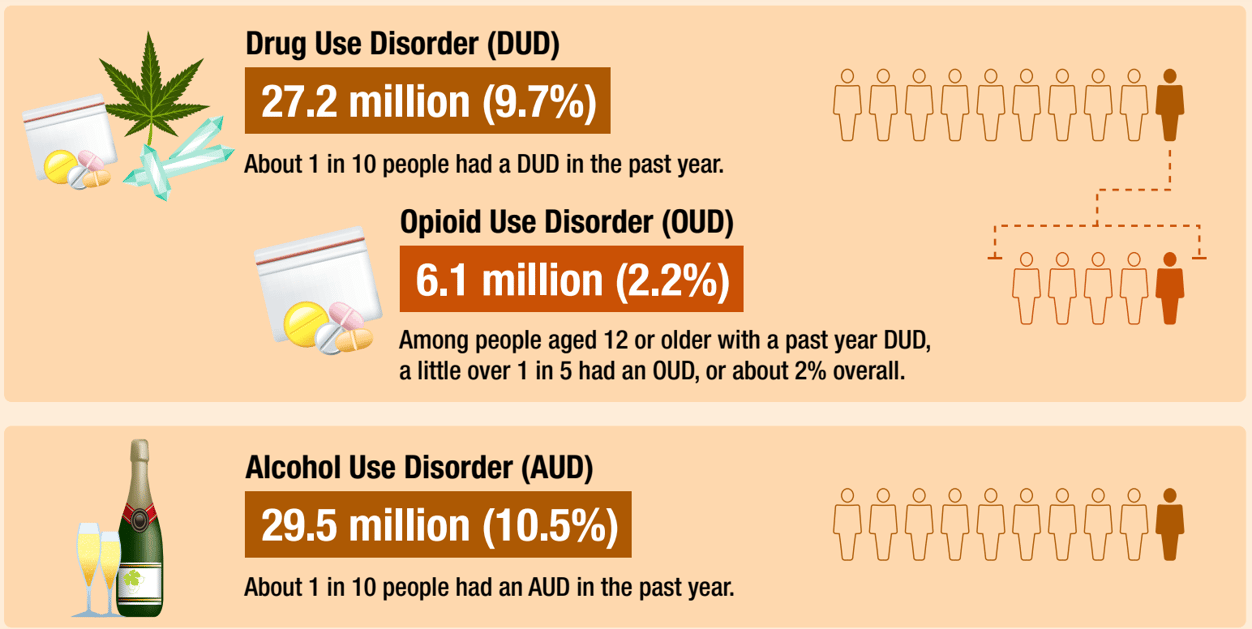
Screen Shot 2023-11-13 at 5.15.51 PM

As well as data on mental illness among adults:
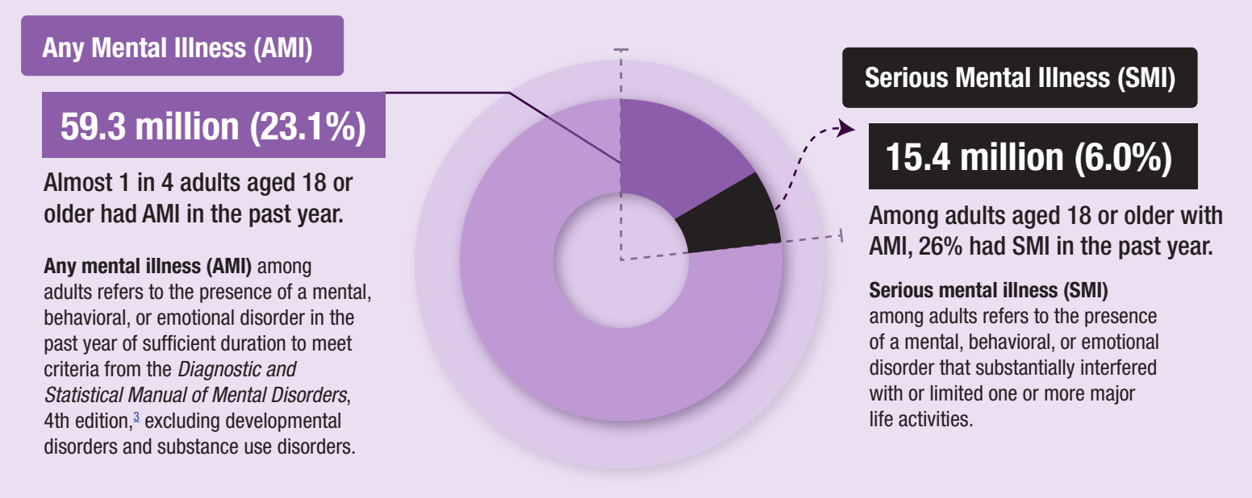
Screen Shot 2023-11-13 at 5.16.21 PM

And on thoughts of suicide among adolescents (all graphics from SAMHSA):
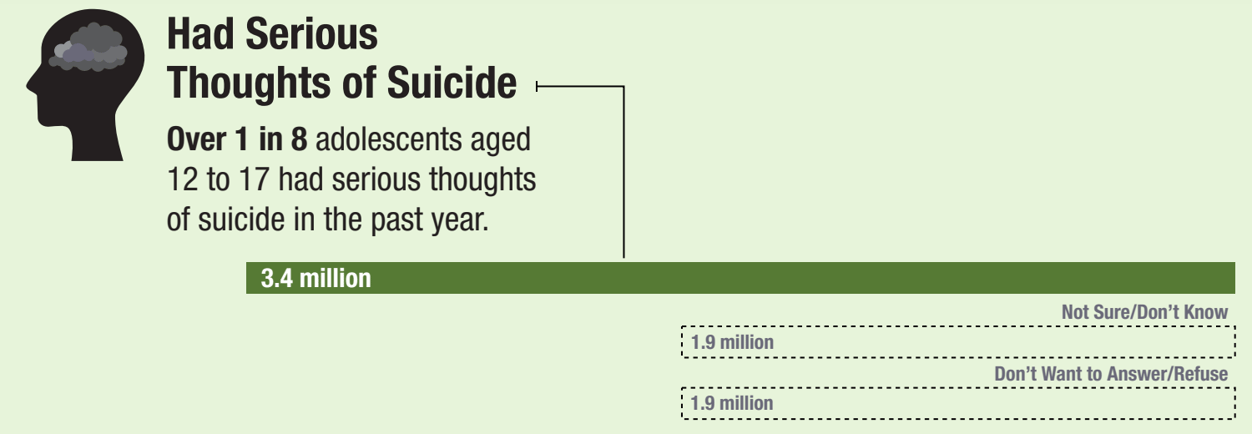
Screen Shot 2023-11-13 at 5.17.09 PM

cancer

Overall, lung cancer survival has improved, but disparities persist

Lung cancer remains the deadliest cancer in the U.S., but survival rates are getting better, today's report from the American Lung Association says. Overall, five-year survival increased by 22% to 26.6%  from 2015 to 2019. Among people of color, survival rates rose by 17%, a faster pace that means survival rates are no longer significantly lower compared to white individuals. Still, Black, Latino, Asian or Pacific Island, and Native American/Alaska Natives are less likely to be diagnosed early and to receive surgical treatment, and more likely to receive no treatment. 

When cases are diagnosed early, five-year survival rate is 63%. But for the 44% of cases caught at a late stage, the survival rate is only 8%. Screening with annual CT scans for those at high risk can reduce the lung cancer death rate by up to 20%, but last year, only 4.5% of those eligible were screened.


More around STAT
Check out more exclusive coverage with a STAT+ subscription
Read premium in-depth biotech, pharma, policy, and life science coverage and analysis with all of our STAT+ articles.

What we're reading

  • Brain Games? Whistleblowers and former lab members suggest star neuroscientist Berislav Zlokovic may have manipulated data that support a major stroke trial and important Alzheimer's research, Science

  • A flesh-eating fungus is thriving in a hotter, drier West, Washington Post

  • Delhi plans to unleash cloud seeding in its battle against deadly smog, Wired

  • Former MIT biologist, who lost positions after engaging in a prohibited sexual relationship, accepts new science position in Prague, Boston Globe
  • Opinion: Ohio has enshrined the right to an abortion. But major obstacles remain for patients and providers, STAT

Thanks for reading! More tomorrow,


Enjoying Morning Rounds? Tell us about your experience
Continue reading the latest health & science news with the STAT app
Download on the App Store or get it on Google Play
STAT
STAT, 1 Exchange Place, Boston, MA
©2023, All Rights Reserved.

No comments