closer look
We know dense breast tissue raises cancer risk. What's next?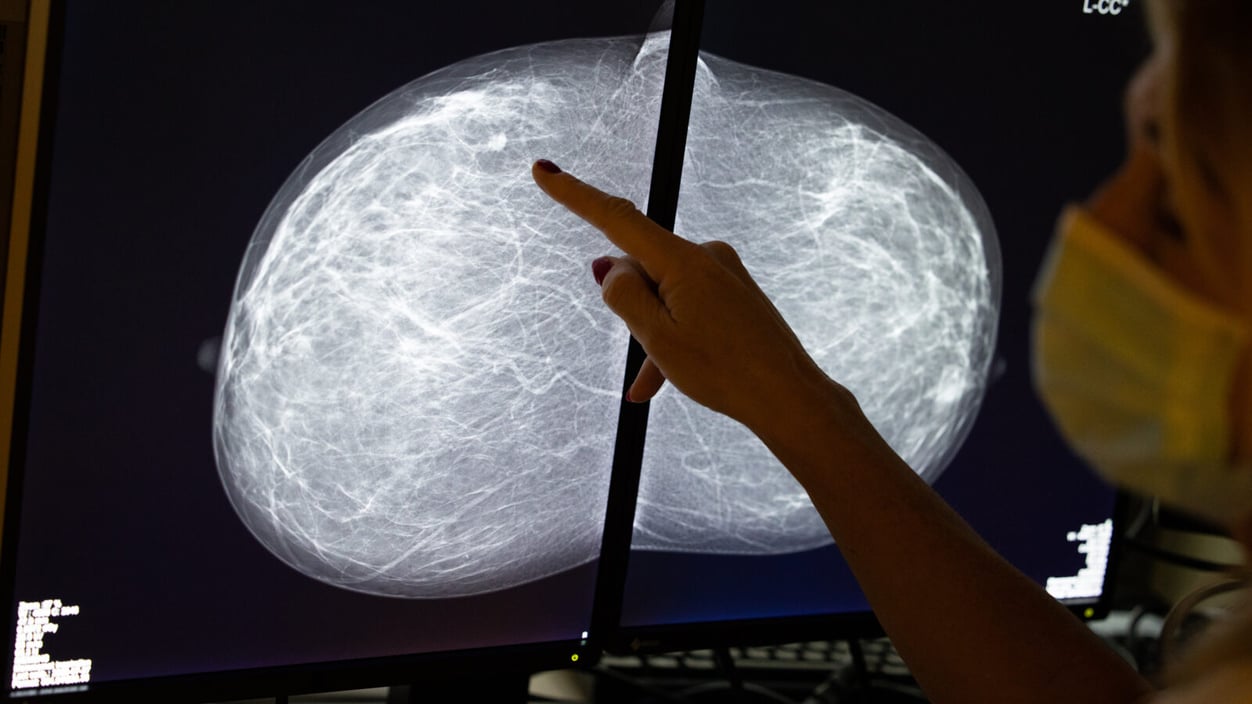
Benoit Doppagne/Belga Mag/AFP via Getty Images
Having dense breasts can be problematic in two ways when getting a mammogram to detect cancer. There's a higher risk of cancer in fibrous tissue, and it's harder to see potential tumors because dense tissue looks like cancer in the image. That's why 38 U.S. states require health care providers to tell patients if they have dense breasts. But what happens next isn't so clear. Even though dense breasts are normal, there is no consensus on how best to screen for cancer if mammography falls short.
Breast ultrasounds are one option, but high rates of false positives makes it less than ideal. MRIs are typically reserved for patients who have increased risk. Research is ongoing into such options as abbreviated MRIs, but as always, paying for these tests and finding a way to a center that offers them pose other barriers. STAT's Annalisa Merelli explores this issue.
neurology
Blood test for Alzheimer's shows promise
A blood test looking for signs of Alzheimer's disease performed as well as more burdensome lumbar punctures that sample cerebrospinal fluid, a JAMA Neurology paper published yesterday concludes. The test, commercially available but not widely used outside research studies, spots phosphorylated tau, which in turn signals the presence of abnormal amyloid and tau, two proteins that clump in the brains of people with dementia. The researchers, who compared blood samples from 786 people, following them for eight years and comparing their test to biomarkers from cerebrospinal fluid, found similar accuracy for the blood test.
"We will need further evidence to show that the blood test can accurately diagnose who is in the process of developing dementia, and that it can identify who is likely to benefit from treatments to slow down the disease," Charles Marshall of Queen Mary University of London, who was not involved in the study, said in a statement.
chronic disease
Study connects milk to lower risk of type 2 diabetes for people with lactase deficiency
People who can't digest dairy products after childhood may be surprised to hear that increasing cow's milk intake has been linked to a lower risk of developing type 2 diabetes for adults like them. A new study, posted yesterday in Nature Metabolism, connects that previously noted link to the microbiome: When people who no longer produce lactase (the enzyme that breaks down lactose) drank more milk, that changed certain bacteria in the gut microbiome and their metabolic by-products.
The researchers discovered this connection after following more than 12,000 participants in the Hispanic Community Health Study/Study of Latinos for about six years. Those who were lactase deficient had a 30% lower risk of type 2 diabetes with about one cup of milk added daily. Milk consumption made no difference for people who didn't lack lactase. Bolstering their case, the link between milk, the genotype for lactase deficiency, and type 2 diabetes risk matched what's found in 167,172 individuals in the U.K. Biobank.
Correction: In yesterday's newsletter we misidentified the outlet that published this story: I miscarried in Texas. My doctors put abortion law first, Newsweek











No comments