pharma
Questions about Pfizer's AI 'Health Answers'
Pfizer recently rolled out a new generative AI product, called Health Answers by Pfizer, designed to provide consumers trustworthy information about common questions. After punching in a query, like "how can I better treat my asthma," the product hums away, much like ChatGPT or similar, before returning a response derived from "verified sources," including a citation. It feels a little bit like typing queries into Google and getting answers from WebMD or another SEO-optimized health resource, without having to actually read (or skim) a whole article.
People spend a lot of time Googling health questions, so here's a faster way to do that, in theory. Pfizer warns that responses are not medical advice, but there's always a risk that people will take responses as such. The risk of bad information reaching users may be higher when an LLM is generating responses, as opposed to a human writing edited content.
A few notes after using Health Answers by Pfizer. Plus, a few responses from chatting with a Pfizer spokesperson over email.
I asked about my knee that hurts. Health Answers gave me all kinds of plausible answers and suggested that I should probably go see a doctor.
Health Answers once warned me that a response was "unverified." It said, "we did not have enough content from our trusted sources to generate a verified answer using Health Answers by Pfizer's standards." It did give me an answer anyway.
I asked, "can you die from touching fentanyl?" Health Answers warned me that "this could be serious" and responded: "Yes, touching fentanyl can be very dangerous and potentially life-threatening." ChatGPT's response? "No, you cannot die from simply touching fentanyl. This is a common misconception." (Admittedly, this is a useful question only if you are trying to break an LLM. After I told Pfizer about it, they updated the product.)
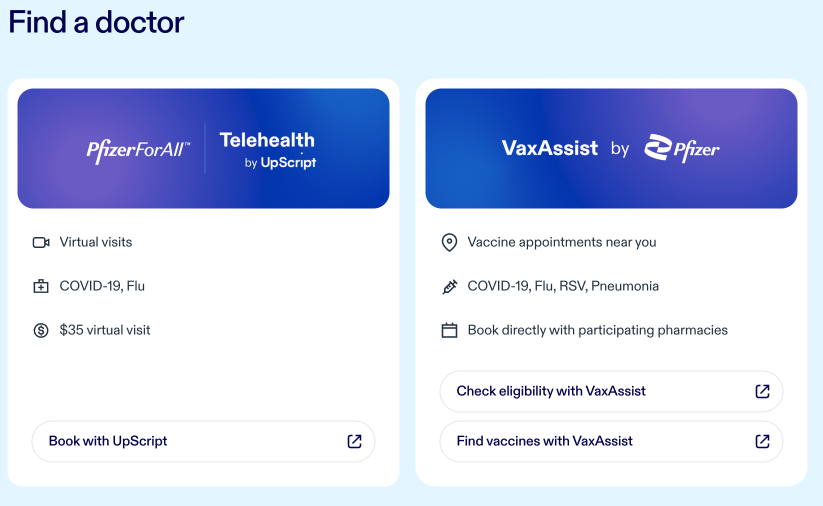
Can Pfizer make money from this? Pfizer says that Health Answers is independent from its pharmaceutical business. The company also runs PfizerForAll, a direct to consumer portal that offers to connect users to telehealth providers that can prescribe Pfizer drugs or whatever treatment is appropriate. There are links to Health Answers on PfizerForAll, and Health Answers provides links to find a doctor on services like BetterHelp, Sesame, Zocdoc, and of course, PfizerForAll's telehealth service which is run by UpScript. The Health Answers website warns that "when you click on or make a purchase or an appointment through links on our site, we may earn a fee."
What about data? It's not required, but Pfizer prompts users to create a profile, including information about any health conditions, which will be used to provide an "enhanced and personalized experience." As part of this process, you can also opt-in to receive marketing from "Pfizer Affiliate Partners that are personalized" based on your use of the site, including the health information you have shared. Pfizer warns that "certain information, such as health information, may be considered sensitive."
What tech is under the hood? In a LinkedIn post, Pfizer executive Dennis Hancock thanked Microsoft for helping Pfizer with the product. Microsoft has close ties to OpenAI. Pfizer told me it used "a public LLM with proprietary enhancements to optimize answers to health and wellness questions."
What is being done to make sure nothing bad happens? Pfizer said: "Safeguards include oversight from an independent scientific and technology advisory board, filters to help ensure answers are faithful to the source material, clinician audits for accuracy, and clear disclaimers throughout the platform on the use of AI."












No comments