trends
Small progress reducing deaths from alcohol, drugs, and suicide
Trust for America's Health
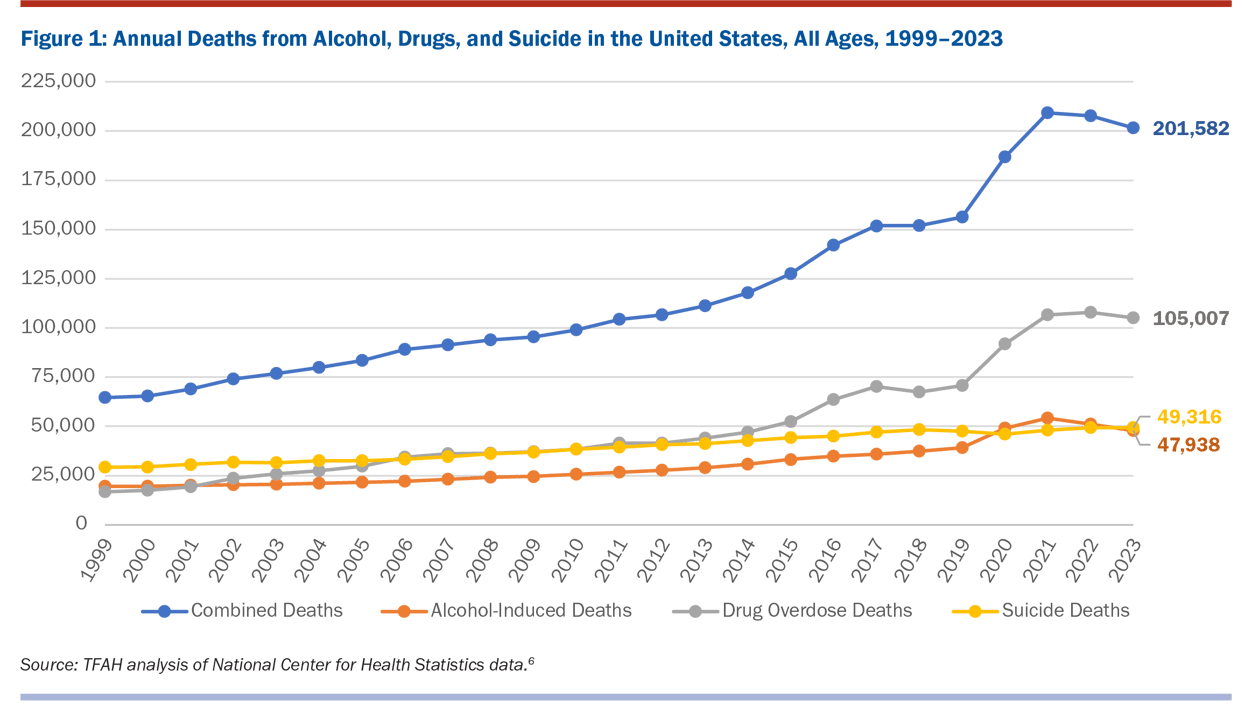
More than 200,000 people in the U.S. died due to alcohol-induced causes, drug overdose, or suicide in 2023. Those deaths have been steadily increasing since the turn of the millennium, as you can see in the graph above. While the last few years have brought some small relief, there's a long way to go if the country is going to bring rates down closer to what they were 20 years ago.
A new report on these deaths from the nonprofit, non-partisan advocacy group Trust for America's Health, titled Pain in the Nation, argues that ongoing staff cuts and budget reductions at federal health agencies put even more lives at risk. The report's policy recommendations include restoring funding to the CDC, bringing the agency's workforce back, funding prevention efforts at schools and in communities, limiting access to lethal means of suicide like medications and guns, and more.
policy
RFK Jr. says NIH may publish 'in-house' rather than in 'corrupt' journals
And more news from Kennedy: In a podcast interview yesterday, the health secretary said, "We're probably going to stop publishing in the Lancet, New England Journal of Medicine, JAMA and those other journals because they're all corrupt." The journals, he said, publish studies that are funded by the pharmaceutical industry. As a substitute for them, he continued, the NIH will establish medical journals for its various institutes and centers — unless current journals change "radically."
The belief that journals have negatively manipulated the scientific record is not a new position for Kennedy, but the latest comments signal that he may use his position as the nation's top health official to influence research that journals publish. Read more from STAT's Anil Oza.
first opinion
How ageism and sexism hurt women in medicine
While women make up more than half of all medical students, they make up just 29% of full professors, 27% of deans, and 25% of both department chairs and health care CEOs. In a new First Opinion essay, two emergency medicine physicians detail the gendered ageism that women in medicine have to face as their careers progress.
"The systemic discrimination may be vague," they write, "until one looks around to find that the number of mid-career and senior-career women is disproportionately small." The authors have ideas for how to solve this additive problem, including term limits for leadership positions and proactive succession planning.
Read the essay, which also includes a fascinating breakdown of the three workplace personas a woman often has projected upon her: Jennifer, Jane, and Janet.











No comments