PARTNERED WITH  |
|
|
Happy Thursday, Hospitalogists.
For decades, provider organizations have been flying blind when it comes to payor contract negotiation. But like I covered in Part 1 of this price transparency series, things are changing. No longer do hospitals or even smaller providers need to be blindfolded by confidentiality clauses and limited data, forced to take the rates offered in a vacuum. It's time to understand what leverage you have. And spoiler…it's more than you think - even as a small provider. So today, in Part 2, we're diving into a practical guide for contract negotiation given the new context that payor transparency data provides. Specifically we're diving into what payor-provider negotiations really look like behind closed doors, how your team can prepare and capitalize on the new price transparency data, and some war stories and tactics that can help your hospital finally get the rates it deserves. Let's dive in. |
Was this email forwarded to you? |
|
|
SPONSORED BY AFTER TRANSPARENCY Providers: The gaps between what you're paid by payors and what the market will bear (or your competitors receive) may surprise you. But with the help of After Transparency, a tech- and data-enabled solution partner, you finally have the edge at the negotiating table. Many clients come to After Transparency after struggling with a traditional style data source, costly consultants, or internal efforts that drain time and resources, without solving their most important challenges or use cases. After Transparency's high-touch, tailored approach is different, pinpointing exactly where potential opportunities exist in the data so you have the negotiating power to get paid your fair share. Read about the value of this data here, then connect with the After Transparency team.
|
|
|
- Payor price transparency data turns former guesswork and payor gaslighting into actionable evidence you can leverage in negotiation.
- Negotiation intelligence is the next phase of the price transparency era. It's time to craft messy data files into narratives that tell the story you want, and also provide you with defensible analytics.
- Payors will do what they can to circumvent negotiation, even going as far as baking an entire rate escalation into quality bonuses to avoid publishing their actual rates within the price transparency files.
- Public contract fights are growing more common. Credible out of network threats can move stalled talks when network adequacy and patient impact are at risk.
- Small gains compound into meaningful dollars. Provider organizations of all sizes - hospitals and below - can benefit in an outsized way from working with experts who know what they're doing with price transparency data (inside the org or out).
- If you're not leveraging payor price transparency data for AT LEAST rate negotiations IF NOT for your entire organization's strategy, you're going to fall behind.
|
The Price Transparency Paradigm Shift |
In the era of payor price transparency data, the game has changed. Hospitals and health systems now have access to something that was once unheard of - trade secrets galore: actual data on what insurers pay other providers. Think of this paradigm shift as enlightening as putting on night-vision goggles in what used to be a pitch-black maze of deal-making. From conversations I've had with industry veterans on the inside, we're at the beginning of a pivotal moment. As one consultant told me, seeing payors' rate data laid bare for the first time had his negotiation folks "just floored." One urgent care executive came out of a presentation on price transparency absolutely freaked out - in a good way - realizing for the first time how badly they were getting underpaid compared to the market. And he's not alone: providers are unlocking these shocking data insights every single day with the help of nuanced subject matter experts like After Transparency or boutique consulting firms who have been at the forefront of negotiation for decades. For the provider orgs working with the right people who know what they're doing, they're now realizing they're sitting on a goldmine of dealmaking leverage for better rates with actionable data. But information alone isn't power. |
Using it is. SO USE IT, FAM. I cannot stress to you enough: if you are not using price transparency data, you are falling behind and absorbing significant opportunity costs. |
Under the Hood of a Payor-Provider Negotiation |
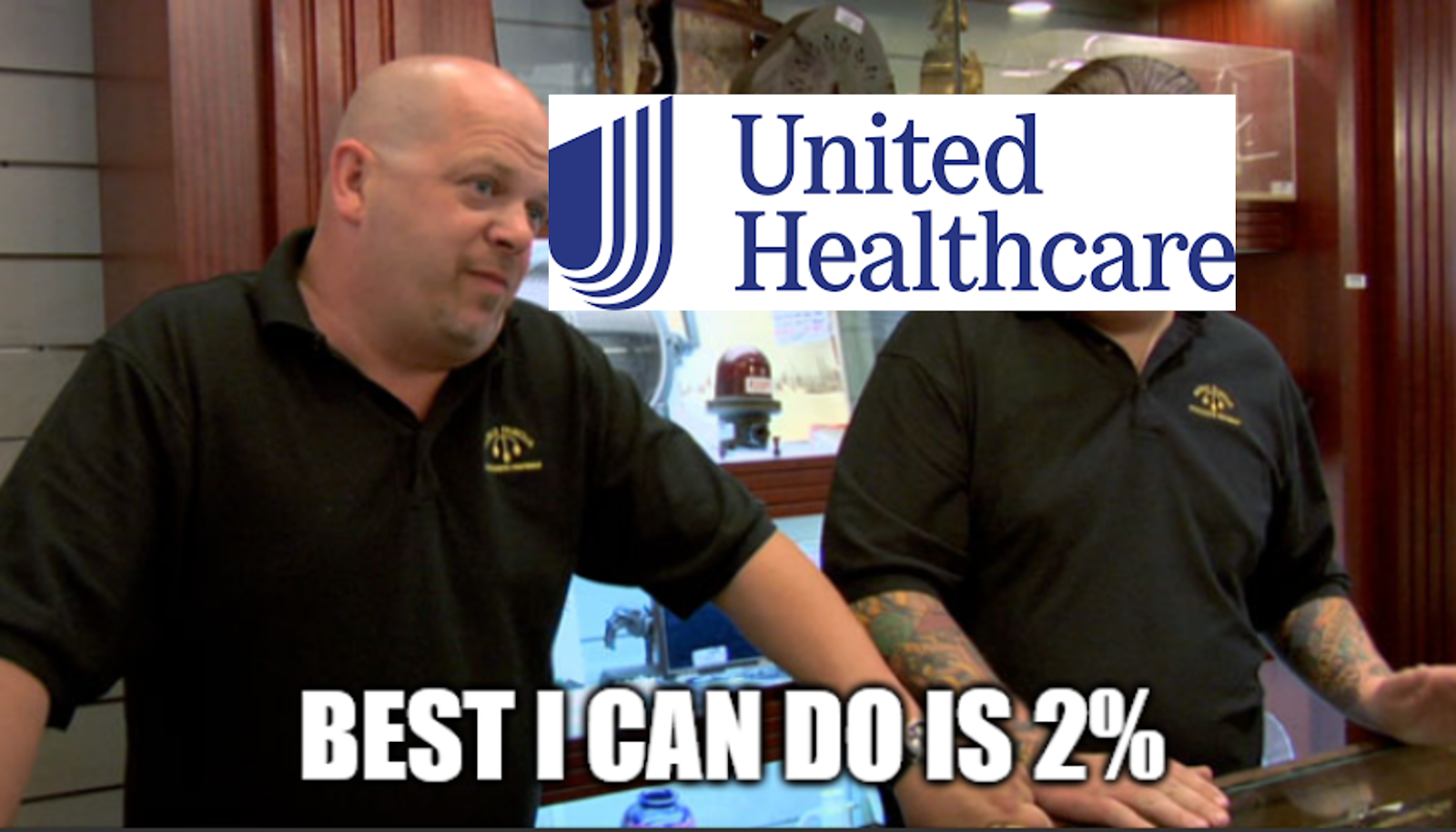
Over the past few weeks, I've been talking with experts from both After Transparency and other payor negotiation consultants to get the full picture on payor negotiation tactics…some of which are kinda bonkers. One veteran negotiator, Kelly Drosihn, shared stories of insurers stretching negotiations to the breaking point. Payors know that as long as you're haggling, they're still paying you yesterday's low rates. Stated differently, they have every incentive to delay or not pick up the phone. Kelly described how one payor executive would literally only return calls at 5:00 PM on the eve of Thanksgiving or Christmas, hoping to catch the hospital team off-guard or desperate. In one extreme case, she and a hospital CEO flew to meet an insurer on Halloween, bringing along her kids, only to spend the entire holiday locked in a conference room while everyone else trick-or-treated in paradise outside. (Yep. Negotiating with payors can mean missing trick-or-treat with your kids on a Hawaiian beach. That's some serious dedication to your client right there.) In years past, when a payor told you "this is a competitive offer," you had to take their word for it (or swap gossip with another CFO over golf and hope he didn't sandbag you). Now, you can look up their rates with other hospitals much more accessibly, as long as you know what you're doing with the data. Want to know what Blue Cross pays the hospital across town for an MRI? It's in the data. Curious if your biggest rival got a 10% increase last year while you got 2%? That's findable too. Negotiation intelligence is the next era of transparency data and payor contracting. Another consultant, Tammy Mallow, who advises urgent care clinics, told me she now encourages every client to at least come to the table. Even smaller groups that once assumed they had no leverage are realizing they can be paid what they're worth. Tammy has seen urgent care operators who hadn't revisited a contract in 10 years—whether from fear or the inertia of "we've always done it this way"—finally wake up because of transparency data. In one case, a physician-owned urgent care discovered that Blue Cross was paying them materially less than competing clinics in the same city. Armed with that information, they pushed past their hesitation, reopened negotiations, and secured a $5 increase on their global visit rate. At first glance, $5 may not sound like much, but across tens of thousands of visits per year it translates into hundreds of thousands of dollars in additional revenue—funds that can be reinvested into the business: new equipment, expanded staff, better provider compensation, and additional clinic locations. Providers—especially post-2020—should no longer tolerate razor-thin contract rates that fail to keep pace with rising costs. When hospitals see labor and supply costs increase 10% while payors offer only a 2% bump (or none at all), the choice is often to make some noise rather than quietly bleed cash. Thanks to transparency data, providers now have a way to push back when payors claim "your request is above market." Which brings us to the newest—and most disruptive—tool in these negotiations: price transparency data. |
You Have More Leverage than you Think: Craft the Story, get the Rate |
There's a psychological shift going on here: you, as a provider, have more leverage than you think. Hospitals often assume, "We're too small to negotiate - we're happy with our 5% increase" or "If we push, the insurer might actually cut our rates or push us out of network." The latter is less rooted in reality and more of an urban legend that looms large in many CEOs' minds. Yes, there have been horror stories of payors threatening to terminate contracts or lower rates when a provider pushes back, but those cases are seldom, and the upside is well worth the short-term risk. In reality, payors need providers (ya know, their networks don't really amount to much without doctors and hospitals), and regulators frown on the old bully tactics. Now that you can point to the payor's own data to justify your ask, it's a lot harder for them to justify a retaliation or outright refusal. If the data supports you, you've got every reason to demand reasonable price for the service you're rendering - especially if it's the exact same service as the guy across the street and you're getting paid $10,000 less. That said, let's not pretend price transparency data is a magic wand or an easy button. It has gaps and quirks. The files show negotiated base rates for thousands of services, but they often leave out things like outlier payments (extra $$ hospitals get for super-expensive cases) or certain carve-out programs (trauma care, transplant fees, and so on). Some payors' data files are a hot mess – missing physician group info, using wonky formatting, or just plain inaccurate figures. Aetna and Cigna, I'm looking at you; your data files sometimes seem like they were compiled by a drunk algorithm. Anthem (aka Elevance) wasn't much better, and in one instance, an insurer (okay, it was Anthem) basically pulled its data offline in a market for 18 months after a particularly bruising negotiation where a hospital used that data against them. (Nothing says "you hit a nerve" like the payor taking their ball and going home.) The good news is the data quality is improving, bit by bit, and experts have gotten better at interpreting it. Plus, with a little elbow grease, you can often triangulate missing pieces using claims data or proprietary benchmarks (like Milliman's actuarial datasets) to fill the voids. The takeaway: transparency data is immensely powerful, but you still need to know how to use it correctly. That's where having the right people and tools comes in. Here's where folks might go wrong with price transparency data today: - They've already tried to use a vendor, seemingly found nothing, spent thousands of dollars, and never want to touch the datasets again after getting schooled by payors
- Outlier payments aren't included in the datasets
- Rate escalators related to quality (increasingly a way to get around including real rate information in payor price transparency data files) are not included
- Carve-outs like trauma and other smaller service lines are not included in the datasets
- Price transparency data doesn't contemplate chargemaster based reimbursement for hospitals
One final point: be mentally prepared to escalate. Going public is now part of the playbook. And yes, that's terrifying. You've seen the payor-provider contract spat headlines. They happen every year, especially with high-profile academic medical centers or large health systems. Along with that link above, here's just a few from this year: (Side note - what's worse? A payor dispute with a large provider org or a Fox dispute with Youtube TV right before the Texas Longhorns vs. Ohio State football game? …I digress) In the old days, these disputes stayed behind closed doors. Hospitals have learned that threatening to go out-of-network – or actually doing it – is the ultimate trump card, especially if you're an essential provider. Public contract disputes nearly doubled from 2022 to 2023 (jumping ~69% to over 80 disputes in the media) and kept climbing into 2024. In almost half of those cases, negotiations dragged on so long that patients had to be notified their hospital might be dropped from the network. Going public isn't just theatrics; it's sometimes necessary to get a deal done, and usually in that scenario, the public sides with the provider brand. For large academics, they know what leverage they have. Their scale, brand, and assets command premiums and they know they hold significant enough leverage to win the rate. For the rest of us, things are a bit more murky. The process can drag on for months of back and forth. And the negotiation usually starts docile and harmless enough: your team sends a letter requesting a rate increase or gets in touch with the right contact. Then the payor responds with boilerplate about "unfortunately, market conditions… blah blah… cannot accommodate." You schedule meetings, exchange spreadsheets, maybe even agree on some minor terms. But when real dollars are on the line, payors tighten up. |
Watch Out for Payor Curveballs (Recognize the Common Tactics) |
Equipping yourself with data and a great team is half the battle. The other half is anticipating the tactics payors will throw at you which may make you stumble. Here are some common negotiation tactics payors use, and how you can respond: - The Hardball "Take it or Leave it" Stance: Some payors (often the big nationals) might come at you with a fixed offer and claim there's no wiggle room. This is especially common with newer, perhaps younger contract managers who aren't into the old back-and-forth. They might even isolate their team – e.g., your usual friendly rep suddenly isn't on the calls, and you're stuck with a stone-cold negotiator who offers a measly increase and a "that's our final offer." Don't let this intimidate you. It's a tactic. They're testing if you'll blink. As long as you've prepared your walk-away plan (see above) and have your data ready, calmly reiterate your case. If they truly won't engage, you may have to actually issue that termination notice and see how quickly their tune changes when network adequacy is on the line. Often, you'll find there was more money on the table after all.
- Gaslighting Your Data: This one's almost comical. You present data from the payor's own transparency files showing they pay Hospital B 20% more than you, and they respond, "Those numbers are wrong" or "You're interpreting it incorrectly." Excuse me, what? It's literally their data. Granted, there is room for genuine mistakes. Maybe you did accidentally pull an outdated file or mix up service codes (which, again, is why it's so important to work with someone who knows what they're doing!!) But if you've done your homework, stand firm. A great retort is, "These figures came from your published data as of [date]. If something's inaccurate, we'd love to know – because CMS might be interested too." Love the subtle compliance check there. Healthcare really does get messy behind the scenes eh? In reality, payors count on many providers being unable to parse the data or easily get flustered. Don't fall for it. If you're confident in your analysis, HOLD YOUR GROUND.
- The Confidentiality Bogeyman: Some old-school types might grumble that you bringing up other hospitals' rates is a breach of contract or confidentiality. This is a scare tactic that used to work maybe 3 to 5 years ago. Today, it's a paper tiger. The federal transparency rules explicitly make these rates public information. So you can politely reply, "We're only discussing public data that anyone can access on your website. No confidential terms are being violated here." End of discussion. Similar logic to the above point.
- Shifting the Goalposts with Quality Programs: Here's a sneakier one that's emerging. Payors have figured out that they can keep base rates looking flat in the transparency files by moving a lot of the effective reimbursement into side programs like quality bonuses or value-based payouts. For example, they might agree to a 15% rate increase for you, but only 0% shows up in the base rates and the 15% is paid through a "quality incentive" program if you hit certain metrics. In certain states, price transparency data may show the same rate for every provider simply because the rate differences are baked into quality differences. To any outside observer, it looks like providers are all the same and got no raise when in reality some are getting more…but under the table, so to speak. This dynamic is malicious compliance with the transparency law's letter, and it's likely to become more common. So how do you handle it? First, be aware it's a possibility. If a payor says "we pay everyone the same," you might quip, "Sure – at least on the published rates. But are those rates the whole story, or is there a second column for incentives?" Push them to be transparent with you about total potential reimbursement. And consider negotiating your own quality incentives if they exist – just make sure they're achievable and not some pie-in-the-sky metrics you'll never hit. Again, understanding the nuance here is so critical to these negotiations. Details matter.
- The Percent of Charges Trap: Many hospitals still have contracts that pay a percentage of billed charges for certain services (often outpatient ancillary services or drugs). Payors will sometimes use this as both a sword and a shield. They might audit your chargemaster increases aggressively, claiming you're raising charges to game the contract. Or in negotiations, if you ask for higher rates, they'll point at your charge master and cry foul if it's higher than peers. Here's the counter: First, use transparency data to compare actual payments, not just nominal terms. If Hospital X gets 70% of charges but their charges are double yours, then of course they're getting paid more. Bring that up! It may be time to restructure away from charge-based payments altogether – perhaps negotiate fixed case rates or per diems that are more equitable. And if the payor wants to play hardball on charges, remind them that nearly every hospital updates charges annually across the board (and usually modestly). If your chargemaster is abnormally low, you might even show that raising charges is necessary to reach parity. Data can expose these nuances; use it to argue that you're only seeking what others are already getting, whether via charges or fixed fees.
Always ask yourself what your narrative is. Use data. Tell a story. The combination of solid data, a strong narrative, and foreknowledge of payor negotiating tactics puts you in a meaningfully leveraged position compared to years past. |
Recapping the Current State of Payor-Provider Negotiations in the Transparency Era |
- Don't let fear stop you. The fear of retaliation is not as bad as you think. There's still a stigma and a cultural shift that needs to take place within negotiation. You can get ahead of your competition by being smart, prepared with your data and story, but don't be paralyzed.
- Use the data, but also use your imagination. Data tells you what is happening; your job is to explain why it matters. Build that narrative for both financial and human impact. Make sure your data insights are bulletproof.
- Engage allies beyond the negotiating table. Whether it's internal champions, other providers, employers, or even the media, don't fight alone if you don't have to.
- Be ready to play chicken. Decide your red lines and be willing (and authorized) to pull the trigger on termination if necessary. Just the act of preparing for it strengthens your resolve.
- Learn from the experts (or hire them). If you don't have a sophisticated data team, or this is your first rodeo with transparency data, get help from those who've wrangled the beast before - both in the data lake and the negotiating room. The ROI is worth the upfront cost, and many consultants in the space work on a contingency basis.
- Check the corners for payor tricks. Watch for quality-program sleight of hand, missing data shenanigans, and baseless claims around data misinterpretation.
We're entering a new era where providers of all sizes have a fighting chance to get what they deserve from payors. It's about time. As someone who geeks out on hospital and provider strategy, I find this shift exhilarating and it'll be fascinating to see how prices shift over time as both sides become more aware of the transparency data capabilities. Sure, negotiations will always be tough – that part won't change – but the tools and transparency now favor those willing to put in the work and challenge the old ways. |
|
|
SPONSORED BY AFTER TRANSPARENCY As specialists focused primarily on payer price transparency, After Transparency makes putting payor data to use frictionless for providers. Their concierge-style approach and flexible process lets them build a combined solution of data, analytics, and support to put the negotiating power in providers' hands. With After Transparency, providers gain more than data. They gain experts who turn complex data into actionable insights, delays into rapid progress, and limited results into meaningful ROI. Talk to them about next steps.
|
|
|
As many of you know, Texas fell short last Saturday much to the dismay of Longhorn nation. Here were my observations from the game: - Texas is fine. We outperformed them in every statistical category but just couldn't put the ball in the endzone. We still have everything in front of us if we take care of business in the SEC, though certain games (@ the Swamp, @ Georgia) won't be fun. Arch had a bad day and we put him in a nigh on impossible position between media hype, preseason #1, preseason Heisman favorite, playing the defending national champs, on the road, as the first game of the season. Can we please chill a bit on Arch, please.
- Baxter looked explosive and I'm looking forward to seeing what he can do this year
- What's up with our receivers? It seems like we have nobody elite other than Wingo which shouldn't happen at Texas. Maybe Ohio State just has an elite D. We'll see how the skill group progresses over time.
- I was extremely pleased with our ability to run the ball and the O line play given the turnover on the front
- Our defense is elite but I was disappointed in our pass rush
- QB sneak on 4th and goal?!?! come on Sark!!
|
|
|
Thanks for the read! Let me know what you thought by replying back to this email. — Blake |
|
|
.png) | Share Hospitalogy, Earn Rewards | Have friends who'd love Hospitalogy too? Click the link below to share Hospitalogy with your friends and earn awesome rewards! | |
|
PS: You have referred 0 people so far | | Share Hospitalogy! | |
|
|
|
|
Get your brand in front of 48,300+ executives and healthcare decision-makers. |
I'm building a community of leaders in strategy, finance, and ops
at hospitals and health systems to help us connect, learn, and grow together. |
Workweek Media Inc.
1023 Springdale Road, STE 9E
Austin, TX 78721 Want to ruin my day? Unsubscribe. |
|
|
|




No comments