PARTNERED WITH  |
|
|
Happy Thursday, Hospitalogists!
I'm done hyperventilating sickly sweet, slightly smoky air in the floor of the Venetian and am back in the great city of Dallas. So now I've had the chance to memorialize my notes from HLTH along with my general impressions from one of the premier health tech conferences.
P.S., who do you think has better odds of success? The 30th AI scribe with a small booth in the back right of the expo or the seedy folks on the strip handing out the…'trading' cards? One more thing: I might host a happy hour or dinner at ACHE in Houston next March if enough Hospitalogists will be there. Take 2 seconds to help me get a quick headcount: Are you planning to attend ACHE? |
Was this email forwarded to you? |
|
|
BLAKE'S BREAKDOWN: HLTH 2025 |
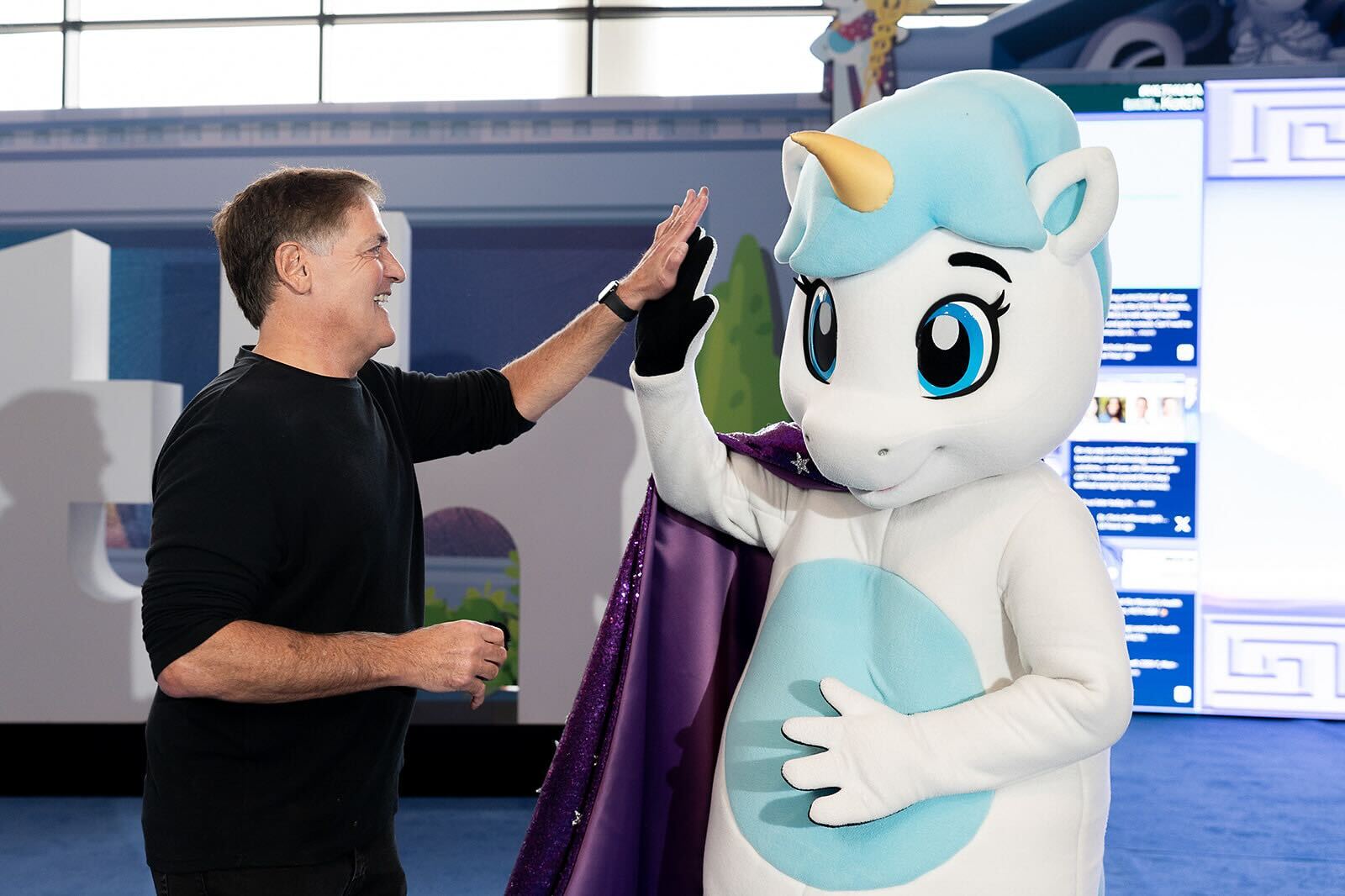
First, enjoy this picture of my guy Mark Cuban high-fiving the mascot of HLTH this year - the unicorn. Incredible stuff. (By the way, Oprah apparently canceled last minute which ruined my meme idea of "You get an AI agent! YOU get an AI agent! Everyone gets an AI agent!" But I digress) |
Key Themes During Conference Season During conference season as a whole, here were some common phrases and themes I'm hearing these days which seem to be today's consensus. I'd be curious for others' takes on this list and feel free to reply with your own to add: - There are no sacred cows left in healthcare (we love to talk about sacred cows in this industry)
- AI is here to enhance and enable humans and physicians in healthcare, not replace - to help individuals practice at the top of their licenses (how many times have you heard this now?)
- AI's greatest potential lies in its ability to translate, connect, and synthesize multidisciplinary teams - i.e., break down silos
- We're seeing the Great Convergence of healthcare AI companies - meaning everyone is moving toward the same financial incentives to create moat - coding, documentation, and RCM being top of the list
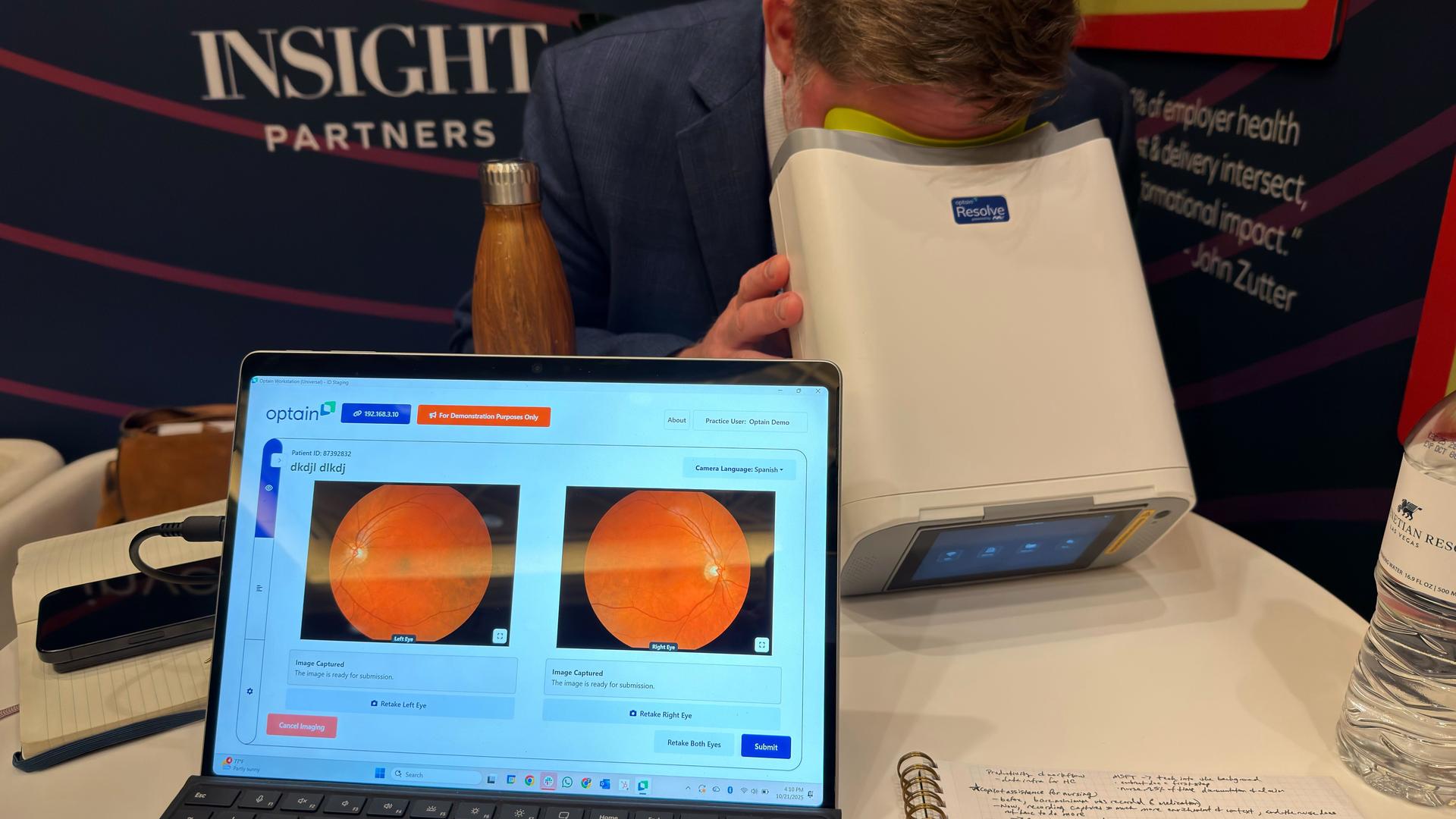
My Notes, Interviews, and Intel from HLTH The following notes and tidbits are in no particular order and also include some random musings I couldn't resist mentioning. Pickleball: Weightwatchers had an entire pickleball court at HLTH. Like its last gasp as a company is spent on marketing dollars toward a sport for senior citizens. Even more ironic was the fact that Carelon's booth had pickleball paddles and balls!! The payor's provider arm trying to incentivize more play and potential orthopedic injury! Remember that whole pickleball adds $400M in cost thing? Well I talked to some actuaries on site and they said that whole thing actually isn't a legit study at all. So there you go - myth busted. Optain: Not ordinarily my cup of tea since it sits more in the medical device world, I couldn't resist taking a meeting with these guys since I'd heard good things about the company from the Aegis Ventures folks. Being an utter non-clinician myself, I was super impressed with Optain's technology in the world of occulomics, a term I learned at HLTH about how eye scans can tell quite a bit about your overall health. The Optain folks did a demo right in front of me which you can see pictured below. |
Optain's value prop is straightforward and tied to diabetic retinopathy: - An eye scan is required for diabetics in both Stars and HEDIS measures, and diabetic retinopathy is already reimbursable. The eye scan is most often the measure missed when it comes to diabetics.
- Eye scanning devices typically aren't deployed in primary care settings, where every other test for diabetics is conducted. Historically they have to go to a separate facility for the eye exam. This gap was a problem Optain's health system partners (and they have like 7 or 8 health system partners who also happen to be strategic backers) identified over and over again.
- Optain's device requires little to no training and scans in minutes, giving clinicians AI-enabled results in minutes (trained on opthalmology-specific LLMs) on eye health.
- Occulomics is a growing space and actually can provide other health indications - cardiovascular health and risk prediction, for instance, and potential for neurological as well.
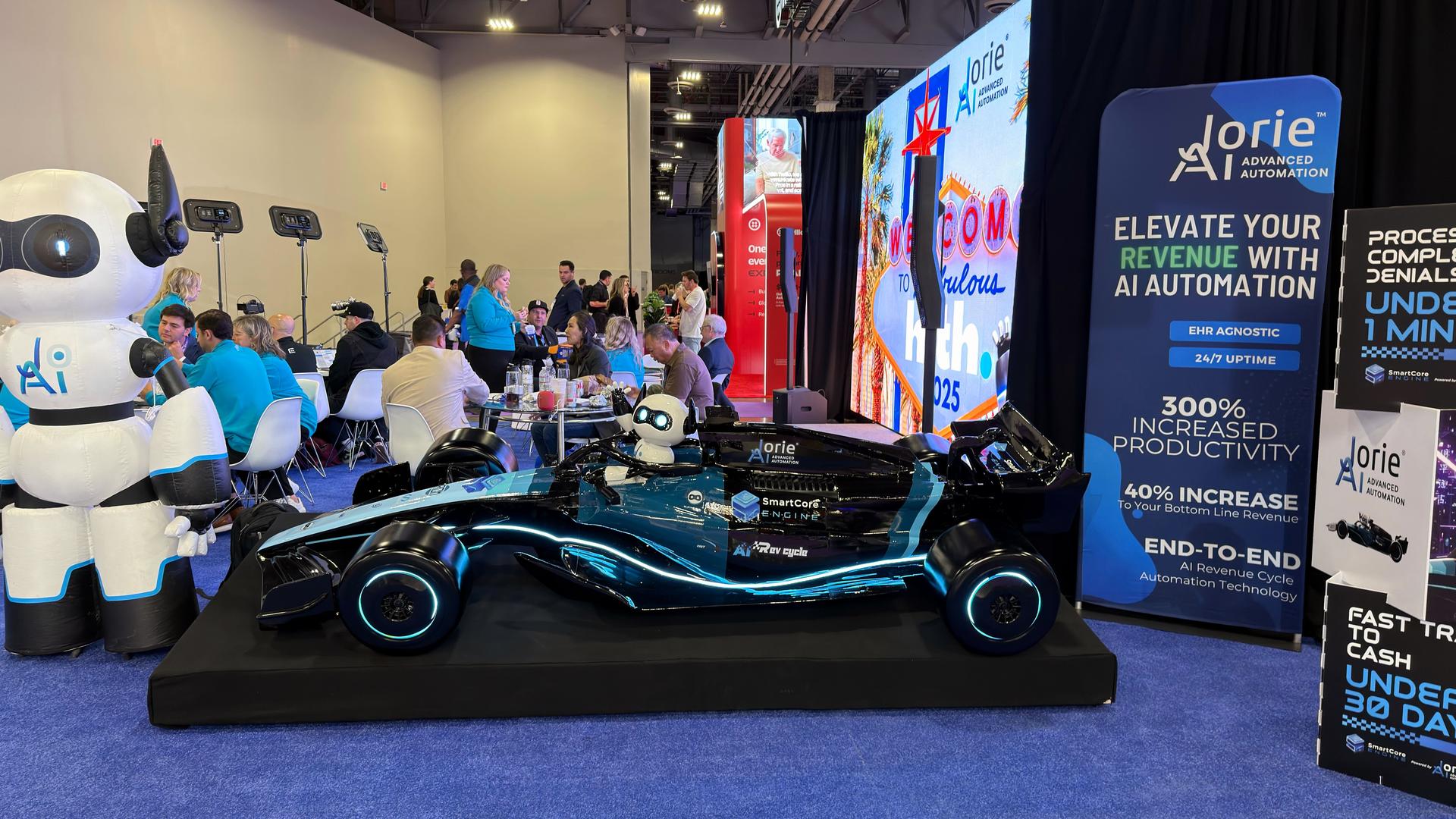
On the strategy side, Optain is deployed in 200 sites, with 1,000 more (!!) coming online in the next 12 months. They also just acquired the largest tele-ophthalmology group to help with reads and further train their AI, and also have a partnership with Privia starting in 2 states. If you hadn't heard of them, you probably will start to. Their $26M Series A was in September. Jorie AI: It's not often you see an F1 racecar on the expo floor but Jorie AI pulled it off. The AI-enabled RCM startup (maybe the only one still family-led and bootstrapped) continues to gain traction and conducts business the right way in a space marred by abuse and upcoding. |
Regard: Eli Ben-Joseph & crew have been grinding in the clinical documentation space just about as long as anyone, so now that it seems to be in the hottest spot on the planet between AI and healthcare, they're rightfully benefiting, including an announced partnership to integrate within Microsoft's Dragon Copilot (formerly Nuance). - I asked Eli for his general thoughts around the current state of AI in healthcare, and we're in agreeance on the trend of platform-ization across the board. Eli also mentioned the pressing need for proving out hard ROI (not just 'vendor math'). He then reminded me of Regard's value prop as a platform - that doctors can only really review 3% of the data / documentation they have access to, and Regard surfaces potential diagnoses and other useful tidbits with a 95% accuracy rate. Pretty in line with Regard's company tagline, which is 'proactive, one and done documentation.'
Microsoft: Speaking of Microsoft, Mary Varghese Presti was gracious enough to spend some time with me and break down their upcoming healthcare strategy. In case you missed it, Microsoft Health & Life Sciences (most of which formerly known as Nuance) had a slew of announcements and partners, most notable was its move into ambient tech for nursing - essentially creating the AI copilot for nurses. While I didn't get much insight into the whole Nuance-Epic drama, I did learn about what Microsoft is focused on thematically, which involves taking the burden away from clinicians and physicians, and having the technology fade into the background seamlessly. - Microsoft just so happens to be the 800 pound gorilla in certain ambient technology capabilities, and tack on their newly announced partnerships with Regard, clinical decision support tools (they mentioned OpenEvidence and UpToDate in the same sentence on the press release! The horror!), Ensemble, Cohere Health, Press Ganey, Artisight (remember them? Back again!) and more. Pretty cool to watch this all plays out and the AI stakes continue to get higher.
Judi Health: The company formerly known as just Capital Rx spent some time with me breaking down their business model and the ongoing broader company transformation after the $400M round and subsequent rebrand earlier this year. I'm hoping to take a deeper dive with them for you (stay tuned). Judi's footprint is 4.5M+ members as they aim to create the ambitious goal of a transparent, aligned administrative layer for employers across drug and medical spend on a single platform. For the employer folks in the Hospitalogy audience…please…I implore you to check your administrative services agreements and what's buried in there. GE Healthcare: I was graciously invited to a media breakfast (does this mean I'm bigtime?! kidding) with GE Healthcare where their team unveiled some new AI-focused announcements centered on health systems. You might remember that GEHC announced the launch of its AI-enabled, cloud-based platform CareIntellect last year, signaling a deeper move into SaaS workflow products to help streamline clinical and operating workflows. This year they're building on top of the CareIntellect platform further by launching a perinatal specific product but also interestingly, announcing Command Center, which is AI-enabled hospital operating software within CareIntellect (noticing an AI theme yet at HLTH?). - Command Center is launching and developing products with 2 initial partners: Queen's Health Systems in Hawaii and Duke and current focus is on initiatives like length of stay management, with the general theme of all of these launches being…'how can we turn data into action where it's needed most?'
- Another interesting note mentioned by leadership was the move toward reimbursement for AI services. Similar to remote patient monitoring, any upcoming announcements around AI reimbursement pathways - and what level of reimbursement they get - will be the next AI battleground for clinically integrated agentic services.
Omada: Sean Duffy continues to be the man and their value prop remains as strong as ever - even more so now that GLP-1 utilization management is top of mind, but also a greater mission around holistic nutrition, meeting people where they are with all chronic diseases they service, and most importantly, fostering connection among those with diseases who may feel lost. Cedar: Cedar had a really cool announcement during HLTH around a consumer-focused product around hot button arenas like patient self-pay, Medicaid, and ACA enrollment during a time when we're seeing a rising consumer focus in RCM. Cedar's Cover bundles various patient-facing mechanisms into one product. The TL;DR here being…Cedar helps individuals become aware of every potential financing or insurance avenue available to them, which benefits health systems, pharma manufacturers, and states downstream in various ways: - Medicaid enrollment: in partnership with Fortuna, simplifying the enrollment process and identifying eligible patients for Medicaid
- Pharmacy co-pay assistance: in partnership with TailorMed to help identify eligible co-pays
- Coordination of benefits: to help patients identify supplemental or secondary insurance
Inbox Health: Just wanted to give a quick shout out to these guys for taking the time to meet with me and discuss their straightforward value prop to physician practices, increasing billing transparency and communication to patients resulting in better collections rates and higher satisfaction between patients and providers. Oscar: The insur-tech ACA player unveiled Oswell during HLTH, which is a supercharged consumer-friendly navigation app for Oscar members to help them navigate benefits, but I imagine also to direct members toward desirable network choices. I had a great conversation with Janet Liang and Keerthi Reddy at Oscar talking about their AI-forward strategy and the announcement, and the capabilities of conversational AI for stuff like this is pretty stellar. Oscar continues to ingrain AI in every facet of their company, and now the question is whether that'll move the needle materially from a member experience and financial perspective. Heidi: The Aussie-born ambient scribe player has been on a tear. Dr. Tom Kelly is incredibly thoughtful and I really enjoyed picking his brain, especially around the questions facing the AI scribe space today. Heidi's whole strategy as the largest global scribe has been centered on product-led growth: build for the physician and clinician, create a free version of your product with more bells and whistles on the paid, let those adopters champion the cause at their respective organizations, and then move upstream. Through that approach, Heidi is live with hundreds of thousands of clinicians globally and now with partners like Beth Israel, Franciscan, and Cambridge. - What struck me the most during my conversation with Dr. Kelly was his steadfast, unabashed, relentless focus on delivering value to clinicians. He consistently noted during the discussion that the derivative value of Heidi to enterprises is secondary to the primary value to clinicians, and called any other approach (e.g., one aligned with EMRs) as an unsustainable sugar high - and asking why you would attach your product more intertwined with something physicians actually hate. Heidi is expanding its offering, moving into AI-enabled contact and calling features, and I wouldn't be surprised to see / hear more partnership announcements to expand into other capabilities around AI and ambient. Heidi's biggest challenge to date is brand awareness - not any of the other noise - and you should keep these guys on your radar.
Angle Health: Oscar isn't the only one trying to reimagine health insurance. I chatted with Angle Health's Co-founder and CEO Ty Wang as one of my last (but not least) conversations of HLTH and he shared his vision for a built-from-scratch health plan and TPA in Angle Health. As former Palantir, Ty & team have built an AI-native, full-stack, implementation-light platform and they're already at some great member scale. Excited to see how Angle Health continues to grow. Hearsay & Rumors: - There's a general consensus among provider organizations when it comes to AI. I've heard at least a handful of times "…well, payors have been doing this for a while already, so it's about time we leveled the playing field." Ironically payors are ALSO looking to level the playing field so I guess the question becomes…who is tilling the field?
- I witnessed a Fierce Healthcare reporter kick a poor CEO out of his chair in the Media Village for their upcoming interview. Absolutely ruthless in there, I tell you.
- Alongside HLTH, per Axios (paywall), Epic has ended its Workshop program. You know, the one where they apparently took equity warrants in certain compan(ies) giving certain vendor(s) - at the very least - the perception of preferential treatment over other alternative players.
- "When we established the Workshop program, the intention was always for apps to move from Workshop to Toolbox as the underlying integration progresses from initial development to maturity," an Epic spokesperson told Becker's.
- Translation: we don't acquire, except we sort of take special interests in certain companies and give preferred access - or at least the perception of it
|
- The AI platforms that can diffuse traditional tensions between disparate segments of a healthcare organization (along with providing hard ROI of course) will win out over the long term. Think clinical teams and finance teams.
- Is Ambience is on the market? Somebody please confirm if this rumor is remotely true
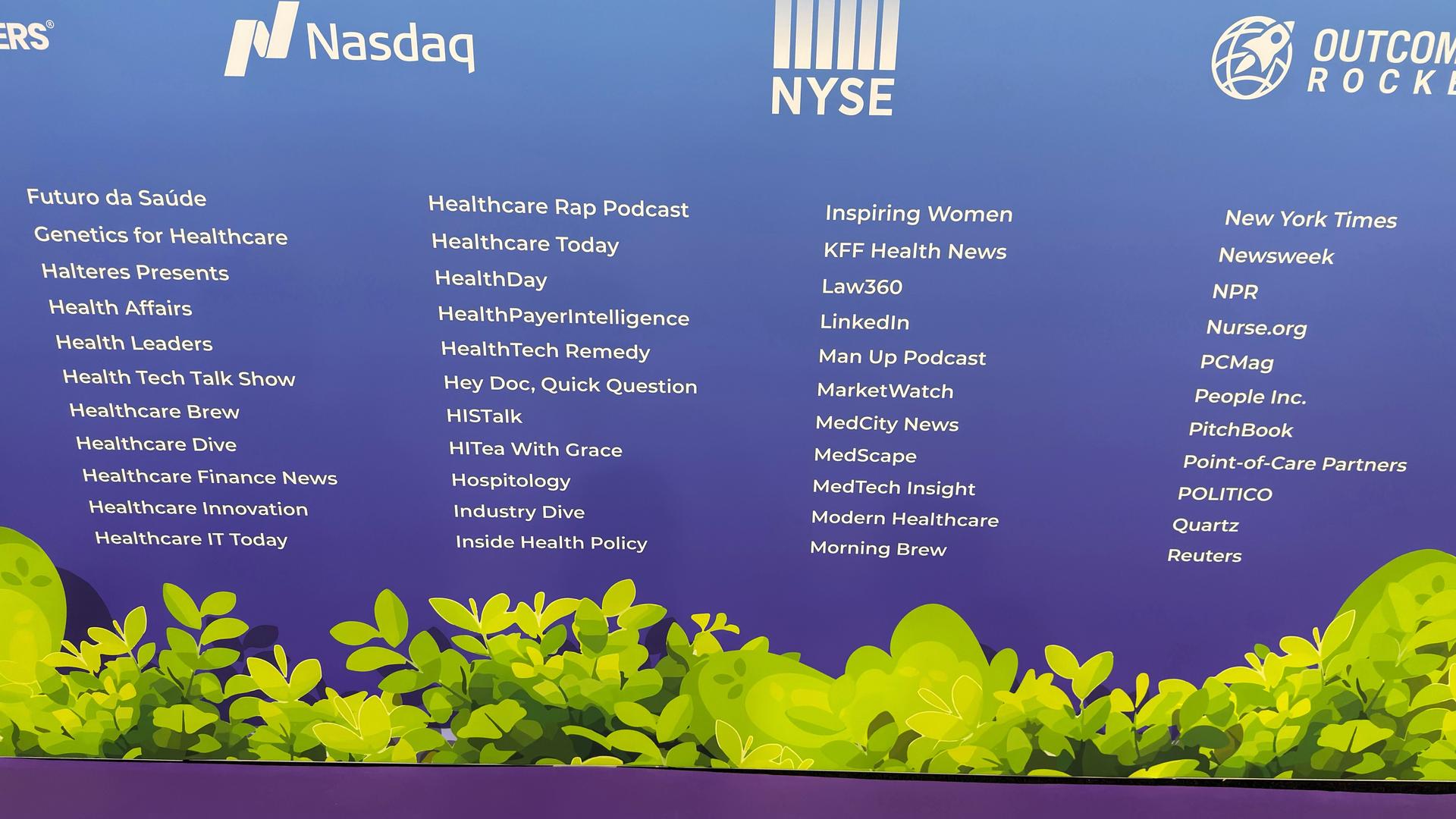
- I made the media wall at HLTH! Let's goooo (disregard the spelling, I don't care, literally everyone misspells Hospitalogy it's fine guys it's FINE)
|
The General HLTH Vibe HLTH's greatest strength is its ability to bring a large swath of people together to connect across the healthcare innovation ecosystem, and the access to innovation leaders is fantastic for folks like me. But overall the conference felt a little sleepy this year and I wasn't the only one to feel this way. I don't think it's a knock on the conference or its production - that remains top tier and absolutely fantastic. Rather I think it traces back to a desire for folks to find more intimate spaces for better dialogues, and this dynamic doesn't happen on a big stage. Plus, with budgets tighter in 2025 and the government shutdown, I would imagine these dynamics led fewer employers, payors, health system, and gov't folks to come out. Really unfortunate. HLTH is great at what it does and I'll be interested to see how it continues to evolve to match this changing tide in the healthcare conference game. |
|
|
Thanks for the read! Let me know what you thought by replying back to this email. — Blake |
|
|
Get your brand in front of 49,000+ executives and healthcare decision-makers. |
I'm building a community of leaders in strategy, finance, and ops
at hospitals and health systems to help us connect, learn, and grow together. |
Workweek Media Inc.
1023 Springdale Road, STE 9E
Austin, TX 78721 Want to ruin my day? Unsubscribe. |
|
|
|





No comments