Breaking News

New NIH guidelines, whole milk, and mania on social media

December 16, 2025
theresa-g-avatar-small - light bg
Morning Rounds Writer and Reporter
Thanks to everyone who emailed to call out my error in yesterday's issue: Gonorrhea comes from a bacterium, not a virus. Helen, of course, did not make this mistake in her great story on the new antibiotic — that was all me. I'm working on a mnemonic device so this does not happen again.

exclusive

NIH lays down more guidance for grant reviewers

A big brick building with columns. An inscription at the top reads "National Institutes of Health."

NIH

Program officers at the NIH received a seven-page memo on Friday with details on how to determine whether grants fall into the Trump administration's priorities — and if not, how to appropriately terminate them. It's the latest step in the government's unprecedented campaign to bend the focus of biomedical research in the country to its will, STAT's Anil Oza reports.

Some outside experts see the guidance as a positive step, as it prioritizes the possibility of renegotiating awards rather than immediately terminating them. "I think it's quite good," said Michael Lauer, who previously directed the NIH's extramural arm. Read more from Anil on the details and what it means for the future of research.

Relatedly: Today we're publishing the first two essays in a First Opinion series on the future of the NIH and American science. One, by two Harvard physicians, focuses on what the future of the NIH should look like after this year's upheaval. The other, by two leaders in innovation at Stony Brook University, explores why China's drug discovery contributions have skyrocketed in recent years.


science

The over-under on saturated fats

Ahead of the (delayed) 2025-2030 national dietary guidelines, health secretary Robert F. Kennedy Jr. is promoting dietary habits including full-fat dairy, red meat, beef tallow, and overall, more saturated fats. A new systematic review clarifies the evidence around the existing debate on the last item: After analyzing data from 17 randomized clinical trials, researchers found that reducing intake of saturated fats reduced the chance of serious cardiovascular events — but only for some people.

As STAT's Liz Cooney writes, the review has findings that both mainstream nutrition experts and fat-forward Kennedy allies might welcome. And already, different interpretations of the evidence have caused some controversy. A companion editorial to the study concludes that saturated fatty acids are "unlikely deleterious" for the general population's heart health. But that interpretation made the review authors so mad that they raised their objections to the journal. Read more from Liz on the study's specifics and how the evidence could impact political debate.


farm to cafeteria

Is whole milk going back to school? 

Whole milk may be on its way back to school lunch trays — but a newly approved bill clears the way for schools to start serving more nondairy beverages like fortified soy milk, too.

The House passed the Whole Milk for Healthy Kids Act yesterday, following the Senate's approval last month. As you read above, the news comes at a time when health effects of saturated fat, particularly the saturated fat that comes from dairy, are being hotly debated. 

The bill would allow schools to serve whole and 2% milk along with skim and low-fat, a change the dairy industry has been pushing for since higher-fat options were eliminated from cafeterias in 2012 as part of the Healthy, Hunger-Free Kids Act. But Democratic senators Adam Schiff (Calif.), Cory Booker (N.J.), and John Fetterman (Pa.) also pushed through language in an amendment that permits schools to stock nondairy milk that meets the nutritional standards of milk. In practice, that means fortified soy milk.

If the bill is signed into law, schools would be required to provide a nondairy milk alternative if kids provide a note from their parents saying they have a disability, including lactose intolerance. Until now, only a doctor's note would suffice. — Sarah Todd


mental health

What happens when a manic episode go viral
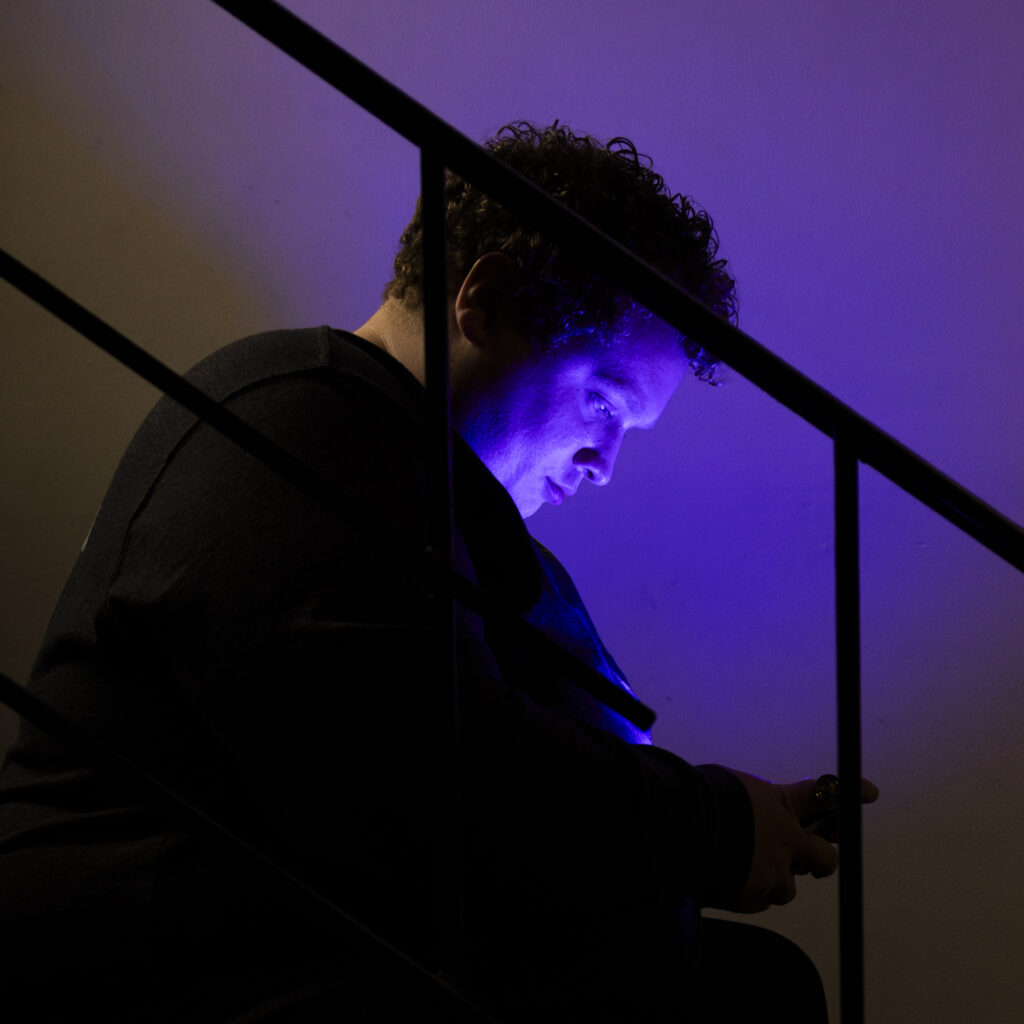
A young man with curly hair sits on stairs, looking at a personal device, maybe a phone. He's illuminated by purple light.

Anthony Tieuli for STAT 

During his junior year of college, Tyler Adolfo (above) experienced a manic episode that caused him to lose connection with reality. In a matter of weeks, he made 1,155 posts on what was then called Twitter, many of them gibberish. Grandiose delusions also led him to post a TikTok video with allegations about his fraternity brothers. He began to have confrontations with other people, including his mother. He attacked a friend with a pocketknife. 

He was kicked out of his fraternity — not for physical violence, but for posting about its leadership online, Adolfo told STAT contributor Eric Berger. His story is representative of a modern problem that people with bipolar disorder face these days: the fallout from the delusional, sometimes hurtful things they said online. "If you have manic behaviors on social media, there is a lot of cleaning up to do," one psychiatrist said. But the accompanying shame can also lead someone right into a depressive episode. Read more from Eric about how the era of social media has changed the calculations for people with bipolar disorder. 


cancer

New evidence on personalizing mammograms by risk

Mammography recommendations tend to come as a "one size fits all" guideline, though that's hardly how cancer risk works. Things like family history, genetics, geography, and age all impact a person's breast cancer risk. UCSF cancer researcher and breast oncologist Laura Esserman's big dream with her WISDOM study was to see if personalized risk-based screening, where patients get more or less frequent screens based on a risk calculator, could be done at scale, and if it had certain benefits over annual screening.

Now she has an answer. The study's key findings, published Friday in JAMA, are that the patients who received personalized screenings received the same rate of breast cancer diagnoses at stage 2B or later compared to the annual screening group. The risk-based screening group had a 37% reduction in stage 2B cancers versus the annual screening group as well. This means that personalized screening was just as safe in terms of catching cancer as annual mammography. It also suggests that some breast cancers may have been caught earlier, explaining the overall reduction in stage 2B cancers.

The highest risk group, which received a mammography and MRI screening every six months, also had more frequent biopsies compared to the lower risk groups. Patients with the lowest risk could get no screening until age 50, then screening every two years. Overall, the study did not see a reduction in biopsies in the personalized risk group versus the annual group.

Ultimately, this suggests that personalized risk-based screening can be done safely and at scale — WISDOM had nearly 30,000 participants. Esserman and her colleagues are now working on a follow-up trial, WISDOM 2.0, which is enrolling participants as young as 30 to help identify high risk patients who may benefit from earlier intervention. — Angus Chen


More around STAT
Check out more exclusive coverage with a STAT+ subscription
Read premium in-depth biotech, pharma, policy, and life science coverage and analysis with all of our STAT+ articles.

What we're reading

  • Data on Humana's clinics looked dismal. Then its corporate research machine got to work, STAT
  • Texas is making a list of transgender people using DPS data, KUT News

  • Trump officials celebrated with cake after slashing aid. Then people died of cholera, ProPublica
  • FDA OKs libido-boosting pill for older women who have gone through menopause, AP

Thanks for reading! More next time,


Enjoying Morning Rounds? Tell us about your experience
Continue reading the latest health & science news with the STAT app
Download on the App Store or get it on Google Play
STAT
STAT, 1 Exchange Place, Boston, MA
©2025, All Rights Reserved.

No comments