politics
The latest Medicare-negotiated drug prices
Andrew Harnik/Getty Images
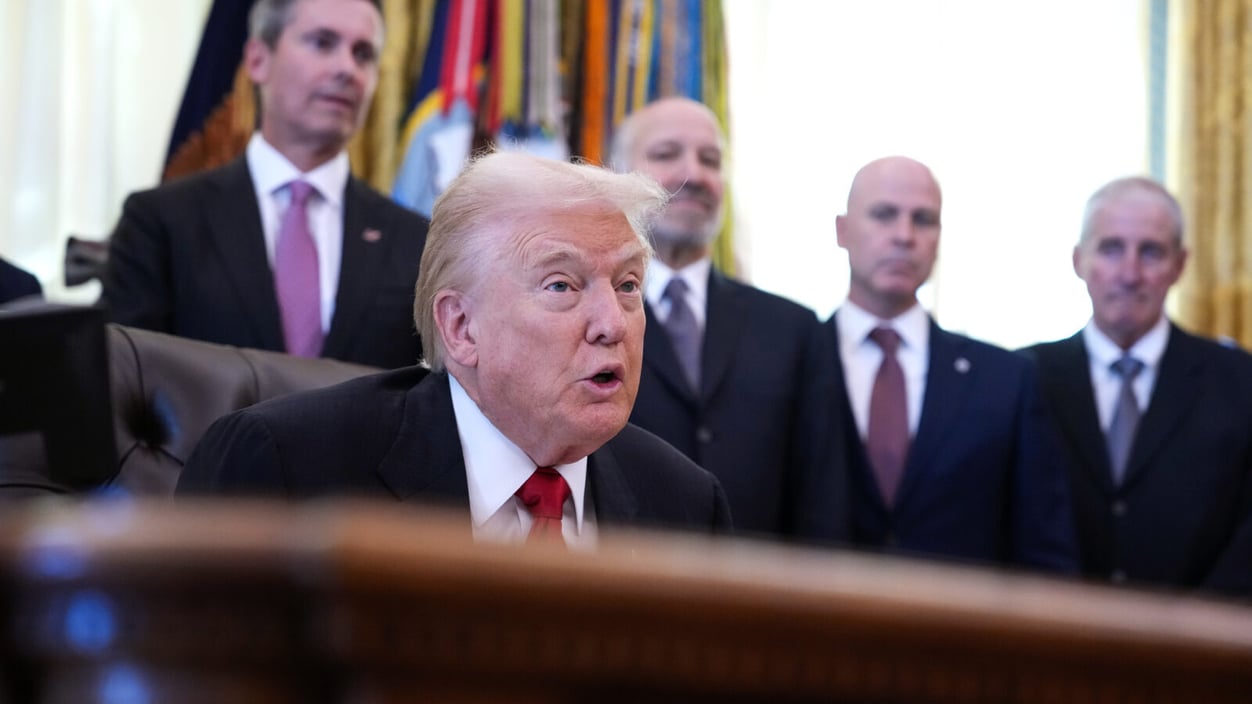
Last week, the Trump administration quietly unveiled the prices for 15 drugs that were the subject of Medicare negotiations, saying it saved $8.5 billion, or 36%, compared to what it would've paid last year had the negotiated prices been in effect. The timing (Tuesday night) and process (a press release, no news conference or big event) of announcing the negotiated prices seemed designed to avoid attention. STAT's John Wilkerson and Elaine Chen broke down the initial details.
It was 2022's Inflation Reduction Act, a law supported solely by Democrats and signed into law by then-President Biden, that allowed the Trump administration to secure these lower prices. While Republicans previously denounced the negotiation provision in the law, the Trump administration said Tuesday that the deals would bring "meaningful relief to millions of Americans." STAT's Daniel Payne wrote about what this shift means, and where there might be new bipartisan agreement in health policy.
First opinion
A vaccine researcher who's scared of needles?
Benjamin Sievers isn't proud of being a vaccine researcher whose heart races and palms sweat when he gets a shot or has blood drawn. But it's a key part of his origin story as a scientist. And he's not alone: a 2023 survey found that nearly a quarter of adults have needle- or injection-related fear. In a new First Opinion essay, Sievers argues that if these feelings are strong enough to deter some people from vaccination altogether, then the way we vaccinate needs to change.
"Needle phobia is often dismissed as childish or irrational, but it's neither," Sievers writes. "It's physiological." Read more on what a future with needle-free vaccines could look like, and why we aren't there already.
medicine
How incoming federal loan caps could impact med students
Starting next summer, students across the U.S. will have stricter limits on the amount of federal loans they can take out to pay for school, thanks to a provision tucked inside the budget bill passed earlier this year. Medical students may be particularly impacted, as they'll be limited to borrowing $50,000 per year, with a total limit of $200,000. But medical school often costs at least that much — for the class of 2026, the median cost of attendance for four years was $297,745 for a public school, and $408,150 for a private school.
A study published last week in JAMA analyzed federal loan data from 2008 to 2020 to get a sense of how many students might be impacted by the new limits. The researchers found that usage of Graduate PLUS Loans — which let students borrow as much as necessary — increased from 13% of students in 2008 to 47% in 2020. (That's a 262% increase in usage. In that same time, the cost of med school increased by 38%.)
Most urgently: In 2020, 40% of med students borrowed more than the incoming $50,000 cap in a single year, and 14% exceeded the new lifetime limit of $200,000. These caps will hit low-income students hardest and likely reduce diversity among physicians, the study authors posited.










No comments