MAHA
What's behind Kennedy's AI-fueled promos?
Michael M. Santiago/Getty Images
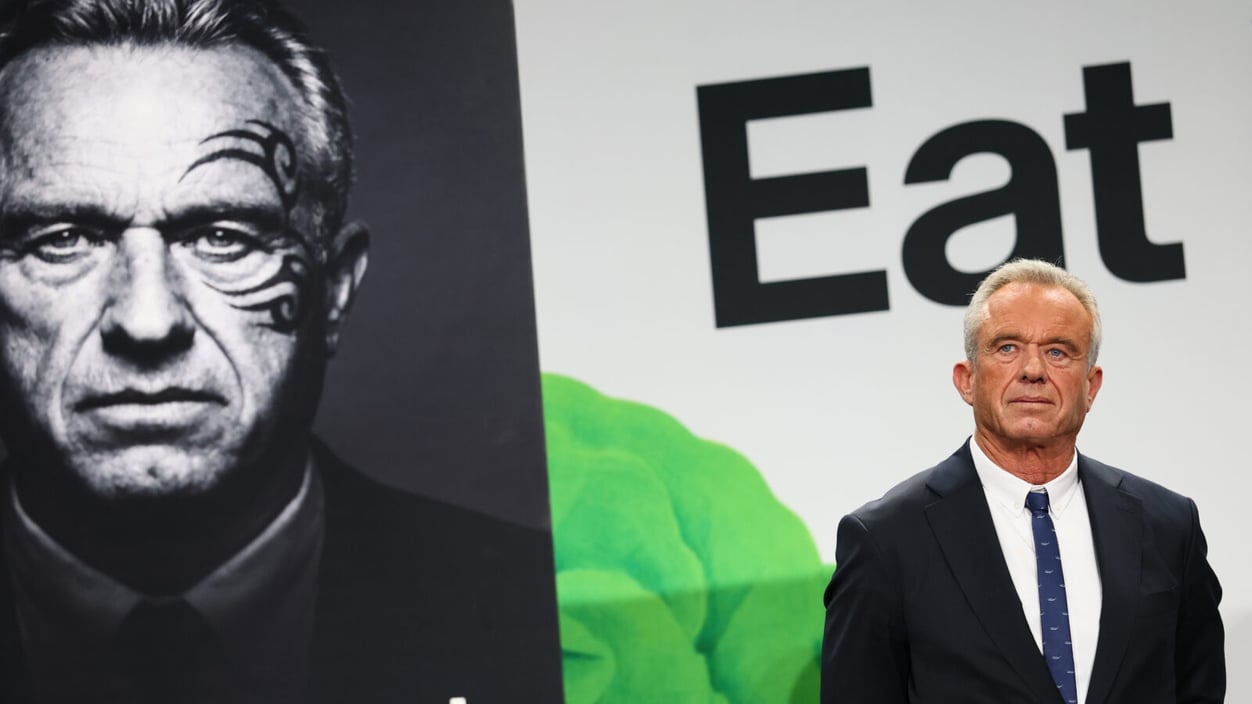
He's an action figure. He's a milk-drinking rave-goer. He's … America's health secretary?
Compared to his predecessors, Robert F. Kennedy Jr.'s social media strategy is unique and provocative. The videos he posts from his official account are often AI-generated and depict Kennedy in all kinds of ways: fighting artificial red dye in school lunches, sporting a face tattoo a la boxer Mike Tyson, or doing shirtless pull-ups at an airport.
While President Trump is known for his in-your-face embrace of social media, Kennedy's tactics stand out. They seem to be part of a strategy to create fervor around Kennedy and his agenda that MAHA leaders hope will cement their alliance with Trump's Make America Great Again movement as the midterms near.
Is it working? Read more from STAT's DC duo of Daniel Payne and Chelsea Cirruzzo, including the identity of the Gen Z digital communications director behind at least some of these videos.
tRANS
Kansas' new ID law could have health consequences for trans people
This week, the driver's licenses of about 1,700 transgender Kansas residents were invalidated after a new law prohibiting identity documents from listing any sex other than the one assigned at birth went into effect. The measure, passed by GOP supermajorities in the legislature, forces trans people to get a new license or risk six months in jail and a $1,000 fine.
States are already tightening restrictions around people's ability to access lifesaving gender-affirming care, but Kansas' new law could complicate more routine health needs and wreak havoc on the type of care that trans people in the state receive.
Say, for example, a trans person is seeking a colonoscopy at a hospital. Experts say that if the gender marker on their new ID does not match the gender marker in the hospital's system or on their health insurance, they could be denied insurance coverage or turned away for treatment altogether. These denials are on top of the harassment and violence that trans people can face in health care settings and the struggles to access preventive screenings for conditions like cancer, compared to their cisgender peers.
"It's not a matter of, 'Do I like what my driver's license says?' It's a matter of, 'Can I interact with the system in a way that the system recognizes me and makes sure I can get the care that I need?' And when the answer is 'or not,' then that has life-or-death consequences for people," said Kellan Baker, a senior adviser for health policy at the Movement Advancement Project, an independent think tank focused on equality and opportunity for all.
POLITICS
CMS: No new durable medical equipment suppliers
If you were planning to start a company selling durable medical equipment to Medicare recipients — a non-zero chance with STAT's readership! — you'll unfortunately have to wait. The Trump administration announced Wednesday a nationwide moratorium on new suppliers in the field so they can crack down on what they describe as rampant fraud, waste, and abuse.
These companies sell a wide variety of supplies, including gauze, wheelchairs, artificial limbs, and urinary catheters — and have had recurring issues with fraud. In the past, federal investigations have found that Medicare improperly paid $34 million between 2015 and 2017, and $22.7 million between 2018 and 2024 to suppliers.
Centers for Medicare and Medicaid Services Administrator Mehmet Oz quipped during a press conference that, "The amount of fraud [in South Florida] is so massive that it's easier to open one of these suppliers than to open a bank account."
Are you a DMEPOS supplier? I want to talk to you. Read more from me.











No comments