across the pond
MAHA goes to Europe
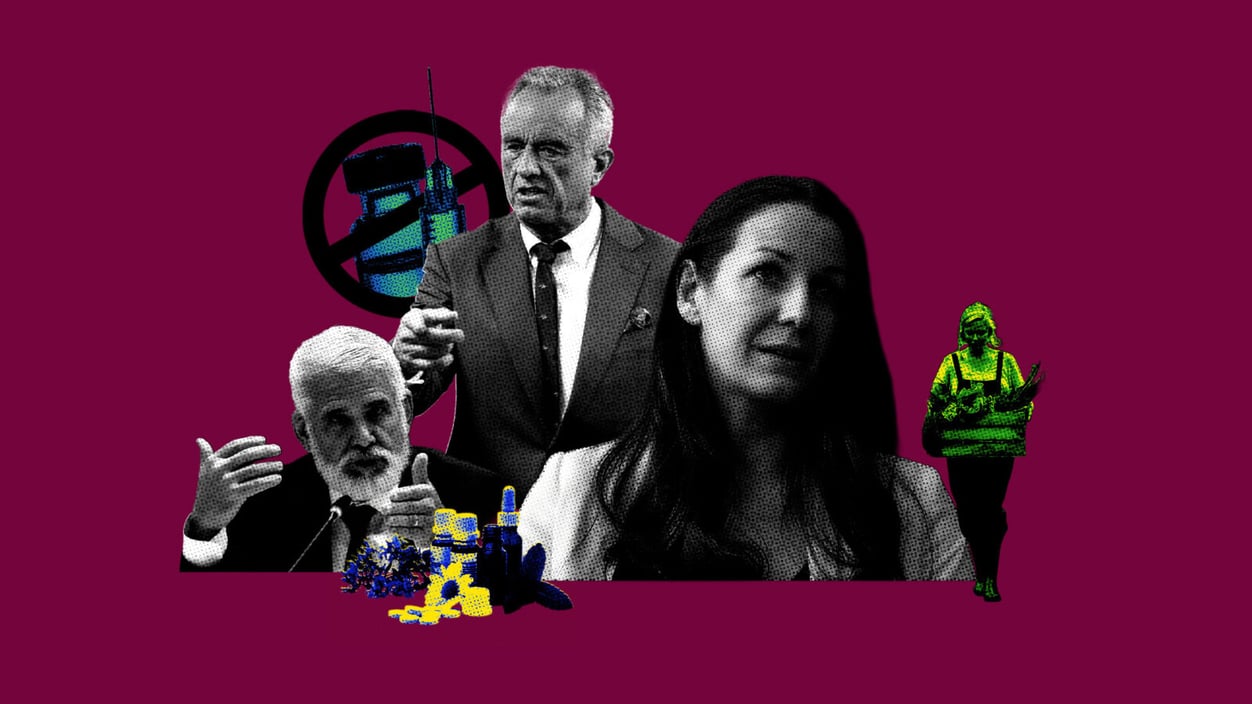
Illustration: Camille MacMillin/STAT, photo: AP, Adobe, YouTube
The formation of a group called MEHA — Make Europe Healthy Again — may initially seem counterintuitive. Here in the U.S., MAHA leaders often cite European policies as a model, and communities there tend to have longer life expectancies, fewer health disparities, and cheaper medicines.
But echoing its American counterpart, the new group says it aims to prevent chronic diseases, protect the environment, promote scientific transparency, and help Europeans "reclaim [their] health and sovereignty." It has also attracted a mix of anti-vaccine activists, right-wing politicians, and medical freedom campaigners who warn that the continent's regulators are captured by "corrupted science" and that its public health systems are akin to "tyranny."
Read more from STAT contributor Gabriela Galvin about how MAHA took hold in Europe and how likely it is to amass political power.
zzzzzzzz
Teen sleep habits are getting worse
The percentage of high school students who report insufficient sleep rose from nearly 69% in 2007 to 77% in 2023, according to a study analyzing federal survey data that was published yesterday in JAMA. Insufficient sleep was defined as seven hours per night or less, but the changes were specifically driven by increases in "very short sleeping," meaning five hours or fewer. Just under 16% of students got five hours or fewer in 2007, but that rose to 23% in 2023.
Poor sleep became more common across demographics, though increases were greater among Black students than their white peers, as well as among those who reported depressive symptoms or suicidal thoughts. While students with behavioral health risks — meaning those with high electronic media use, substance use, a lot of sedentary behavior, and more — consistently had higher rates of insufficient sleep, the increases across groups were similar. That suggested to the study authors that structural and environmental factors play a bigger role in the trend than specific behaviors.
lab dish
The ethical dilemmas of human embryo models
For decades, the work to engineer human embryo models using stem cells has been stagnant, and the resulting models have been clunky. But now, research is progressing quickly. "I have to admit to being very surprised by just how much these models look like real human embryos," biologist and STAT contributor Paul Knoepfler writes in his latest column.
The highly realistic models come with a new set of ethical considerations. How many days of growth are ethical? What should these models be called? And perhaps most importantly, what's the difference between a model and the real thing? Read more from Knoepfler on the key questions that researchers — and maybe, eventually, society at large — need to consider as the work continues.












No comments