Plus: A positive sign from Teladoc Health ͏ ͏ ͏ ͏ ͏ ͏ ͏ ͏ ͏ ͏ ͏ ͏ ͏ ͏ ͏ ͏ ͏ ͏ ͏ ͏ ͏ ͏ ͏ ͏ ͏ ͏ ͏ ͏ ͏ ͏ ͏ ͏ ͏ ͏ ͏ ͏ ͏ ͏ ͏ ͏ ͏ ͏ ͏ ͏ ͏ ͏ ͏ ͏ ͏ ͏ ͏ ͏ ͏ ͏ ͏ ͏ ͏ ͏ ͏ ͏ ͏ ͏ ͏ ͏ ͏ ͏ ͏ ͏ ͏ ͏ ͏ ͏ ͏ ͏ ͏ ͏ ͏ ͏ ͏ ͏ ͏ ͏ ͏ ͏ ͏ ͏ ͏ ͏ ͏ ͏ ͏ ͏ ͏ ͏ ͏ ͏ ͏ ͏ ͏ ͏ ͏ ͏ ͏ ͏ ͏ ͏ ͏ ͏ ͏ ͏ ͏ ͏ ͏ ͏ ͏ ͏ ͏ ͏ ͏ ͏
|
|
|
Health Tech Correspondent
|
|
|
Good morning health tech readers!
Today, updates from large virtual care companies. Plus: A low-tech way to boost cancer screenings.
Reach me: mario.aguilar@statnews.com
|
|
|
policy
FDA's plan to use AI to speed up clinical trials
The Food and Drug Administration announced plans to make clinical trials more efficient, starting by reviewing data in real time from trials conducted by AstraZeneca and Amgen, Lizzy Lawrence reports.
The agency also asked for input on a pilot program to work with companies that use AI to enhance safety monitoring and medication dose selections, identify safety signals, and improve patient recruitment in clinical trials.
Read more here
research
Boosting cancer screening with texts — No AI required
In this moment where it can feel like everyone is trying to use AI for everything, I was tickled by the results of a randomized clinical trial that tested the efficacy of simple text messages as a way of boosting completion of stool-based colorectal cancer screening.
The study randomized 1,275 patients to receive either a phone call or three “behaviorally informed" messages reminding them to return their test kits. Overall, 59% of people in the text group returned their kits, compared to 50% of people in the phone call group.
Co-author Leora Horwitz, a professor at the NYU Grossman School of Medicine, told me part of the challenge is getting people to pick up the phone. Of 457 call group participants eligible for reminders, nurses successfully reached just 209 and left voicemails for 67. Another problem: 161 people got no call at all, attributable to workforce constraints. “It’s an accurate representation of how a human telephone outreach works in real life,” said Horwitz.
Would this change if hospitals turn to voice AI companies to conduct robocall follow ups? All of the participants who did not receive a call would now be dialed. But a bot can’t force anyone to answer the phone.
medical devices
Hinge's new migraine offering
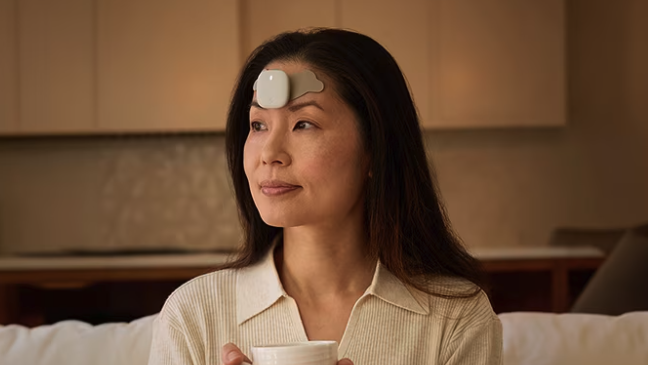
Hinge Health, which is known for a virtual physical therapy benefit offered through employers, announced a new migraine management service, including a new version of its Enso stimulation device users stick to their foreheads. The product received FDA clearance last week. While there are other forehead stimulators on the market — checkout the list of other products with the same FDA product code — CEO Daniel Perez told me said the Hinge offering stands apart because of software that helps users track their symptoms and a care team that’s included with the service. He also thinks Hinge’s device is slicker.
“We believe our gel pads are much more well designed for patients to particularly place them on their forehead,” he told me. “Our experience is a lot better. Our waveforms are smoother, our design is better.”
|
|
Health tech news roundup
Aidoc, a leading developer of AI that helps radiologists interpret images, raised a $150 million Series E funding round led by Growth Equity at Goldman Sachs Alternatives. The company last announced a $150 million raise in July 2025. In January, Aidoc received an FDA clearance for a tool that can triage 14 critical findings in a single abdominal CT. Over the weekend, OpenEvidence pulled its service in Europe citing regulatory uncertainty around several rules including, the EU AI Act. CEO Daniel Nadler told me the situation was "extremely frustrating." - Virtual care giant Teladoc Health reported first quarter revenue that was down 2% year over year to $614 million. I've been following the attempted turnaround of the company's BetterHelp mental health segment, and the company is now projecting $90 million to $105 million in insurance revenue this year as it expands from a strictly direct-to-consumer business. That's up from the $75 million to $90 million it projected during its last earnings call. BetterHelp revenue was also down year to $218 million.
There’s a “vibe shift” happening where we’re "on the precipice of changing the way we talk about AI in health care," my colleague Brittany Trang writes in her AI Prognosis newsletter. In medical journals, blogs, and on LinkedIn, clinicians are increasingly pushing back on fundamental assumptions driving some AI adoption, including that experienced doctors will challenge diagnoses offered by AI and that nothing is lost when doctors don’t have to think about writing clinical notes any more. - Rad AI, another radiology AI developer, appointed David Leonard as chief operating officer and Elizabeth Bergey as chief clinical officer.
- Ambience Healthcare, an ambient scribe developer, appointed Michael Han as chief medical officer. He previously worked at the MultiCare Health System.
|
|
|
Check out more exclusive coverage with a STAT+ subscription
|
Read premium in-depth biotech, pharma, policy, and life science coverage and analysis with all of our STAT+ articles.
|
|
What we're reading
- Woman’s Talkspace therapy app sessions exposed in court, Proof
- A licensure framework for autonomous clinical AI, JAMA
|
|
Thanks for reading! More next time - Mario
Mario Aguilar covers how technology is transforming health care. He is based in New York.
|
|
|
|
STAT, 1 Exchange Place, Boston, MA
|
|
©2026, All Rights Reserved.
|
|
|
|













No comments