Breaking News

In reverse on hep B vaccines, hitting the gas on psychedelics

September 11, 2025
theresa-g-avatar-small - light bg
Morning Rounds Writer and Reporter
We've got a bunch of news to share this morning. And tonight in Boston, we'll see the last 7 pm sunset of the year. Two surefire signs that summer is over.

$$$

Harvard federal funding set to resume — for now

Federal agencies are in the process of restoring at least some of Harvard University's previously canceled research funding, my colleagues at the Boston Globe reported yesterday. The news comes a week after a federal judge said the Trump administration illegally canceled nearly $3 billion in the university's research funding. (A White House spokesperson said last week that the government would appeal the decision, though as of yesterday afternoon, nothing had been filed.) 

The Trump administration has been exerting pressure on the university since April, when it first cancelled $2.2 billion in federal grants. "I certainly don't speak for the community, but I suspect that a lot of my colleagues are quite excited that Harvard has a spine," George Church, the prominent Harvard bioengineer, told STAT's Jason Mast at the time. The effects of the cuts have been wide-reaching, from the medical school to virologists 2,000 miles away. Amid the chaos, one biological research lab even secured private equity financing to continue its work. The university has yet to reach a broader agreement with the Trump administration over its investigations.


one big number

$100 million

That's how much money philanthropist Melinda French Gates is committing to women's health research in a partnership between her organization, Pivotal, and Wellcome Leap, which describes itself as "a global ARPA for health." The funding will specifically go toward research on how cardiovascular disease, autoimmune diseases, and mental health impact women. At the 2025 Forbes Power Women's Summit yesterday, Gates pointed out that just a small fraction of global health research has been directed toward women, and most of it focuses on issues like breast cancer or reproductive health. 

The announcement comes a month after the Gates Foundation, co-founded by French Gates, pledged $2.5 billion to women's health initiatives through 2030. It's been over a year since French Gates resigned from the nonprofit with a $12.5 billion check from Bill Gates, aiming to influence reproductive rights in the U.S. "The sooner we get on the science, the sooner we're going to have solutions for everybody," French Gates said yesterday at the Forbes Summit. 


hospitals

Judge blocks DOJ subpoena of trans records at Boston Children's

A federal judge has blocked the Trump administration's subpoena for medical records of transgender patients at Boston Children's Hospital. On Tuesday, the judge ruled that the government had failed to demonstrate "proper purpose," and "even if it had, that BCH has demonstrated that the subpoena was issued for an improper purpose, motivated only by bad faith," according to the decision.

This summer, the Department of Justice announced that it had sent out around 20 subpoenas to clinics and drugmakers regarding gender-affirming care. The Washington Post reported last month that a subpoena sent to the Children's Hospital of Philadelphia requested emails, Zoom recordings, written notes, voicemails, texts, and more made by doctors dating back to 2020 — before gender-affirming care was banned in any U.S. state. The subpoenas are part of a multifaceted campaign by the Trump administration — which could appeal the decision, or narrow the scope of its request — to eliminate gender-affirming care for trans youth, which the president has repeatedly and inaccurately referred to as "mutilation."

Notably, the judge denied the hospital's request that the records be sealed — which it argued was necessary because the public wasn't yet aware that the hospital had been served a subpoena, and that knowledge could exacerbate the threats levied at the facility, its clinicians, and its patients. Children's hospitals around the country — but particularly Boston Children's — have been targets for harassment over the provision of trans health care for years. In 2022, STAT reported that hospitals were editing and removing information about gender-affirming care services and providers from their websites in response to those attacks. 


if it's not broke

How the U.S. decided to vaccinate all babies against hep B
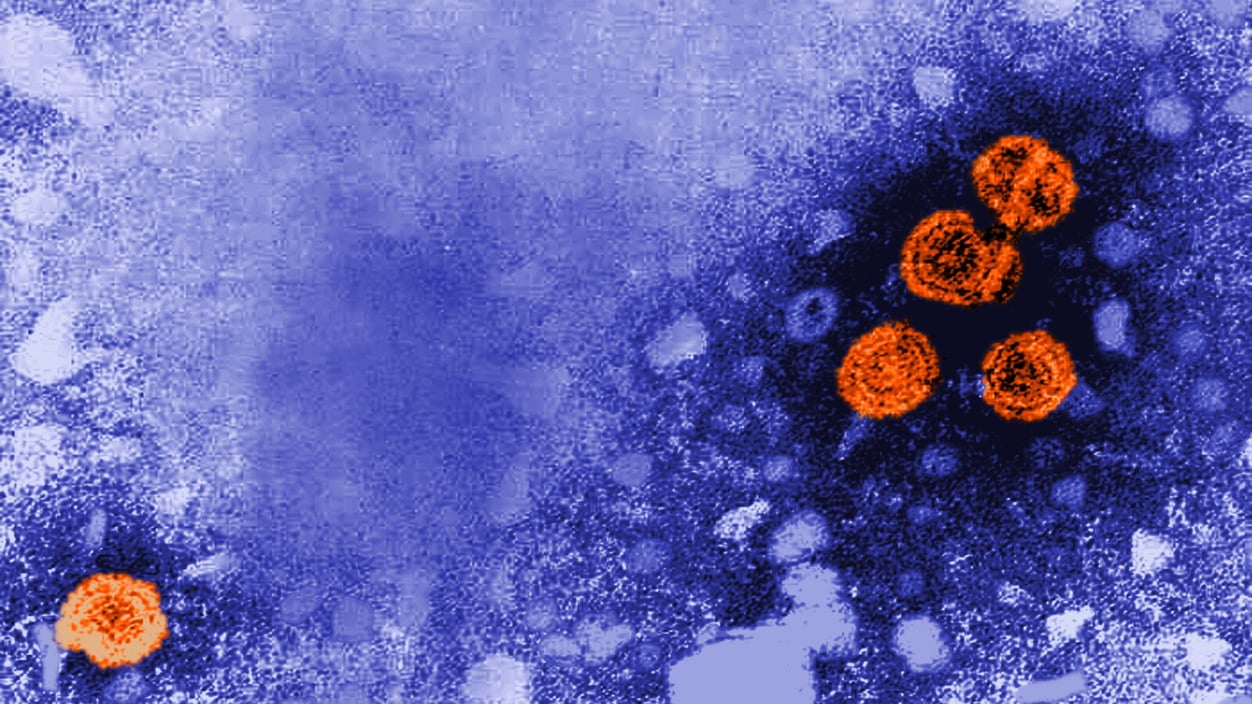
Electron microscopic image of hepatitis B virus particles (orange spheres against a purpleish blue background).

Erskine Palmer/CDC 

When the hepatitis B vaccine first became available in the early 80s, it was for people deemed high risk, like health care workers and men who have sex with men. But by the end of the decade, infection rates had gone up, not down — and CDC epidemiologists were looking for a new strategy. In 1991, the ACIP recommended vaccinating all infants, and over the next two decades, case numbers plummeted by 99% among children and teens.

Fast forward another decade and a half, and new members of the same vaccine advisory committee have hinted at a desire to reverse course when ACIP meets next week. STAT's Eric Boodman spoke to researchers, clinicians, and patients about what dropping universal infant vaccination could mean. "Premature death, that is a very real and perpetual anxiety," said Wendy Lo, who was diagnosed with hep B decades ago, at age 21. Read more


progress

The latest data on chronic disease deaths

The bottom line: From 2010 to 2019, the risk of dying from a chronic disease between birth and age 80 declined in most countries, including the U.S. But there's a catch: Those improvements got smaller over time, and the U.S. actually saw the smallest declines of its peers. 

That's all according to a new analysis published yesterday in The Lancet. "I could say this is good news, bad news, but maybe … it's complex news," study author Majid Ezzati told STAT's Isabella Cueto. While previous research has summarized the state of disease and death around the world, this paper uses WHO data to compare nations against themselves. Read more from Isa about the findings.


deals

What's driving new pharma interest in psychedelics?

Last month marked the first time a traditional pharma company bought an investigational psychedelic drug. The deal — Abbvie purchased a compound from Gilgamesh Pharmaceuticals for up to $1.2 billion — suggests the industry is getting more comfortable with psychedelics, despite the FDA's rejection of MDMA last year. And some predict more deals will follow. 

"There's a huge amount of interest coming in suddenly from pharma," Josh Hardman, founder of the media and consulting firm Psychedelic Alpha, told STAT's Olivia Goldhill. "We've seen a huge uptick in the last six months of larger pharma companies joining the mailing list, taking out paid subscriptions." As the psychedelic field develops, more data will provide confidence for potential deals, Olivia writes. Read more.



More around STAT
Check out more exclusive coverage with a STAT+ subscription
Read premium in-depth biotech, pharma, policy, and life science coverage and analysis with all of our STAT+ articles.

What we're reading

  • A family's detention and deportation through a mother's eyes, The 19th

  • Child dies after receiving new experimental gene therapy, STAT
  • Opinion: It's not you. It's the food, New York Times
  • Robotic device could make intubation faster and easier for first responders, small study suggests, STAT

Thanks for reading! More next time,


Enjoying Morning Rounds? Tell us about your experience
Continue reading the latest health & science news with the STAT app
Download on the App Store or get it on Google Play
STAT
STAT, 1 Exchange Place, Boston, MA
©2025, All Rights Reserved.

No comments