Breaking News

Negotiating with 'bullies,' mixing hormones with weight loss drugs, & no more human fetal tissue research

January 23, 2026
admin-ajax
Morning Rounds Writer and Reporter

Good morning. If you thought that I was bald all these years based on my illustrated avatar, think again! I've finally upgraded from the at-home pandemic isolation headshot I submitted for my STAT internship back in 2020. Now, I've got long hair and bangs, to show that time has passed.

one small number

1

That's how many new members were added last year to NIH advisory councils — key panels that make final recommendations on what research to fund at universities and medical centers. The inaction around these councils has depleted their ranks as current members' terms expired and a handful resigned. The majority of the 25 councils are now operating with less than half their full slate of members, according to STAT's analysis of annual reports on council activity submitted at the end of December.

The confirmation of new advisory council members "has always been a slow matter," said Ned Sharpless, a former director of the National Cancer Institute. But this is different, he confirmed. As one current council member put it, "it looks so much like a mechanism to quietly pull the plug on everything at NIH without actually doing anything." Read more from STAT's Megan Molteni about the questions raised by these empty positions.


reproductive health

Planned Parenthood CEO won't negotiate with 'bullies'

Planned Parenthood CEO Alexis McGill Johnson spoke with allies in Congress this week to chart a path forward for reproductive rights, Medicaid coverage, and the organization's imperiled funding, she told STAT on Thursday.

The future of those issues may be a bit brighter as the group looks toward the midterms, McGill Johnson said, while arguing America's health care system is "in crisis."

Planned Parenthood in particular has had a bruising few years — which included the rollback of federal abortion rights and attempts to defund the organization.

But McGill Johnson said the group isn't changing its messaging in Washington, and she's not interested in working with GOP leaders who have the group in their crosshairs.

"I can't imagine negotiating with bullies," she said. "Changing our tone would require us negotiating with bullies."

(The Trump administration did not respond to a request for comment about McGill Johnson's remarks.)

McGill Johnson said she hopes other leaders across the health sector — many of whom have changed their practices or cut deals under pressure from the administration — will increasingly follow suit by standing up to the federal government.

"Tyranny plays on fear," she said. "But fear collapses when we organize together." — Daniel Payne 


public health

Top CDC vaccine adviser questions historic vaccine

Kirk Milhoan, a pediatric cardiologist who recently became chair of the CDC's Advisory Committee on Immunization Practices, suggested on a podcast yesterday that the public might want to reconsider the use of polio vaccines. "What we are doing is returning individual autonomy to the first order, not public health, but individual autonomy to the first order," he said about the committee while downplaying established science.

Read more on the comments and the weight they carry for federal vaccine policy. And if you've been keeping up with the plans for a controversial U.S.-funded hepatitis B vaccine study in Guinea-Bissau, the country's public health minister gave an update on the situation yesterday at a press conference.


first opinion

Even doctors who know better make this decision
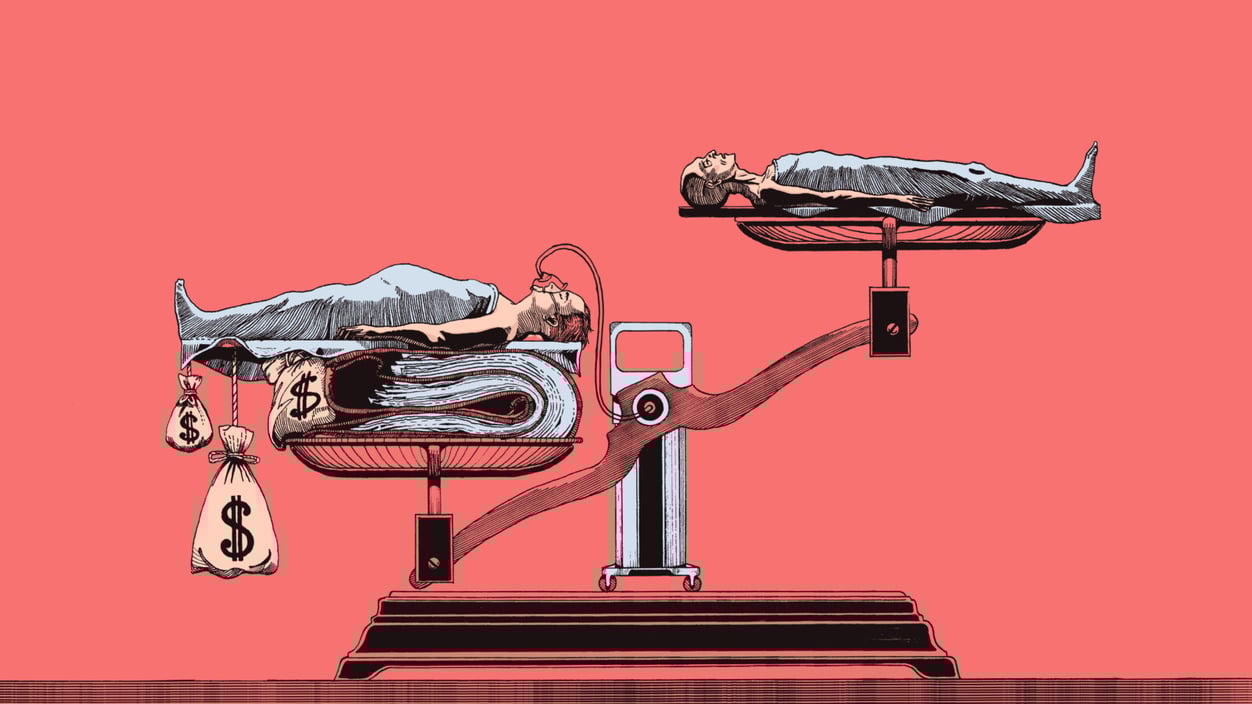
People being weighed on a scale with

Adobe

When you think of people who have to make medical decisions based on their ability — or inability — to pay for certain procedures or medications, you don't normally think of doctors. But in our health system, even some full-time physicians have $3,000 deductibles.

Last year, the hospital that Amy Caggiula works at quietly changed nearly all of their insurance offerings to high-deductible health plans. "I found myself asking my own physician to switch my medication to a drug that is less effective and less safe — but cheaper," the emergency medicine doctor and professor writes in a new First Opinion essay. Read more from Caggiula about how we got here and what we should do about it. 


research

On mixing MHT and weight loss drugs

A new, small study suggests that for older women, taking menopause hormone therapy congruently with a weight loss medication could lead to even more weight loss. In a paper published yesterday in The Lancet Obstetrics, Gynecology, & Women's Health, researchers analyzed data from 120 postmenopausal women taking the weight loss drug tirzepatide, 40 of whom were also on hormone therapy. 

After 15 months of treatment, the women taking hormones saw 35% more overall weight loss than those who weren't. The hormone group also had significantly higher proportions of women reaching the clinical thresholds of more than 20%-30% of their own bodyweight loss. And while both groups showed improved cardiovascular health, the hormone group had significant reductions in diastolic blood pressure (likely related to the increased weight loss).

The Trump administration has been eagerly encouraging more (cisgender) people to use hormones, and in November, the FDA removed the black box label warning from menopause hormone products. Still, we'll have to wait and see if larger randomized control trials validate this weight loss data. And I've always got this story that Elaine Chen wrote last year in the back of my mind, about the possibility that market pressure could be fueling too much weight loss on some of these drugs.


policy

Trump admin halts use of human fetal tissue in NIH-funded research

The Trump administration announced yesterday that NIH-funded research can no longer use human fetal tissue derived from abortions, an expansion on restrictions issued during his first term. The tissue, which otherwise would be thrown away, has been critical for certain research, including ways to fight HIV and cancer. Anti-abortion critics say there are alternatives, although many scientists disagree. Read more from the AP on the announcement.

As Politico reported, it was one of several anti-abortion announcements the administration made on the eve of today's March for Life. But conservative activists haven't taken their eyes off the prize: restricted access to abortion pills and expanding the Hyde Amendment, which already bars federal funds from going toward abortions.



More around STAT
Check out more exclusive coverage with a STAT+ subscription
Read premium in-depth biotech, pharma, policy, and life science coverage and analysis with all of our STAT+ articles.

What we're reading

  • How North Carolina erased medical debt for 2.5 million people, NPR

  • Could AI help doctors catch signs of cognitive decline early? STAT
  • 'They saw them on their dishes when eating': The mushroom making people hallucinate dozens of tiny humans, BBC
  • The number of new drug shortages in U.S. hits lowest level in 20 years, but myriad problems remain, STAT

Thanks for reading! More next time,


Enjoying Morning Rounds? Tell us about your experience
Continue reading the latest health & science news with the STAT app
Download on the App Store or get it on Google Play
STAT
STAT, 1 Exchange Place, Boston, MA
©2026, All Rights Reserved.

No comments