BIG FOOD
The fight against ultra-processed food turns to the anti-tobacco playbook
Camille MacMillin/STAT
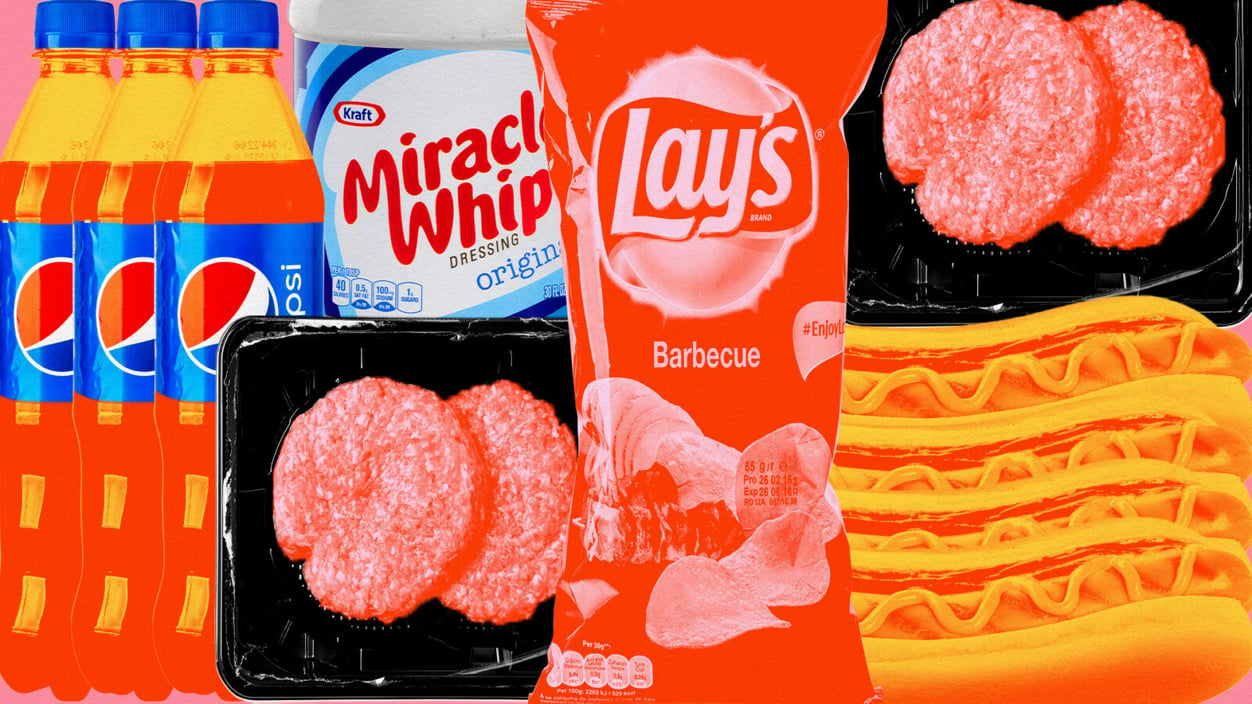
Critics are intensifying a public relations war against ultra-processed food by highlighting its history with the widely distrusted tobacco industry — and exploring how strategies against Big Tobacco might be applied to food.
Researchers, nutrition advocates and politicians across the political spectrum say ultra-processed food manufacturers have perverted the brain's built-in reward system, wreaking havoc on Americans' health through a parade of Chips Ahoy! and Cheetos. Health secretary Robert F. Kennedy Jr. has even argued that the "thousands of scientists" that made tobacco addictive have moved to do the same for food.
The food industry rejects this association and has responded with a new seven-figure ad campaign that emphasizes the manufacturing jobs it creates and the benefits of "everyday essentials that are convenient, affordable, and above all, safe."
How real is this comparison between Big Tobacco and Big Food? Where does it fall short? Read this excellent story from STAT's Sarah Todd.
PURPLE (G)RAIN
What is a 'natural' dye, anyway?
The Food and Drug Administration yesterday announced that it's making it easier for companies to transition from artificial, petroleum-based colors to dyes derived from natural sources. Whereas the FDA's previous definition of "artificial color" meant that the color did not naturally occur in that food (for instance, a dye making butter more yellow), the new FDA labeling approach focuses on whether a dye is derived from natural sources or from petroleum-based sources (i.e., whether that color comes from Yellow No. 5 or annatto extract.)
The Environmental Working Group, an advocacy group, slammed the announcement as a "retreat" from health secretary Kennedy's promise to ban synthetic food dyes altogether.
As STAT's friendly neighborhood PhD chemist, I am here to remind you that everything is chemicals no matter where it comes from. "Natural" vanilla includes vanillin made from tree pulp waste, and just because a dye is "natural" doesn't mean it's necessarily squeezed from the teat of a beet. The FDA's new working definition of "natural" dyes includes dyes that are manufactured via fermentation from yeast, algae, or fungi; mixed or reacted with other chemicals, or extracted from plants bred to maximize color production. — Brittany Trang
FIRST OPINION
Former FDA head: HHS leadership is undermining evidence-based policy
Pediatric cardiologist Kirk Milhoan, the new chair of the Centers for Disease Control and Prevention's Advisory Panel on Vaccination Practices, recently said the polio vaccine may not be necessary, and that he trusted his own observations regarding vaccines over established science.
Privileging individual insights over collective wisdom undermines the work to keep a society safe and healthy, Robert M. Califf, M.D., the former commissioner of the Food and Drug Administration, argues in a new First Opinion. "Even a professional's naïve analysis of aggregate data can be insightful, but also can be profoundly misleading."
Health care must be built on a collective foundation of evidence and expertise. "When it comes to medical and public health interventions, we ignore evidence and expertise at our peril," said Califf, now an instructor at the Duke University School of Medicine. Read more.












No comments