

🏥 From MultiPlan insider to MultiPlan disruptor

 |
||||||
|
||||||
|
|
||||||
Hospitalogists, Ever wonder what happens when an insider gets tired of pitching change to a board that keeps saying no? Navin Nagiah’s choice: leave MultiPlan to build the thing they wouldn't. Today, I’m sharing my conversation with the CEO and co-founder of Daffodil Health. We get into repricing's original sin, the No Surprises Act's lopsided scoreboard, and why "AI raises costs" is the wrong lens entirely. Before we get into it, a few things I’m looking forward to: 9/4 → Community Roundtable: This session will be interactive - come with your thoughts and questions on the current and future state of Medicaid. 9/23 → Healthcare Happy Hour: Who’s going to Vegas next month? I’m hosting a happy hour, open bar, and great people. 11/2-3 → Hospitalogy AI Retreat: A no-cost retreat for senior healthcare leaders. Join execs from Kaiser, Sutter, Baylor, Henry Ford, Mayo Clinic, UCHealth, Adventist, Ascension, and more. Was this email forwarded to you? Sponsored by Medallion Healthcare is at a turning point, where AI, policy, and operational pressure are reshaping what readiness really looks like. Join Medallion's Elevate on September 1 for a full-day virtual event bringing together healthcare leaders and operators to unpack where the industry is headed and how to get there. You’ll hear practical perspectives on where AI is driving real impact, how leading teams are adapting to shifting regulations, and what it takes to scale while keeping patient experience at the center. This year, Medallion is digging into the tensions shaping the industry, where policy, technology, and growth strategies come together. Expect conversations on:
BLAKE'S BREAKDOWN From MultiPlan Insider to MultiPlan Disruptor: The Daffodil Health StoryIf you’re a middleman, earn your keepHere's a question that doesn't get asked enough in healthcare: if you're sitting between the patient and the clinician, what value are you adding? That's the framing Navin Nagiah, co-founder and CEO of Daffodil Health, dropped on me during a recent episode of "Claims Denied." I thought it was a sharp way to cut through an industry that has accumulated layers of intermediaries like geological strata. Employers, payors, TPAs, repricing vendors, arbitration shops. Everybody's in the middle. Navin's argument is simple: if you're a middleman, you should earn your keep by adding value; if you're not adding value, technology should disintermediate you. And that's exactly what Daffodil is setting out to do. 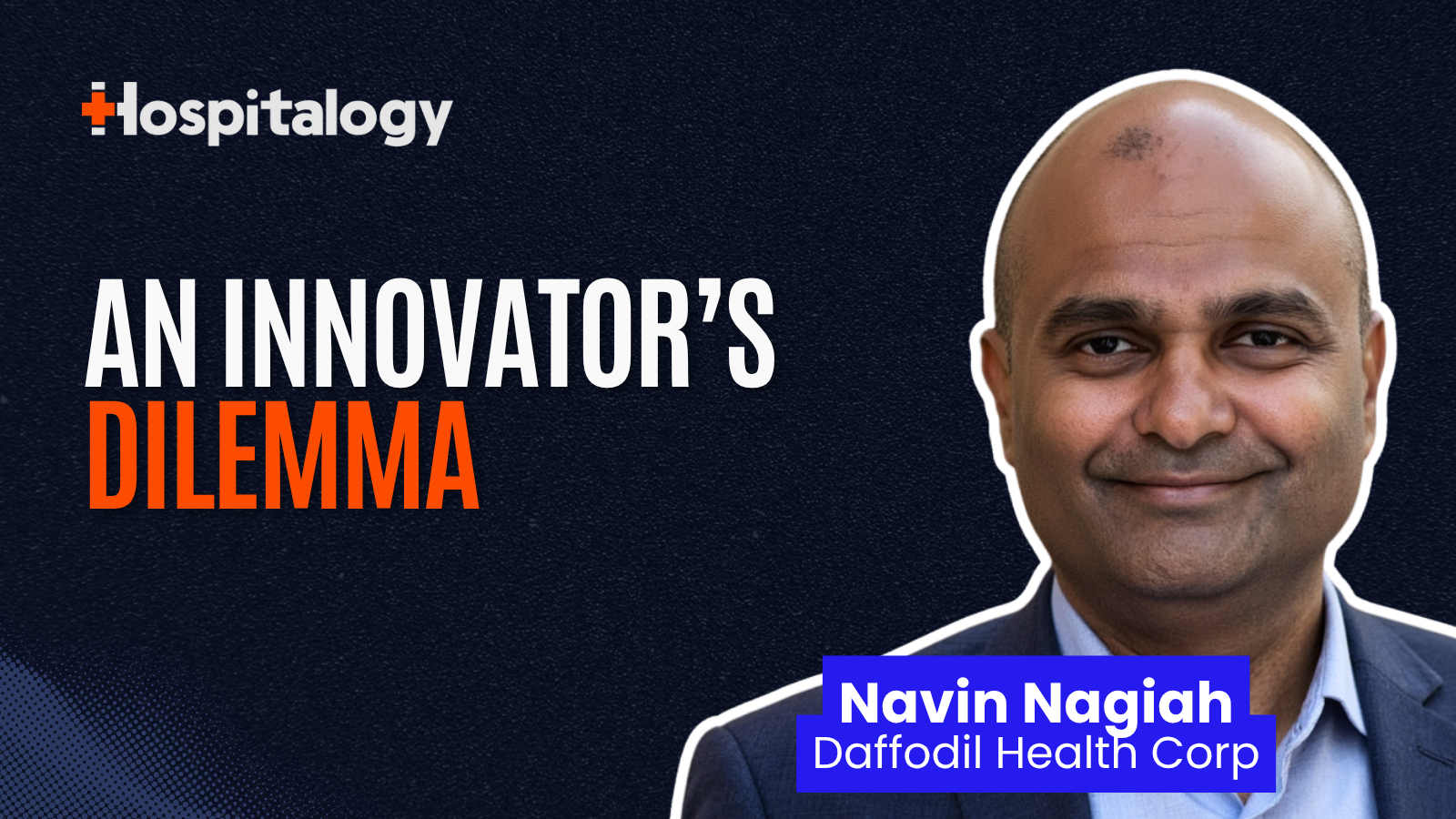
Click the image to listen to the episode. He went to the board 3 times; they said no 3 timesBefore founding Daffodil, Navin ran product at MultiPlan, now Claritev. His goal was to modernize the repricing model from the inside: automate processes, shift the product direction, and prepare for what he could see coming around the corner with transparency regulation and the push toward auditability. He wrote extensive internal documents. He went in front of the board three separate times. He couldn't get alignment. Here's a publicly traded company under constant market scrutiny, and the risk calculus of transforming your own business model while Wall Street watches is just brutal. Navin was charitable about it, and doesn't blame the board or the CEO for not wanting to take that swing. But the structural constraints of a public company trying to cannibalize its own revenue model are real. Navin made the point that basically the only companies that have successfully pulled this off under public market glare are Apple (when Jobs came back) and Adobe (desktop to SaaS). That's a short list. The more pointed question I asked was whether AI automation would hurt Claritev's economics if they pursued it. Navin's answer was direct: yes, it would. A legacy economic model, legacy tech architecture, legacy product assumptions, and a culture that's ossified over decades. Trying to transform all of that simultaneously while reporting quarterly earnings is, in his words, "brutally difficult" and "extremely expensive." So Navin left to build the thing MultiPlan wouldn't. Healthcare's hotel rack rate (and the BS built on top of it)The out-of-network repricing space operates on what I'd call healthcare's original sin of pricing: the chargemaster. Navin's analogy was perfect: it's a hotel rack rate. It's posted, nobody pays it, but the entire billing dance starts from that inflated number. Here's how the game works. A provider sends a claim for $1,000 based on their chargemaster, and both sides know the payor will settle for roughly $500 (the national average settlement is about 50% of billed charges). And yet the entire repricing industry has been built on this artificial gap. A vendor comes in, gets the $1,000 bill "repriced" to $500, claims they saved $500, and charges 25% of those "savings." Navin called this what it is: complete BS built on a fake anchor. When everyone in the system knows the true settlement range, claiming credit for "savings" off a fictional starting point is essentially a tax on payor inattention. Daffodil's counter-model is straightforward: flat-fee SaaS pricing. They tell the payor to send 90 days of historical claims, benchmark Daffodil's pricing performance against whatever vendor the payor is currently overpaying, and if Daffodil matches or beats performance at 10-15% of the current cost, the payor keeps the margin instead of handing it to a middleman. I can see how that pitch lands. Providers 88, payors 12 (yikes)One of the more eye-opening parts of the conversation was Navin's breakdown of the No Surprises Act's current state. The headline stat: providers are winning approximately 88% of all arbitration disputes. And in roughly 20% of cases, the payor isn't even able to respond in time. The No Surprises Act has been effective at its primary goal: patients aren't getting blindsided by surprise bills from out-of-network anesthesiologists anymore. That's a genuine win. But the arbitration layer it created has become its own ecosystem of spend, and providers have moved faster than payors to weaponize technology in that arena. Navin described instances where providers will strategically dump batches of NSA claims on a Friday afternoon, knowing that if the payor can't respond within the required timeframe, the arbitrator defaults in the provider's favor. That's technically legal. It's also the kind of tactical maneuvering that should concern every employer and self-funded plan that's relying on their payor or TPA to be an effective fiduciary. Navin was clear that he's not making excuses for payors; it's their responsibility to invest in technology and compete. But the asymmetry is real, and it has economic consequences that flow downstream to employers and members. The "AI only raises costs” take is too simpleWe got into the broader debate about whether AI is increasing healthcare costs, a narrative that's been gaining traction after some recent think tank reports. The argument goes something like this: providers invest in AI for RCM, up-coding, and prior auth appeals. Payors invest in AI to counter those moves. Net result: both sides spend more on technology, costs go up, nobody wins. Navin pushed back on this framing pretty hard. That argument only holds if you look at AI through a narrow lens of payor-provider combat. If you zoom out and consider full process automation — taking an admin workflow that required human involvement at multiple steps and automating it end-to-end at a fraction of the cost — that's genuine waste removal. If a process that cost $100 with legacy vendors now costs $10 with an AI-native solution, that's deflation. I'm of a similar mind. We're in the investment and infrastructure phase right now, where incumbent solutions running alongside new AI-native platforms temporarily inflates total spend. But the secular trend is pretty clear: automation will compress the cost of administrative processes dramatically. The question is how fast will incumbents get displaced? The wedge is repricing; the endgame is way biggerI asked Navin about Daffodil's long-term product vision. OON repricing is the wedge, but the endgame is what Navin calls a "smart plan platform." The idea is to enable payors to do custom plan design based on employer-specific variables: workforce demographics, geography, blue collar vs. white collar, age distribution, travel patterns. Instead of an employer with 500 people across two locations being forced into a broader (and more expensive) network than they need, the platform would enable precision plan design that matches actual utilization patterns. Layer on top of that consumer steering incentives. If an MRI costs $300 at one facility and $2,000 at another, build rebates and incentives into the plan design that nudge members toward the high-quality, low-cost option, and you start to see a platform that attacks healthcare costs from multiple angles simultaneously. This is where the Daffodil story gets genuinely interesting strategically. The repricing wedge gives them claims data and payor relationships. The plan design platform gives them a much larger TAM and stickier customer relationships. It's a natural extension of the chassis they're already building. Whether they can execute on that broader vision with ~$20M in total funding is the open question, but the product logic tracks. Sponsored by Regard I've written a lot about rural hospitals running on razor-thin margins, and Penn Highlands Healthcare is a good case study in doing something about it. The nine-hospital system used Regard to capture diagnosis complexity that was already there — no extra clicks for physicians — and saw a 7-point jump in CC/MCC capture and a 10% lift in case mix index. ON YOUR RADAR
*This resource is brought to you by one of my brand partners who help make this newsletter possible! Thanks for the read! Let me know what you thought by replying back to this email. — Blake |
||||||
|


No comments